Quick answer: Five months is a month of consolidation and preparation — fine motor skills are advancing rapidly, social engagement is delightful, and many families are beginning to think seriously about introducing solid foods.
Five months is a month of consolidation and preparation — fine motor skills are advancing rapidly, social engagement is delightful, and many families are beginning to think seriously about introducing solid foods.
5 Months Milestones
At 5 months: sitting with support (some babies are close to unsupported sitting), transferring objects from one hand to the other, holding and shaking a rattle with purpose, rolling both ways (if not already), responding to their name consistently, imitating facial expressions and some sounds, showing clear preferences for certain toys and people, and beginning to show proto-conversations — taking turns vocalizing with you.
Sleep at This Age
Sleep patterns vary enormously at 5 months depending on whether you’ve sleep trained and your baby’s individual temperament. Many 5-month-olds are taking 2–3 naps per day (typically morning, midday, and a late afternoon catnap). Nighttime sleep may include 1–2 wakings or more. Sleep training from 4–6 months has good safety and efficacy evidence — including graduated extinction (Ferber), full extinction, and fading approaches.
Feeding
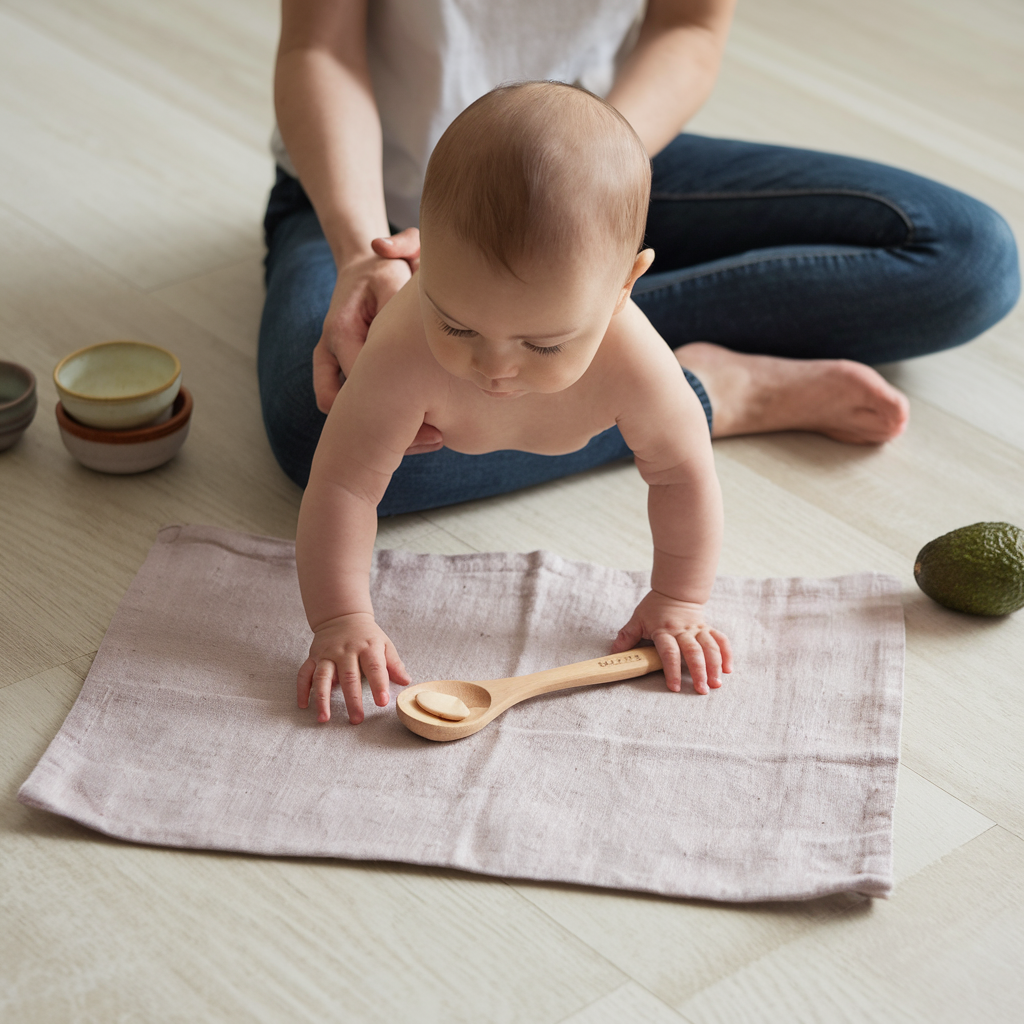
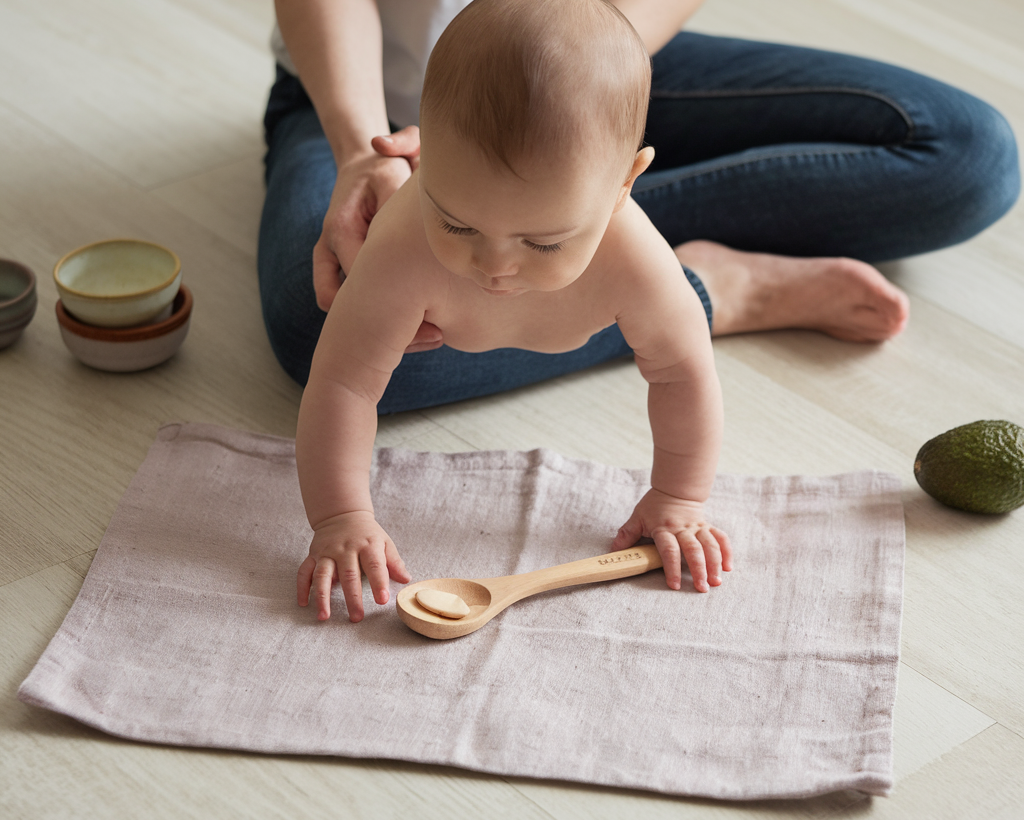
Still primarily milk-based (breast or formula). Some babies show signs of readiness for solids at 5 months — but the current guidance is to wait until at least 6 months unless baby shows all developmental readiness signs early. Don’t be rushed by well-meaning relatives or historical guidance suggesting earlier introduction.
Practical Tips This Month
- Watch for all three readiness signs before starting solids: sitting with minimal support, loss of tongue-thrust reflex, and showing interest in food.
- Offer varied textures and toys for sensory development.
- Introduce concepts through play: peekaboo (object permanence), ‘so big’ (body awareness), and turn-taking games.
- Continue reading daily — point and name objects, use varied intonation.
- Ensure car seat is still used correctly — many families make transition errors around this age.
The developmental readiness window
Current NHS and WHO guidance recommends starting solid foods at around 6 months rather than earlier — but ‘around’ acknowledges that some babies show readiness signs slightly before their 6-month date. The three signs of developmental readiness (all three must be present, not just one): the baby can sit up with minimal support and hold their head steady; they can coordinate eyes, hands, and mouth — picking up objects and bringing them to the mouth; and they have lost the tongue-thrust reflex that automatically pushes food out of the mouth. Interest in food alone — watching you eat, reaching for your plate — is not a readiness sign on its own. Early introduction before these signs are present is associated with increased choking risk and doesn’t improve outcomes. If your 5-month-old shows all three signs, discuss with your health visitor before starting.
Frequently Asked Questions
What are the signs my baby is ready for solid foods?
The three signs: sitting with minimal support (not needing to lean heavily on a prop), loss of the tongue-thrust reflex (not automatically pushing food out of the mouth with the tongue), and showing interest in food (watching you eat, reaching for your food, opening mouth when food is offered). All three should be present. Meeting just one or two doesn’t indicate readiness.
Can my 5-month-old have water?
Breastfed babies don’t need water before 6 months — breast milk contains sufficient fluid. Formula-fed babies generally don’t need additional water in normal temperatures, though small amounts of cooled boiled water can be offered in hot weather. After 6 months when solids begin, small amounts of water with meals are appropriate.
My baby isn’t rolling yet at 5 months — should I be concerned?
Some babies roll as early as 3 months; others not until 6 months. The typical range is 3–6 months. If baby has not rolled at all by 6 months, mention it at your next well-baby check. Ensure adequate tummy time, which is the primary driver of rolling development.
Disclosure: This post contains affiliate links. We may earn a small commission at no extra cost to you. We only recommend products we genuinely trust.
Related Reading
- 4 month old baby: rolling, grabbing & the 4-month sleep regression
- Solid food calculator: when is my baby ready for weaning?
- 6 month old baby: starting solids – a complete first-foods guide
Found this helpful? Sign up to the LylyMama newsletter for evidence-based baby development guides delivered to your inbox every week.