
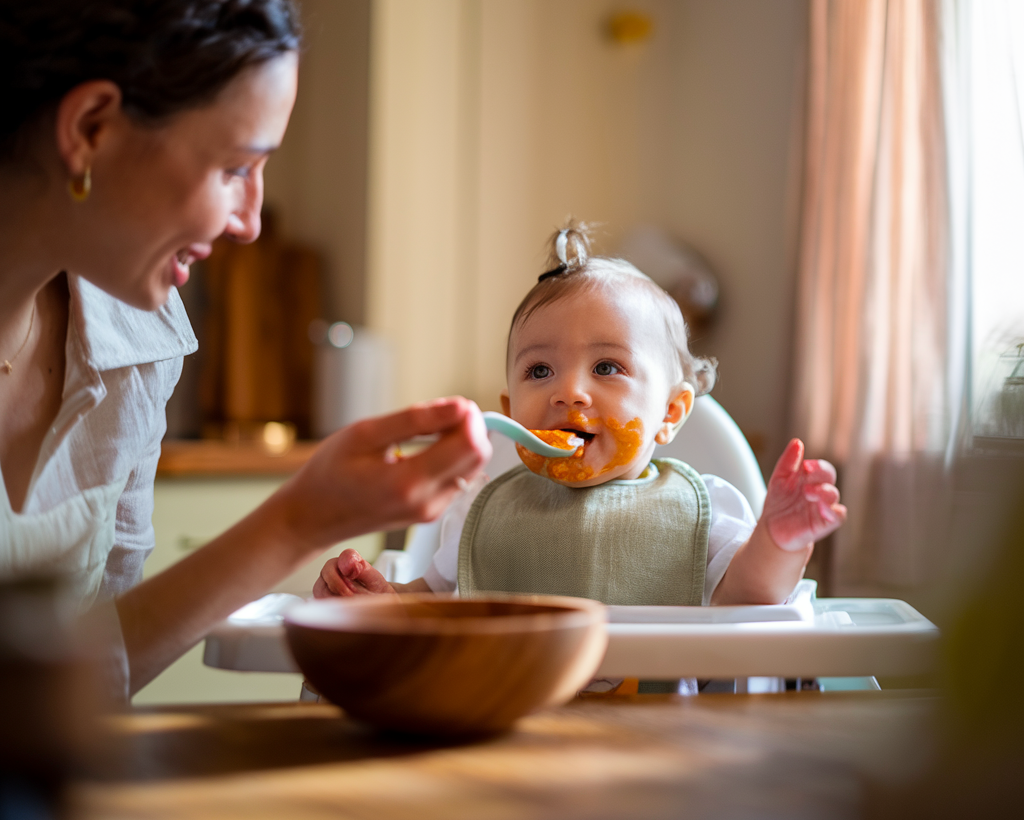
Getting the timing right for starting solid foods matters more than many parents realise. Too early (before 4 months) is associated with increased allergy risk, digestive problems, and choking hazard. Too late (beyond 7 months) means missing a critical window for iron intake. The developmental signs below — not calendar age alone — are your most reliable guide.
🥦 Is My Baby Ready for Solid Foods?
Answer these questions to check whether your baby is showing the key developmental signs of readiness.
The Three Signs That Actually Matter
Age alone is not a sufficient guide. Current WHO, NHS, and AAP guidance identifies three developmental signs that should all be present before introducing solid foods. Sitting with minimal support — the baby must be upright enough to swallow safely; this requires adequate head and trunk control and is essential for managing new textures. Loss of the tongue-thrust reflex — the automatic reflex that pushes anything foreign out of the mouth fades as the digestive system matures. Without this, food is literally pushed back out regardless of how ready the baby seems on other measures. Interest in food — watching adults eat intently, reaching toward food, opening the mouth when food approaches. This isn’t just curiosity; it reflects neurological readiness to engage with the eating process.
Why the 6-Month Target Exists
The WHO recommendation of exclusive breastfeeding to 6 months with solid introduction at 6 months is based on three converging evidence streams: iron stores from birth begin depleting at approximately 6 months and breast milk provides insufficient iron to meet the accelerating growth demand; the gut microbiome and digestive enzyme production reach a developmental threshold around 6 months that supports broader food processing; and the three developmental readiness signs above typically emerge together at approximately this age. Earlier introduction is not automatically harmful in a healthy full-term baby showing all three signs from around 17 weeks — but before 17 weeks has documented risks regardless of other factors.
First Foods: The Priority List
- Iron-rich foods first — the primary nutritional gap at 6 months: fortified baby oat cereal, red meat purée, lentil purée, chicken, spinach and broccoli
- Single-ingredient foods for the first 1–2 weeks to identify reactions clearly
- Allergens early: peanut, egg, tree nuts, fish, dairy, wheat, soy — current evidence strongly supports early introduction to reduce lifelong allergy risk
- Vegetables before fruit where possible — establishes vegetable acceptance before a strong sweetness preference develops
- Breast milk or formula stays as the primary nutrition for the whole first year — solids are complementary, not a replacement
Frequently Asked Questions
My baby is 5 months and seems hungry all the time — should I start solids?
Increased hunger at 4–5 months is almost always a growth spurt or developmental leap, not a signal that milk feeding is insufficient. Increasing feeding frequency to match demand is the appropriate response at this age. Solid foods at 5 months don’t satisfy a hungry young baby more effectively than milk — calorie for calorie, milk is superior. The readiness signs, not hunger behaviour, are your guide.
Can I start baby-led weaning straight away, or do I need to start with purées?
BLW can begin at 6 months when all readiness signs are present. The food must be soft enough to squash between your fingers, cut to finger-sized pieces, and you must be present and watching at all times. The gag reflex is active and protective — gagging is normal and expected; choking is different and requires intervention. A paediatric first aid course before starting solids is strongly recommended.
My baby is 7.5 months and shows no interest in food — is that a problem?
Some babies are genuinely later to show food interest than others — normal variation extends to about 8 months. If there’s still no interest at 8 months, discuss with your health visitor. Occasional delayed weaning interest can reflect sensory processing differences or oral motor difficulties that benefit from early occupational therapy support.
Medical disclaimer: This tool is for informational purposes only and does not replace medical advice. Always consult your OB, pediatrician, or healthcare provider with any concerns about your baby’s health or development.
Related Reading
- 5 month old baby: ready for solid foods? Signs to look for
- 6 month old baby: starting solids — a complete first-foods guide
- Solid food introduction chart: first foods by age
Found this helpful? Sign up to the LylyMama newsletter — honest, evidence-based guidance for every stage of pregnancy and parenting.