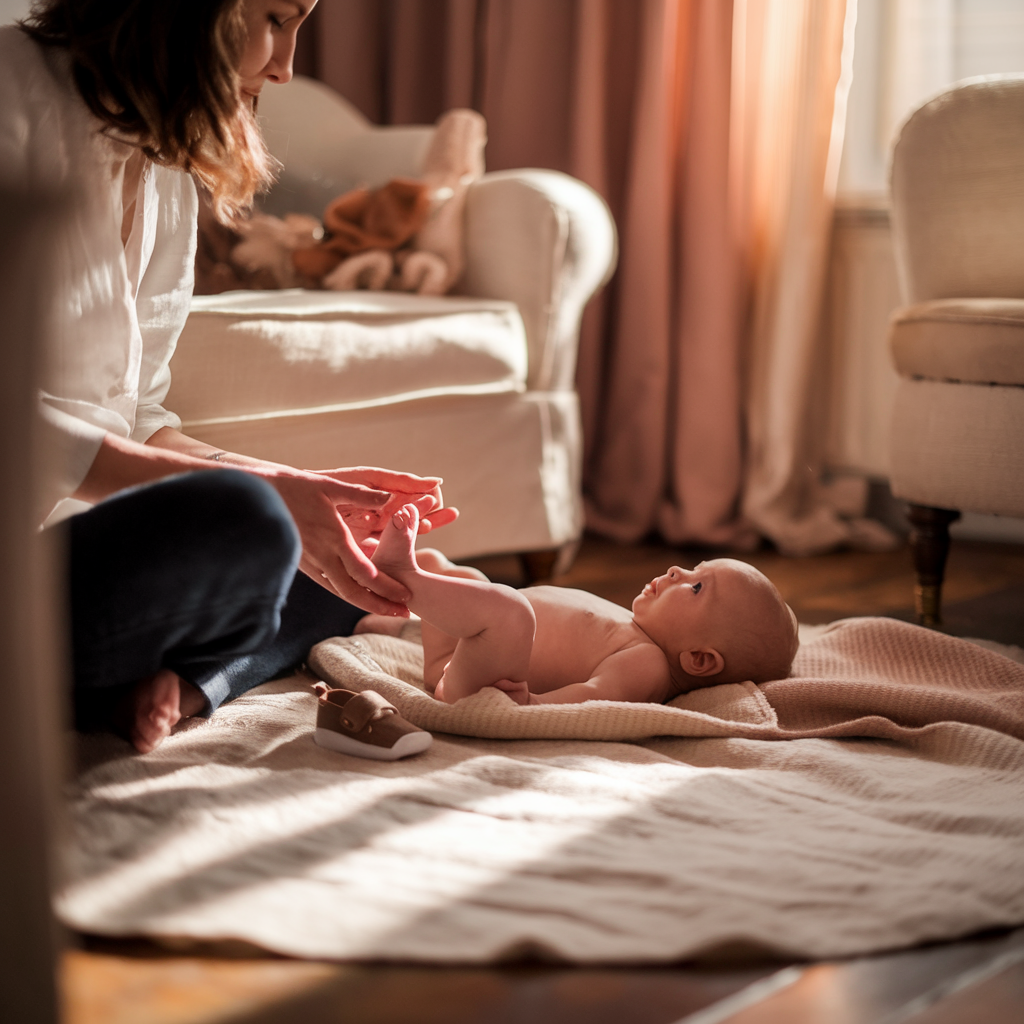
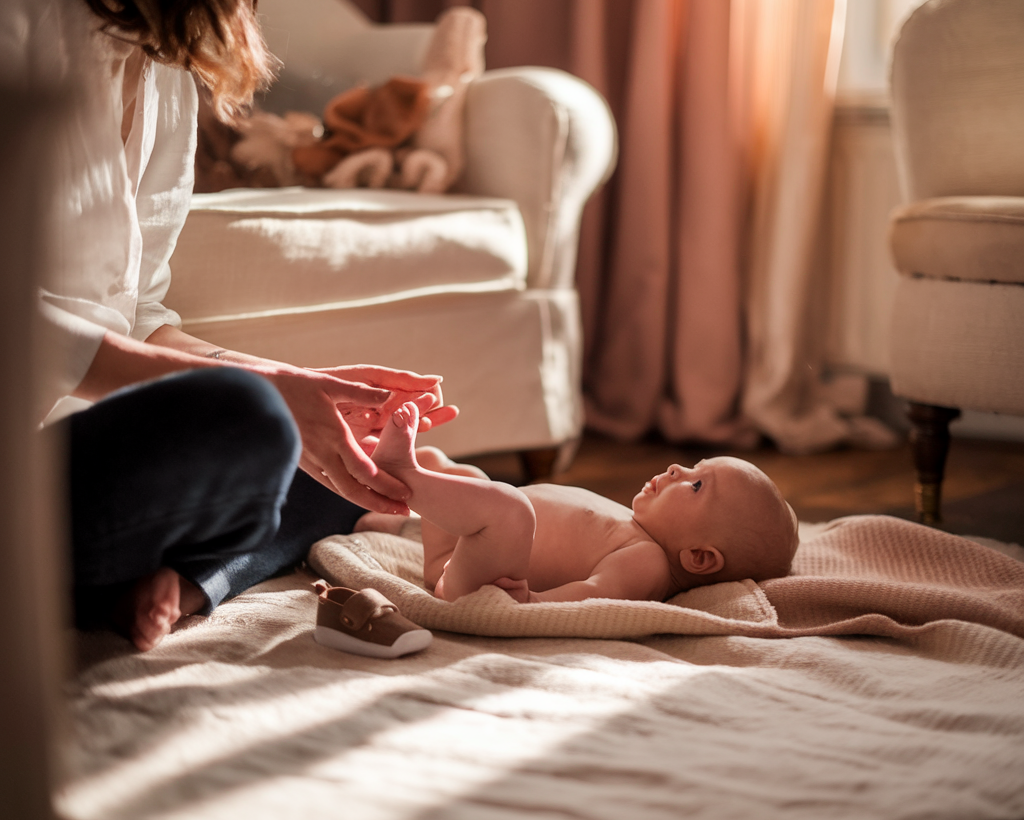
Quick answer: No — shoes are not needed before walking outdoors. Bare feet or non-slip socks are best for development indoors. Shoes are for outdoor protection. When first shoes are needed, they must be flexible, lightweight, and properly fitted.
Why bare feet support development
The foot contains 26 bones, 33 joints, and over 100 muscles, tendons, and ligaments — it’s a complex sensory and mechanical structure that is actively developing throughout early childhood. The sole has a very high density of sensory nerve endings that send proprioceptive information to the brain about surface, position, and balance. This sensory feedback drives balance development, gait pattern formation, and motor coordination. Bare feet provide maximum sensory input; hard-soled shoes reduce this substantially. Paediatric podiatry and physiotherapy consensus: bare feet or the most flexible, minimalist footwear possible is best during early walking development.
When shoes become necessary
Shoes are needed for outdoor protection — from sharp objects, cold surfaces, hot pavement, and rough terrain. They are not needed indoors on carpet or smooth surfaces. First shoes are needed when the child walks outdoors regularly — typically 1–3 months after first independent steps, around 12–15 months. Pre-walkers (babies who can’t yet walk) may wear very soft-soled shoes for warmth — these must be genuinely flexible, not rigid-soled.
What makes a good first shoe
Flexibility: the shoe must bend easily in the forefoot area — resist it with your hands and it should flex without force. Lightweight: heavy shoes change gait and tire young walkers. Thin sole: provides some ground feel. Natural toe box shape: widest at the toes, not tapered. Correct fit: 1–1.5cm of space beyond the longest toe; no width compression. Getting properly fitted by a trained shoe fitter (Clarks, Startrite, independent children’s shoe shops) is worth the effort — children’s feet change shape and size every 6–8 weeks in the first years, and correct width fitting in particular requires expertise.
Common mistakes to avoid
Buying too big ‘to last longer’: causes tripping, altered gait, and reduced proprioceptive accuracy. Keeping shoes on indoors: unnecessary — remove shoes at home wherever practical. Buying rigid cushioned shoes: impede natural gait development. Buying shoes without a proper fitting: width is as important as length and varies enormously between children.
The UK shoe fitting system explained
UK children’s shoe sizes measure both length and width — the width fitting (A through H, with E as standard, F as wide, and H as extra-wide) is as important as the length and varies significantly between children. A child who is a standard length size 3 might need a 3E or 3F — wearing a 3 standard-width shoe with a wide foot produces pressure on the outer toes and affects gait development. The Clarks fit guide (available in-store and online) provides the most accessible trained fitting service in the UK at no cost. Shoe sizes change every 6–8 weeks in the first two years — check fit at every seasonal footwear purchase at minimum, and whenever the child mentions discomfort or you notice wear patterns on the sole.
Frequently Asked Questions
My 8-month-old is starting to pull to stand — should I get shoes now?
No — at 8 months, bare feet or non-slip socks are optimal. Shoes don’t help babies pull to stand, cruise, or walk earlier or better. The sensory feedback from bare feet on different surfaces is actually beneficial for balance development at this stage.
Are soft pre-walker shoes okay?
Soft, genuinely flexible pre-walker shoes (fabric with a minimal flexible sole) are fine for occasions when some foot protection is needed. Avoid any pre-walker with a hard or rigid sole — it provides no developmental benefit and some detriment.
When should I take my child for their first shoe fitting?
When they are walking confidently enough outdoors regularly — typically 1–3 months after first independent steps. In the UK, Clarks offers free trained fittings; so do many independent children’s shoe shops. The fit should be checked every 6–8 weeks.
Related Reading
- 10 month old baby: cruising furniture and almost walking
- Baby’s first steps: what to expect and how to encourage walking
- 1 month old baby: milestones, sleep & feeding guide
Found this helpful? Sign up to the LylyMama newsletter — evidence-based answers to the questions every new parent actually has.