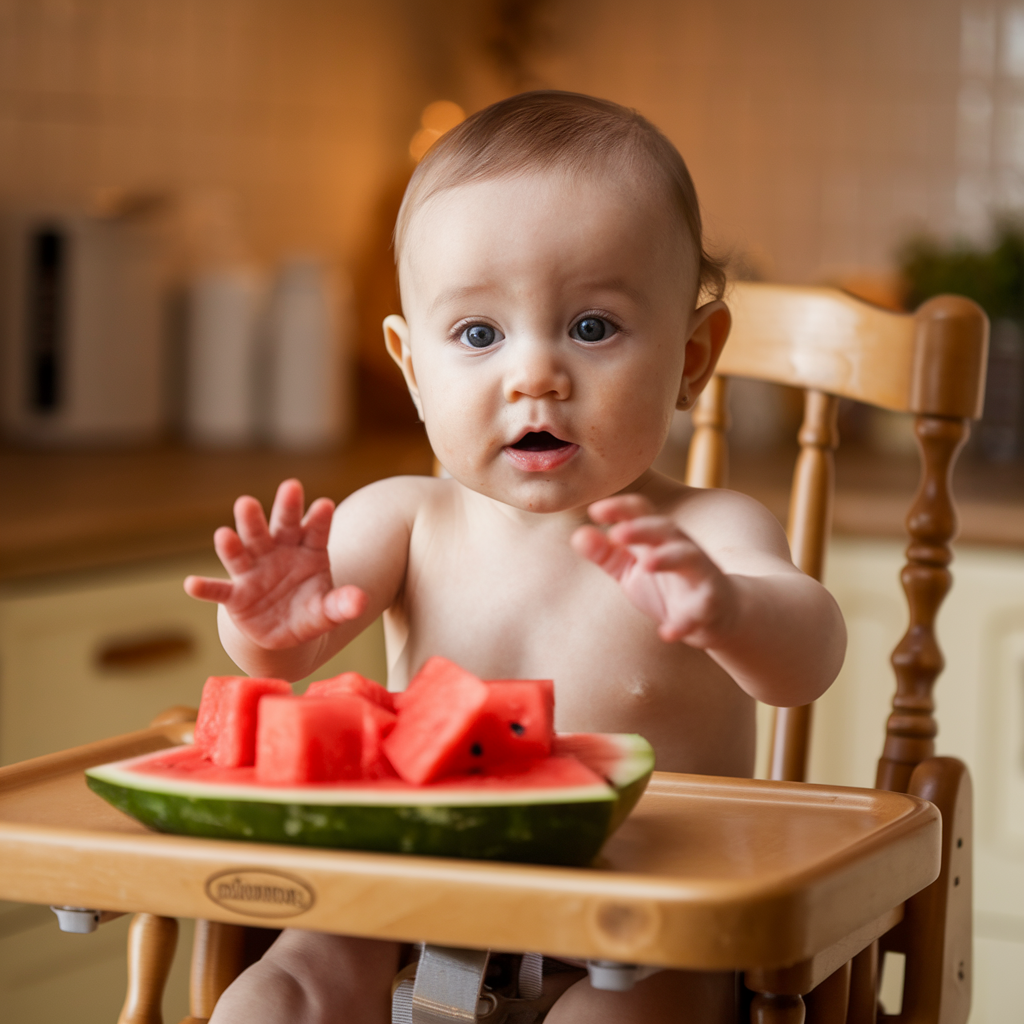
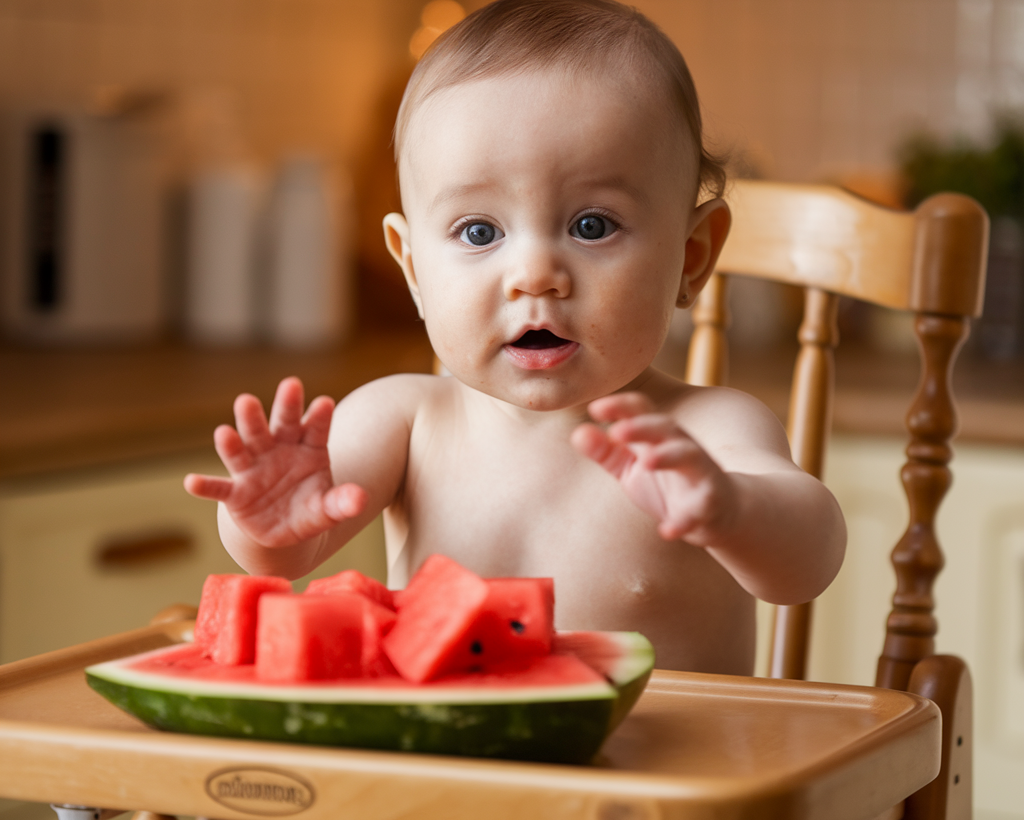
Quick answer: Yes — from 6 months, watermelon is a safe and nutritious first food. Remove seeds and rind, offer as soft finger-food pieces or mashed purée. The 92% water content makes it excellent for hydration alongside solid food introduction.
Nutritional value and why it works as a first food
Watermelon is 92% water, making it excellent for hydration at a stage when babies are transitioning from all-liquid to mixed feeding. It contains vitamins A and C, small amounts of potassium, and lycopene (the antioxidant red pigment). Calorie density is low — watermelon is not a significant calorie source — but at 6 months, the goal of solid foods is nutritional variety and allergen introduction rather than caloric replacement of milk. The soft texture at room temperature makes it suitable for gumming without teeth. Chilled watermelon also provides mild teething relief.
Preparation for different ages
6–8 months (BLW or finger food): cut into finger-length spears or thick wedges with the rind removed — the shape allows the baby to hold and gum without the rind creating a hard edge they could bite off. Remove all seeds. The flesh should be soft enough to squash between your fingers. 6–8 months (purée/mash): simply mash or blend — the high water content means it produces a smooth purée easily. 9–12 months: smaller pieces, cubes approximately 1–1.5cm. 12 months+: small bite-sized pieces, eaten independently. Remove seeds at all ages — while small, they are a choking risk in quantity and should be removed as a habit.
Allergy considerations
Watermelon is not one of the top 9 allergens (milk, egg, peanut, tree nuts, wheat, soy, fish, shellfish, sesame). True watermelon allergy exists but is uncommon — it often presents as oral allergy syndrome (mild tingling or itching in the mouth) in people with grass pollen allergy. First introduction: offer a small amount, observe for 20–30 minutes. A red rash around the mouth from watermelon is common and is usually a contact skin reaction from the juice acidity, not a true allergic response. This clears quickly and is not a reason to avoid watermelon.
Practical notes
The high water content means watermelon produces very liquid stools — expect loose, reddish-tinted stools after eating watermelon. This can look alarming but is normal. Watermelon is messy — the juice runs. A bib, a mat under the high chair, and a bath nearby are useful. It doesn’t store well once cut — offer fresh and discard leftovers after 24 hours in the fridge.
Frequently Asked Questions
Can babies eat watermelon seeds?
Small white seeds in small quantities are generally safe — they pass through the digestive system. However, they are a mild choking risk and removing them is good practice. Black seeds from seeded varieties should always be removed before offering to babies under 2.
My baby’s poo turned red after eating watermelon — is that normal?
Yes — watermelon’s red colour (from lycopene) passes through the digestive tract and can produce pink or reddish stools. This is harmless and temporary. Distinguish from blood in stool, which is typically mixed through the stool and accompanied by other symptoms — watermelon-coloured stool is distinctly red and appears on the surface of a normal-consistency stool.
Is watermelon juice safe for babies?
Not recommended under 12 months — juice of any kind, including fresh watermelon juice, provides sugar without the fibre of the whole fruit and is not recommended for babies under 12 months. Offer the whole fruit instead.
Related Reading
- Baby-led weaning vs purees: which approach is right for your family
- 6 month old baby: starting solids – a complete first-foods guide
Found this helpful? Sign up to the LylyMama newsletter — evidence-based answers to the questions every new parent actually has.