
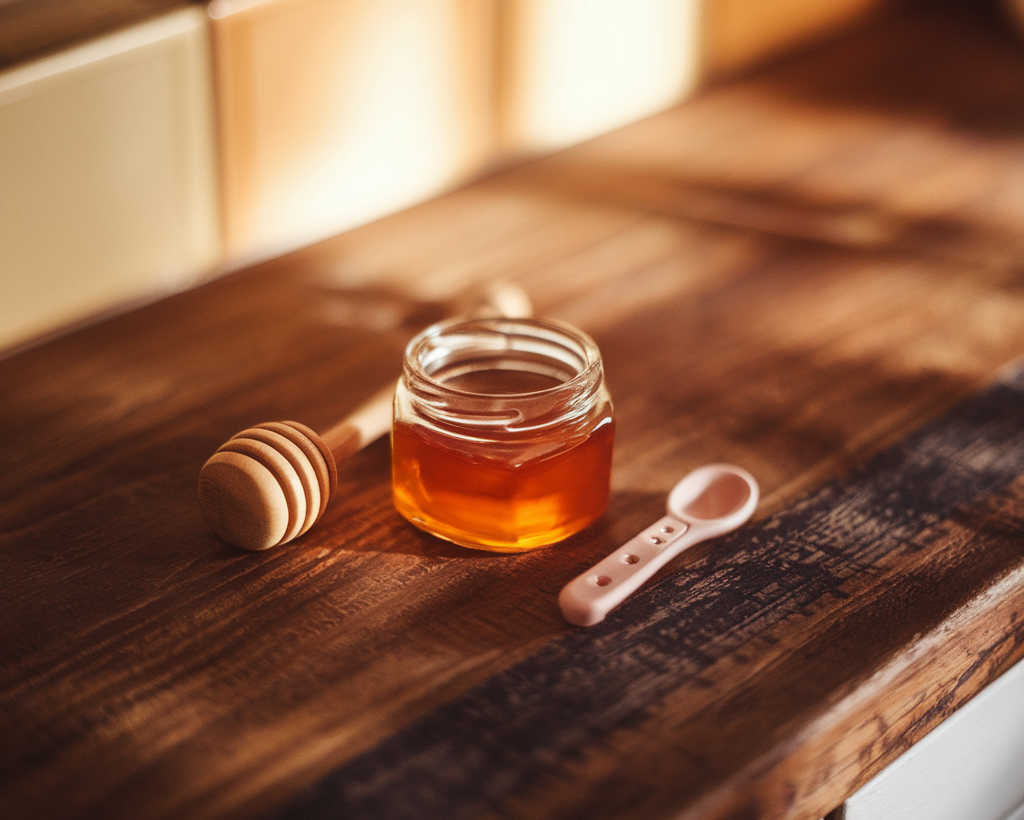
Quick answer: No — not under 12 months, in any form. Honey can contain Clostridium botulinum spores that produce botulism toxin in the infant gut. Adult digestive systems can handle these spores safely; the immature infant gut cannot. From 12 months onward, honey is safe.
The botulism mechanism
Clostridium botulinum bacteria produce one of the most potent toxins known — botulinum toxin blocks neuromuscular transmission, causing the descending paralysis characteristic of botulism. The spores of C. botulinum are present in soil and can contaminate honey during production — no manufacturing process eliminates them reliably. In adults and children over 12 months, the gut microbiome and digestive acid environment prevent the spores from germinating and producing toxin. In babies under 12 months, the gut microbiome is still establishing and the acidic environment is less hostile — spores can germinate and produce toxin directly in the intestinal tract. This is infant botulism: the most common form of botulism in the UK and US.
Signs of infant botulism
Infant botulism typically presents in babies aged 2 weeks to 12 months. Initial signs: constipation (often the first symptom), followed by a weak cry, reduced facial expression, difficulty feeding and swallowing, weakened muscle tone (‘floppy baby’), and descending paralysis. The classic presentation is a previously well baby who develops progressive weakness. Infant botulism is rare but potentially fatal and requires intensive care treatment (botulism antitoxin in the US; supportive care with respiratory support in the UK). If your baby develops sudden floppiness, difficulty feeding, or a weak cry — seek emergency medical attention.
What counts as honey to avoid
All honey: raw, pasteurised, organic, manuka, local, commercial. All honey products: honey-flavoured cereal bars, baked goods containing honey, cereals sweetened with honey. The spores are heat-stable and survive baking. Herbal teas can contain honey — check labels. The ‘no honey under 12 months’ rule applies to all honey in any form.
What’s safe as a sweetener under 12 months
Sugar (sucrose) is safe from 6 months but not recommended as a regular addition to food — there’s no nutritional purpose, and early sweet-taste preference formation affects later eating patterns. Natural sugars in whole fruit and vegetables are fine from 6 months. The primary guidance is: no added sugars (of any kind) in infant food, not specifically because they’re harmful in tiny amounts, but because there’s no benefit and introducing sweet tastes early shapes food preferences.
Frequently Asked Questions
What about honey in formula or baby foods?
Commercially produced infant formulas and baby foods sold in the UK and EU cannot legally contain honey — they are required to meet standards that prohibit this ingredient for infant products. Check the ingredients list of any non-infant-specific food before offering it. Toddler cereals and snacks sometimes contain honey and are not appropriate under 12 months.
Is manuka honey safer than regular honey?
No — manuka honey has higher antibacterial activity due to its methylglyoxal content, but this does not eliminate botulinum spores. All honey, regardless of type or processing, carries the same risk for babies under 12 months.
My baby accidentally ate a tiny bit of honey — what should I watch for?
Infant botulism from a tiny accidental amount is rare, but monitor for: unusual constipation, weak cry, reduced facial expression, difficulty feeding, or reduced muscle tone in the following 1–2 weeks. If any of these symptoms develop, seek medical attention and mention the honey exposure.
Related Reading
- Baby-led weaning recipes: 20 finger foods for 6-9 months
- 12 month old baby: first birthday milestones & 1-year check-up
Found this helpful? Sign up to the LylyMama newsletter — evidence-based answers to the questions every new parent actually has.