Breast milk storage is straightforward if you know the rules. This guide covers safe storage guidelines and the best options at each price point.
How to store breast milk safely
Storage guidelines — room temperature (up to 25°C): 4 hours. Refrigerator (4°C): 4 days. Freezer: 6 months best quality. Bags vs containers — bags are single-use but space-efficient in the freezer (lay flat to freeze, stack vertically). Hard containers are reusable and better for fridge storage. Label with date and time. Leave 10% space for expansion when freezing.
Budget: Lansinoh Breastmilk Storage Bags — ~£8 for 25 bags
BPA-free, double-sealed, pre-sterilised, with write-on label area. Standing bottom allows filling without a stand. At approximately 32p per bag not the cheapest but the quality justifies it — leaks are rare, seals are reliable, volume markings accurate. Compatible with most Lansinoh pump connectors for direct pumping.
Pros: Reliable seal, pre-sterilised, BPA-free, standing base, pump-compatible, widely available
Cons: Single-use (ongoing cost)
Best for: Most breastfeeding families — the standard recommendation for breast milk storage bags
Mid-range: Medela Breast Milk Storage Bags — ~£9 for 25 bags
Compatible with Medela pump connectors — pump directly into bag without transferring. Same quality seals and BPA-free construction as Lansinoh. The direct-pump compatibility reduces one handling step and one opportunity for contamination. For Medela pump users specifically, these are the sensible choice.
Pros: Direct pump compatibility (Medela), reliable quality
Cons: More expensive per bag, less universally compatible with other brands
Best for: Medela pump users — the direct compatibility reduces handling
Reusable: Junobie Silicone Breast Milk Storage Bags — ~£25 for 6 bags
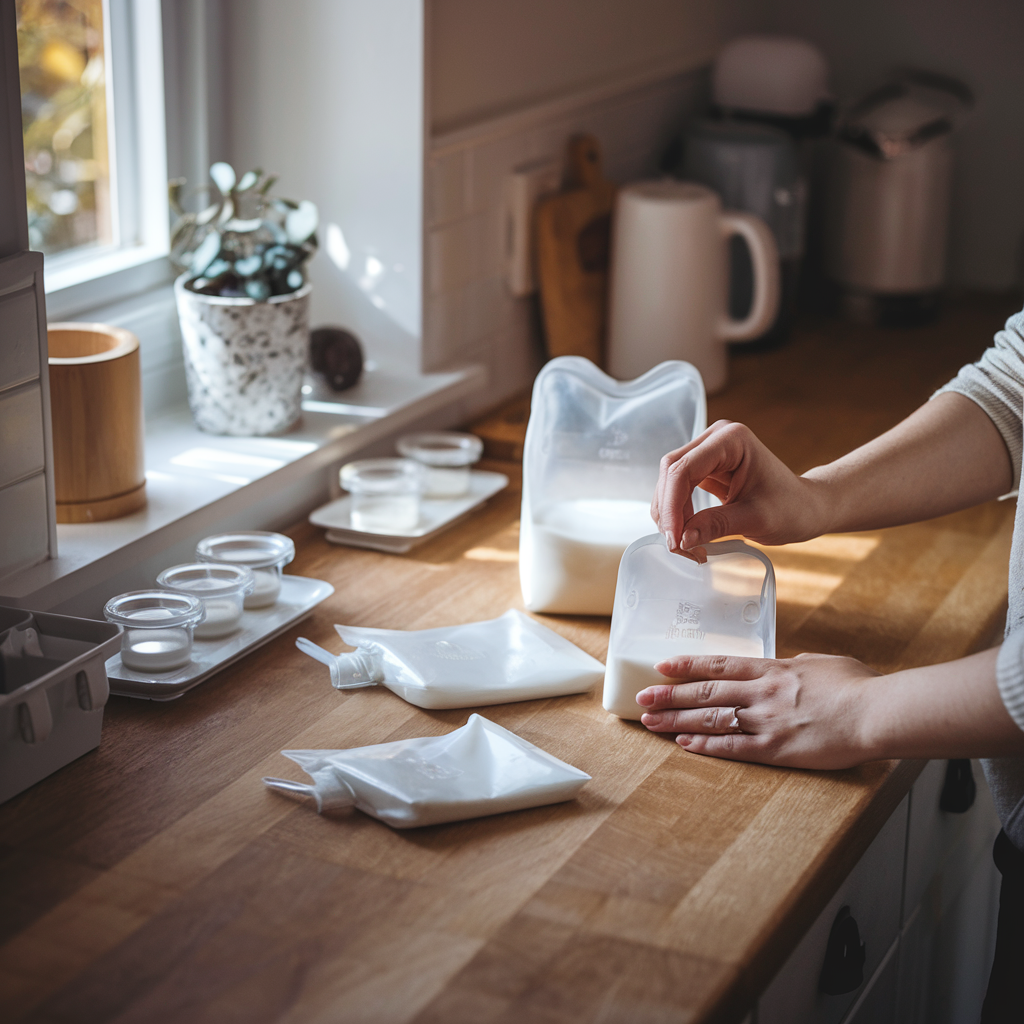
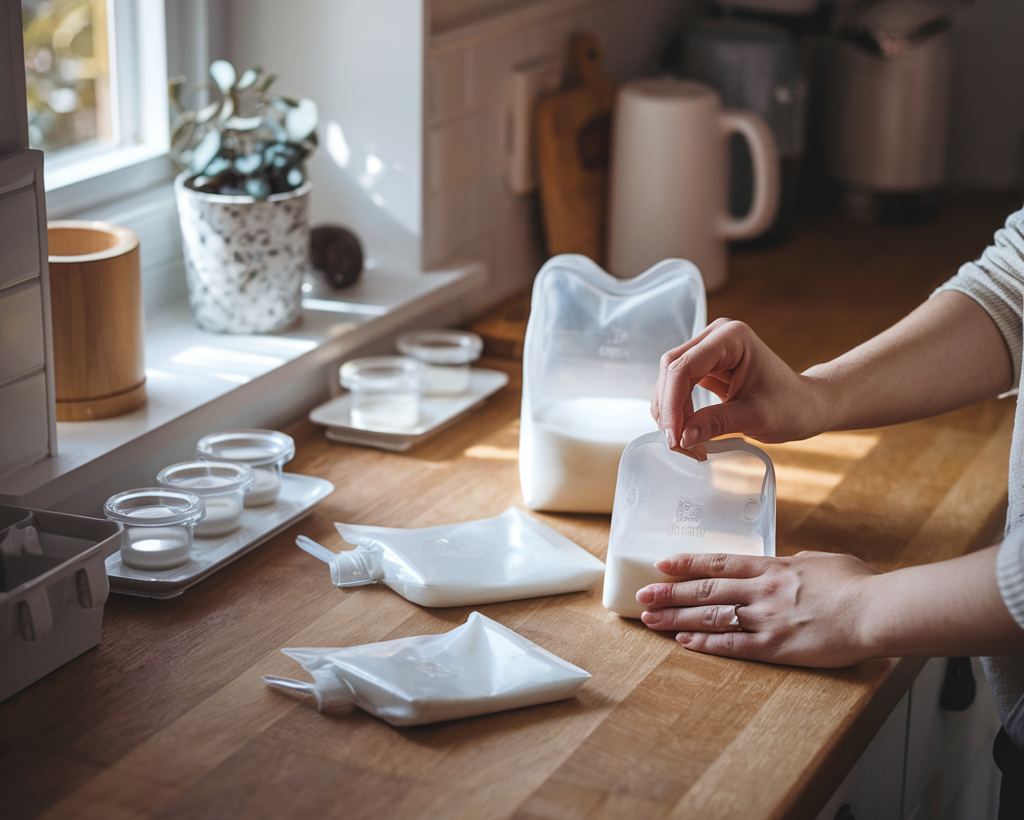
Reusable silicone bags — sterilisable and reusable, significantly reducing plastic waste and long-term cost for high-volume expressers. Dishwasher safe. Breaks even after approximately 30 uses vs single-use bags. Main limitation: silicone bags don’t flatten for compact freezer storage the way disposable bags do.
Pros: Reusable, dishwasher safe, durable silicone, good environmental option
Cons: Higher upfront cost, less compact in freezer, more washing required
Best for: Environmentally conscious families or high-volume expressers where long-term cost saving justifies upfront investment
Bags vs containers: which to choose
Storage labels are the single most important operational habit: always write the date expressed and volume on the bag before freezing. Use oldest milk first from the freezer. Leave 10% headspace in any bag before sealing — breast milk expands when frozen. For high-volume expressing (exclusive pumping, return to work), evaluate the per-bag cost over the full expressing period: 6 months of 3 daily sessions at 36p per bag is approximately £200 — reusable alternatives become economical after approximately 30 uses.
Frequently Asked Questions
Can I combine milk from different pumping sessions?
Yes — add freshly pumped milk to chilled milk in the fridge, as long as fresh milk is chilled first before combining. The combined milk’s clock runs from the oldest batch.
How do I thaw frozen breast milk safely?
Thaw in the fridge overnight or in a bowl of warm water. Never thaw in a microwave. Once thawed, use within 24 hours and don’t refreeze.
How do I warm stored breast milk safely?
From fridge: stand the bag or bottle in a jug of warm (not boiling) water for 10–15 minutes, or use a dedicated bottle warmer on the breast milk setting. From frozen: thaw overnight in the fridge (best) or in warm water (30–45 minutes). Never use a microwave — hot spots can burn the baby’s mouth and degrade some immune proteins. Test temperature on your inner wrist before feeding. Once warmed, use within 1 hour; do not rewarm.
Related Reading
- Pumping breast milk: how to build and maintain supply
- Breastfeeding in the first week: latch, supply and sanity tips
Disclosure: This post contains affiliate links. If you buy through our links we may earn a small commission at no extra cost to you. We research products independently and are never paid to recommend specific items.
Found this helpful? Sign up to the LylyMama newsletter for honest, researched guides on everything you need in pregnancy and early parenthood.
Lansinoh bags’ double seal — both the top zipper and a secondary seal below — makes leakage genuinely rare. The pre-sterilised packaging means bags can be used directly from the box without additional sterilisation. Standing base allows filling without a third hand to hold the bag upright. Compatible with Lansinoh pump connectors for direct pumping.
The Medela bag connector directly accepts Medela pump connectors — pump straight into the bag without transferring to a bottle first. Each transfer step is a contamination opportunity and adds time: eliminating it has real practical value for regular expressing. The bags are thicker than some alternatives and have reliable seals.
Silicone bags sterilise in the dishwasher top rack or by boiling — no ongoing consumable cost after initial purchase. Break-even against Lansinoh bags at approximately 30 uses per bag. Main practical limitation: silicone bags don’t flatten completely when frozen, taking more freezer space per volume stored than disposable bags. Available in multiple colours for date-coding without labels.