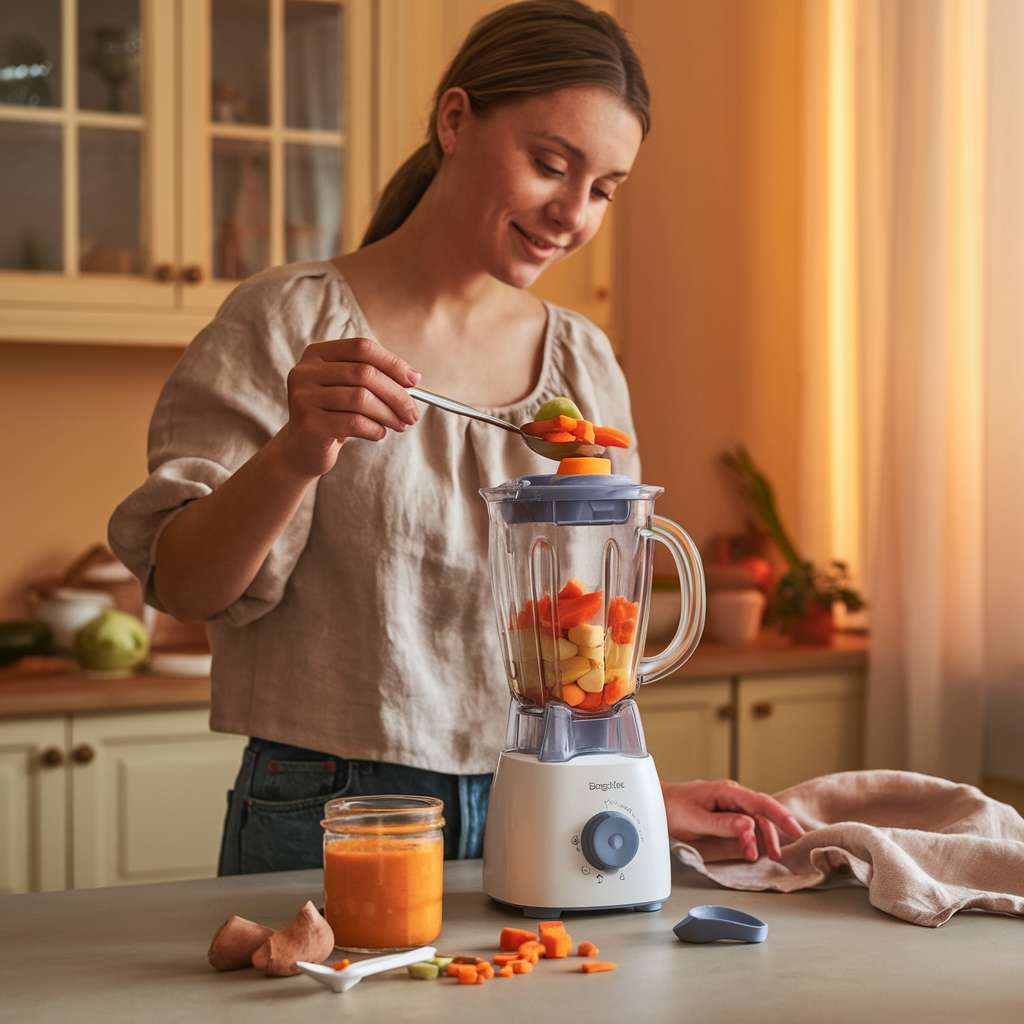
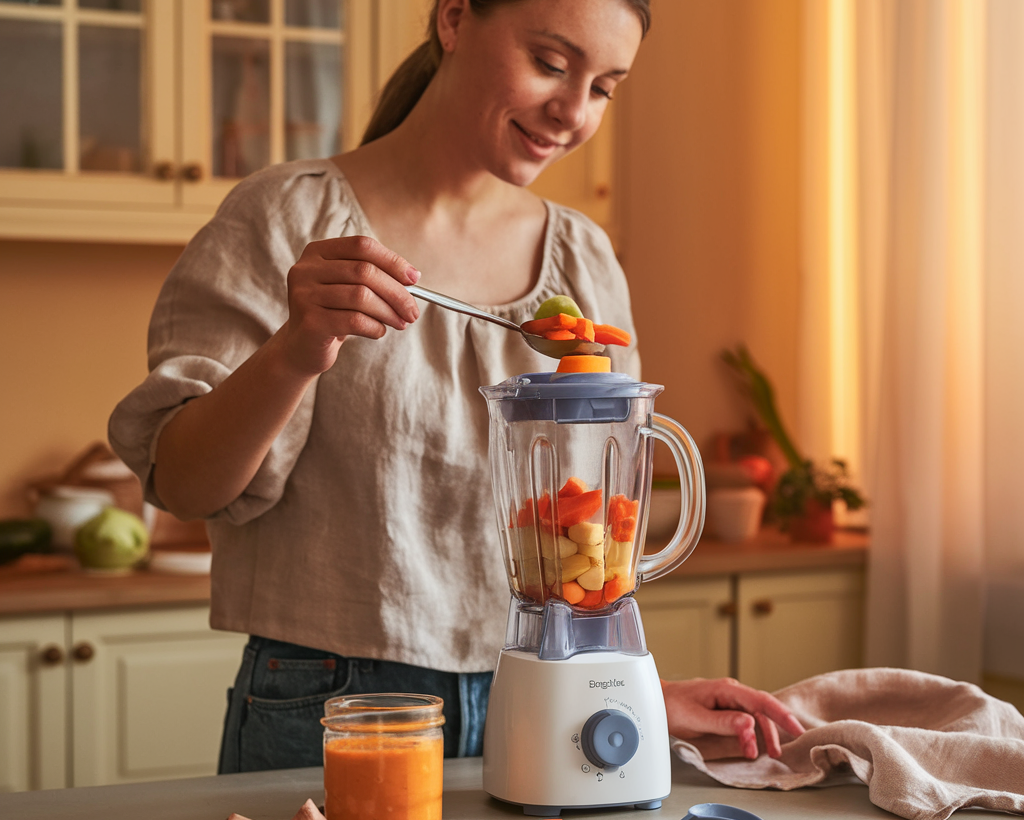
Baby food makers and blenders are useful from 6 months when preparing home-made purées and mashed foods. Whether you need a dedicated baby food maker or a regular blender depends on how much cooking you do and your kitchen setup.
Do you actually need a baby food maker
Power — baby food often needs finer processing than adult food; high-powered blenders produce smoother results. Steam-cook function — some makers steam then blend in one unit, reducing vitamin loss and washing up. Capacity — consider how much you want to batch cook. Ease of cleaning — all parts should be dishwasher safe.
Budget: Nutribullet Baby Complete Food-Making System — ~£65
A dedicated baby food blender with the high torque of the original Nutribullet adapted for smaller portions. Multiple cup sizes for individual portions through larger batches. All parts dishwasher safe. Does not steam — you cook the food separately then blend. For parents who already cook or steam food, blending performance at this price is excellent.
Pros: High-power blending, multiple cup sizes, dishwasher safe, compact, very smooth results
Cons: No steam function, food must be cooked separately
Best for: Parents who want excellent blending performance without the all-in-one premium
Mid-range: Beaba Babycook Solo — ~£120
Steams and blends in one unit — vegetables go in, steam for 15 minutes, blend in the same container with no washing up between stages. 500ml capacity makes approximately 4 portions per cycle. The standard recommendation in this category for years, consistently earned.
Pros: Steam and blend in one unit, minimal washing up, fast cooking, good capacity
Cons: £120 significant if you rarely batch cook, capacity limited for large batches
Best for: Parents committed to home-cooked baby food who want a streamlined all-in-one solution
Alternative approach: Vitamix Immersion Blender — ~£300–400
Not a dedicated baby product — an adult-quality immersion blender that produces consistently smoother results than any dedicated baby food maker and serves the household for years beyond weaning. For parents who cook regularly and want one appliance rather than a dedicated baby blender, this is the practical choice.
Pros: Professional quality results, serves household permanently, better than any dedicated baby blender
Cons: Very expensive for a blender, overkill if used only for weaning
Best for: Parents who cook regularly and want a long-term kitchen investment rather than a single-purpose baby appliance
How to choose based on your weaning approach
If you’re planning baby-led weaning (BLW) from the start: you don’t need a baby food maker. BLW uses soft finger foods from family meals without blending — a sharp knife and a steamer are sufficient. If you’re planning traditional weaning with purées: home cooking is cheaper and gives more ingredient control than pouches, and a good blender is the primary tool. Only buy a dedicated baby food maker if the steam-and-blend integration genuinely saves you meaningful time over your existing cooking setup.
Frequently Asked Questions
Is home-made baby food nutritionally better than pouches?
Not necessarily — the difference between well-prepared home-cooked food and quality commercial pouches is modest. The practical advantage of home cooking is more control over ingredients and cost savings.
Can I just use a regular blender?
Yes — a standard blender works fine. Dedicated baby food makers offer convenience (steam + blend together) rather than nutritional superiority.
Is BLW or purée weaning better?
The evidence doesn’t clearly favour either approach for developmental outcomes. BLW encourages self-feeding and exposure to varied textures and family foods from the start; it has some evidence for lower fussiness later. Traditional weaning with purées progressing to lumps gives more control over nutrient density and allergen introduction timing. A combination approach — some purées, some finger foods — is what most families end up doing regardless of initial intention. The most important variables are: starting at approximately 6 months, including iron-rich foods from the start, introducing the top allergens early.
Related Reading
- First baby purees: 15 easy recipes for 4-6 month olds
- 6 month old baby: starting solids – a complete first-foods guide
Disclosure: This post contains affiliate links. If you buy through our links we may earn a small commission at no extra cost to you. We research products independently and are never paid to recommend specific items.
Found this helpful? Sign up to the LylyMama newsletter for honest, researched guides on everything you need in pregnancy and early parenthood.
The Nutribullet’s high-torque motor consistently produces finer purées than the Beaba Babycook’s blending component — relevant for early weaning when smooth texture acceptance matters. Multiple cup sizes from 90ml (single serving) to 600ml (batch cooking) cover the full weaning progression. Does not steam — food must be cooked separately, which adds steps but allows more cooking method flexibility.
Steam and blend in one bowl is the Beaba’s core value proposition — vegetables into the bowl, steam for 15 minutes, blend in the same container, serve or freeze without additional washing up. For parents doing regular home-cook weaning, this genuinely streamlines the process. The 500ml capacity makes approximately 4 portions per cycle, suitable for batch cooking and freezing.
An immersion blender directly in the cooking pot eliminates the transfer step entirely — cook in a pot, blend in the pot, serve. For families who already cook on the hob rather than steaming, this is the most streamlined approach. A Vitamix Immersion produces medical-grade smooth purées beyond what any dedicated baby food maker achieves.