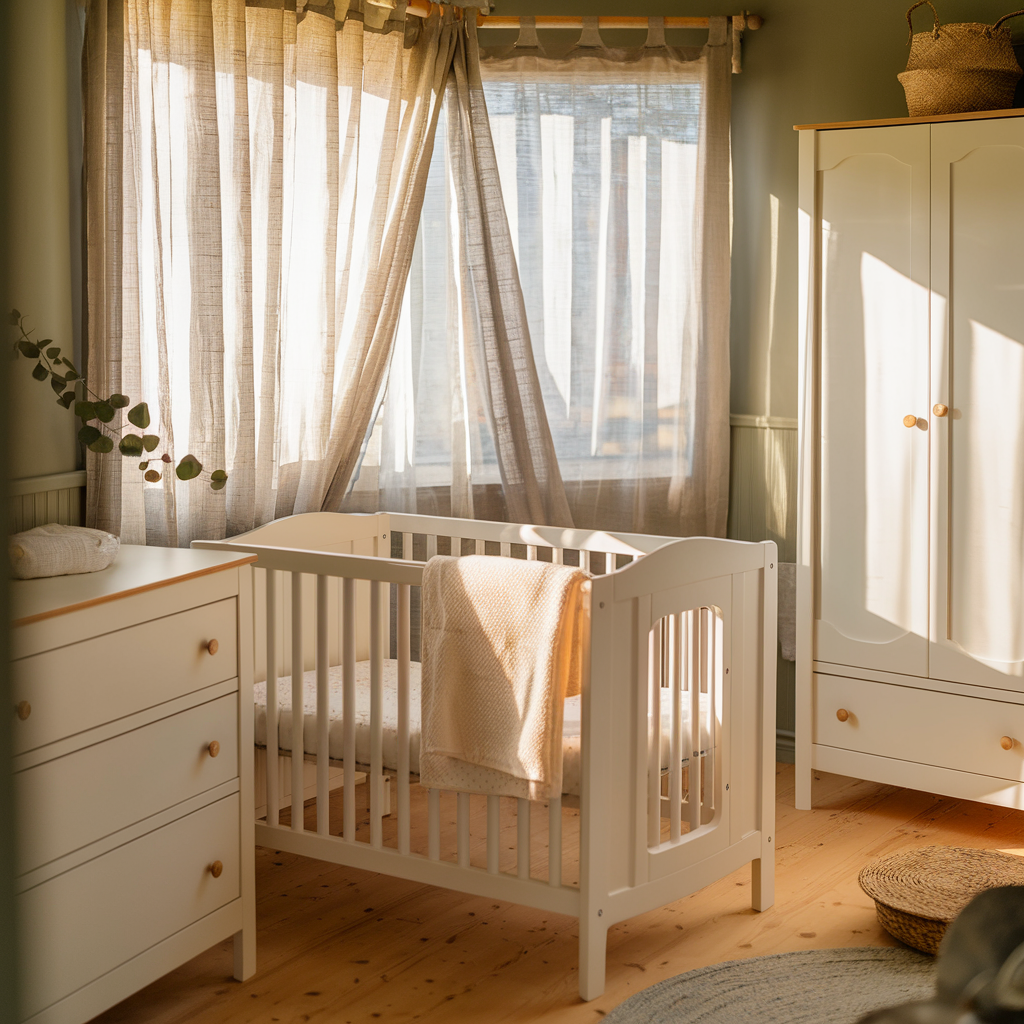
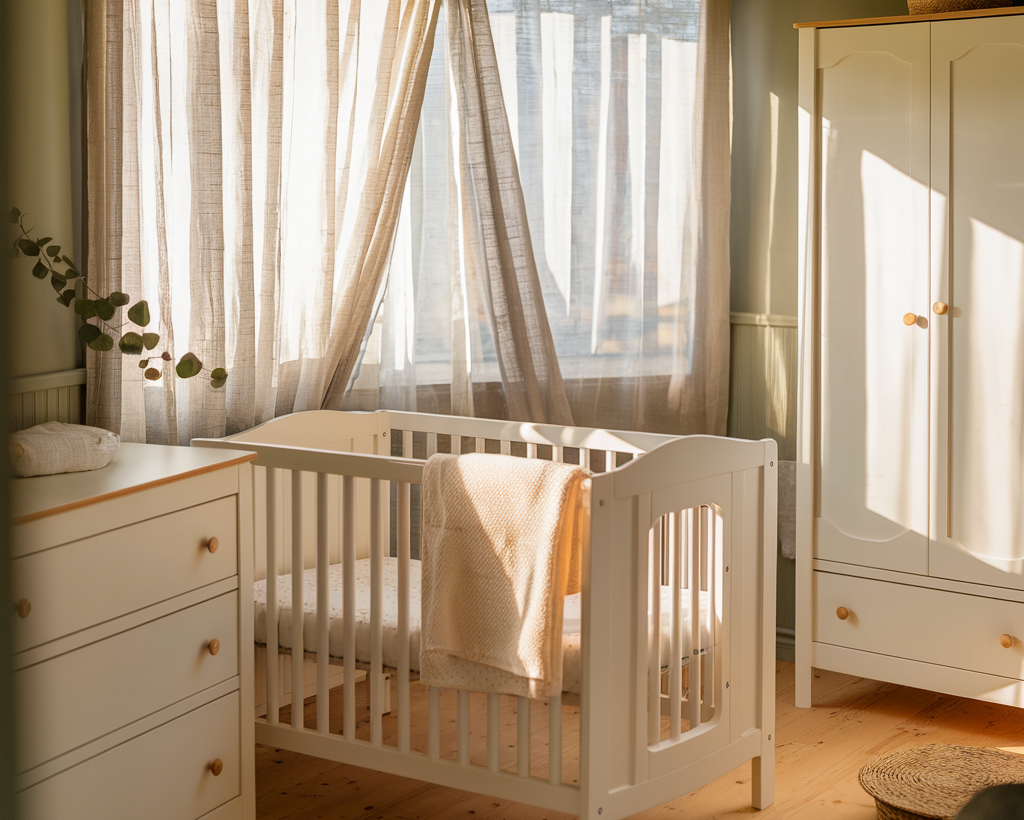
Nursery furniture is a significant purchase both financially and in terms of how long you’ll live with it. The key decisions: quality vs price, whether to buy as a matching set or separately, and what size cot is appropriate for your space and timeline.
What nursery furniture quality actually means
Safety — all cots sold in the UK and EU must meet BS EN 716 standard. Cot bed vs cot — a cot bed converts to a toddler bed (useful to ~4–5 years); standard cots typically work to 2 years. Mattress sold separately — always buy a new mattress. Adjustable mattress height — essential as baby becomes mobile.
Budget set: IKEA Sundvik Cot + Hemnes Dresser — ~£200 combined (+ mattress)
IKEA’s Sundvik cot meets safety standards, has three adjustable mattress positions, and converts to a small toddler bed. The Hemnes dresser (not marketed as nursery) with a changing mat on top creates a changing station at a fraction of dedicated table prices. Both pieces are well-made for their price and available in coordinating finishes.
Pros: Excellent price, safe, converts to toddler bed, Hemnes dresser dual-use, easily sourced
Cons: Assembly required, basic aesthetics, mattress upgrade recommended
Best for: Budget-conscious families who want safe, functional furniture without the nursery furniture premium
Mid-range set: Mamas & Papas Franklin Cot Bed + Dresser — ~£700–900 combined
Solid wood, converts from cot to toddler bed, includes an underbed drawer, and coordinates with a matching dresser with removable changing top. The quality is noticeably better than budget alternatives — the wood feels substantial and the finish holds up to several years of use.
Pros: Solid wood construction, converts to toddler bed, integrated storage, good hardware
Cons: Significant price, requires assembly
Best for: Families investing in furniture that will last through multiple children or years of use
Premium set: Boori Natty Cot Bed + Dresser — ~£1,200–1,500 combined
Sustainably sourced beech or cherry wood throughout — furniture-quality cabinetry, not MDF-with-veneer. The Natty cot converts to toddler bed then junior bed (with kit), extending useful life to approximately 8–10 years. If you’re buying furniture you genuinely want to keep, Boori is the honest choice.
Pros: Genuine solid wood, converts through multiple stages, sustainable sourcing, excellent build quality
Cons: Expensive, Boori conversion kits add ongoing cost, heavier than MDF alternatives
Best for: Families who want furniture quality that lasts through childhood and potentially multiple children
How to invest wisely in baby furniture
Never reuse a second-hand mattress regardless of condition or apparent cleanliness — research links second-hand mattresses to increased SIDS risk and a new mattress is a non-negotiable safety measure. For the cot itself, second-hand is acceptable if you verify the specific model meets current BS EN 716 safety standards and inspect the frame carefully for structural integrity. The mattress investment: a firm, breathable mattress (natural coconut coir or open-cell foam) in the £80–150 range is appropriate — price above this rarely reflects meaningful safety improvement.
Frequently Asked Questions
Should I buy a cot or cot bed?
A cot bed costs more but converts to a toddler bed, extending useful life by 2–3 years. For multiple children, a standard cot used by siblings in sequence may be more economical.
Can I use a second-hand cot?
Yes — check for recalls and structural damage. Never use a second-hand mattress, even within the same family.
What mattress should I buy for the cot?
Firm and flat — the mattress must not compress significantly under the baby’s weight. Breathable materials (natural coir, open-cell foam) are preferable to sealed foam. The mattress must fit the cot exactly — no gap larger than 2.5cm at any edge. NEVER add a mattress topper, pillow, or additional padding. A new mattress (not second-hand) for every baby. The Lullaby Trust has specific mattress guidance and approved products at lullabytrust.org.uk.
Related Reading
- Nursery essentials checklist: what you actually need vs nice-to-haves
- Safe sleep for newborns: the complete ABCs guide
- Best baby monitors: video, audio and smart compared
Disclosure: This post contains affiliate links. If you buy through our links we may earn a small commission at no extra cost to you. We research products independently and are never paid to recommend specific items.
Found this helpful? Sign up to the LylyMama newsletter for honest, researched guides on everything you need in pregnancy and early parenthood.
The Sundvik’s three mattress height positions are essential — lower the mattress before the baby can pull themselves to standing, not after. The cot-to-toddler conversion removes one side rail; the conversion kit is included. The Vyssa mattress range from IKEA meets cot safety standards at accessible price points — buy new even if the cot is second-hand.
The underbed drawer is the most practically useful feature in the mid-range category — storing next-size-up clothing or spare bedding beneath the cot turns otherwise wasted floor space into functional storage in a room where every square metre counts. Solid wood construction means the frame doesn’t creak or flex over years of use.
Boori’s conversion from cot to toddler bed to junior bed (with conversion kits, sold separately) extends useful life to approximately 8–10 years. The solid Australian beech wood construction is furniture quality — it looks and feels like adult furniture, not nursery equipment. Strong second-hand market: a well-maintained Boori Natty holds significant resale value.