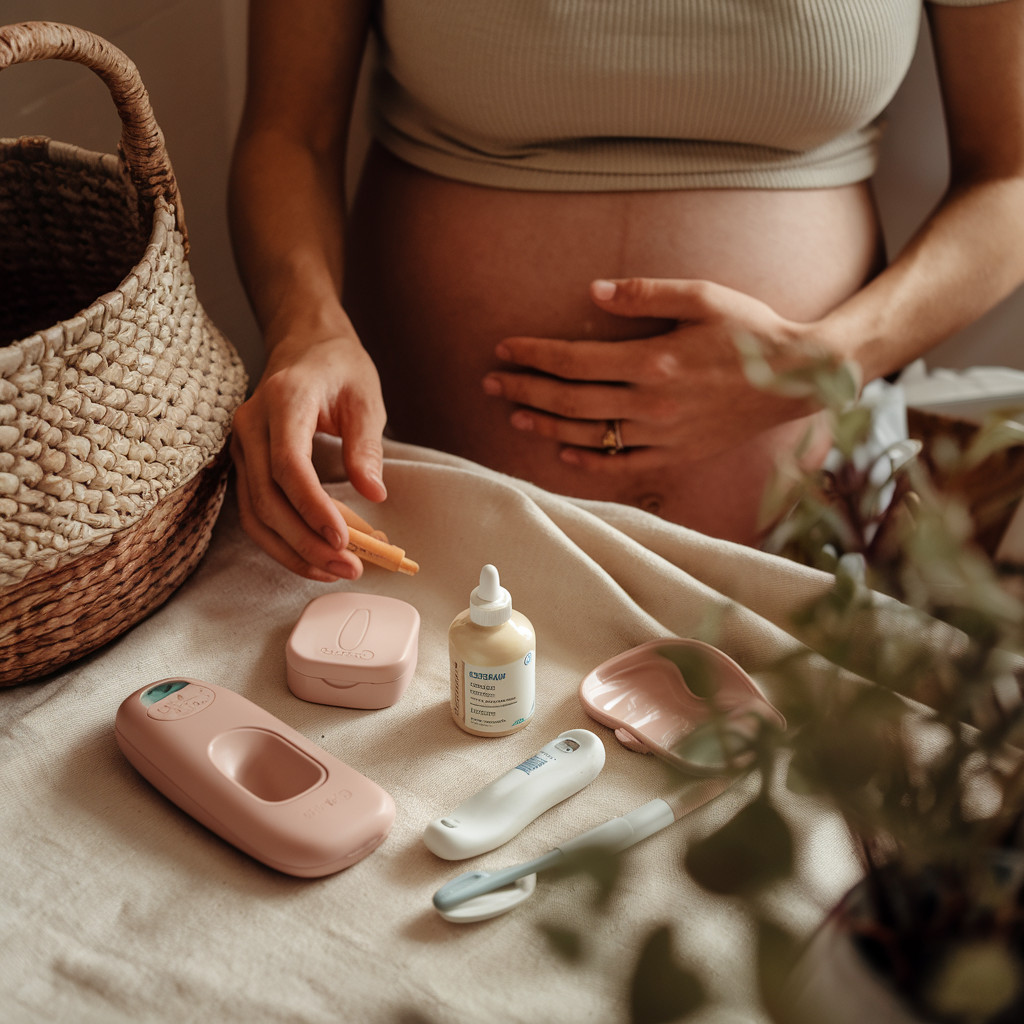
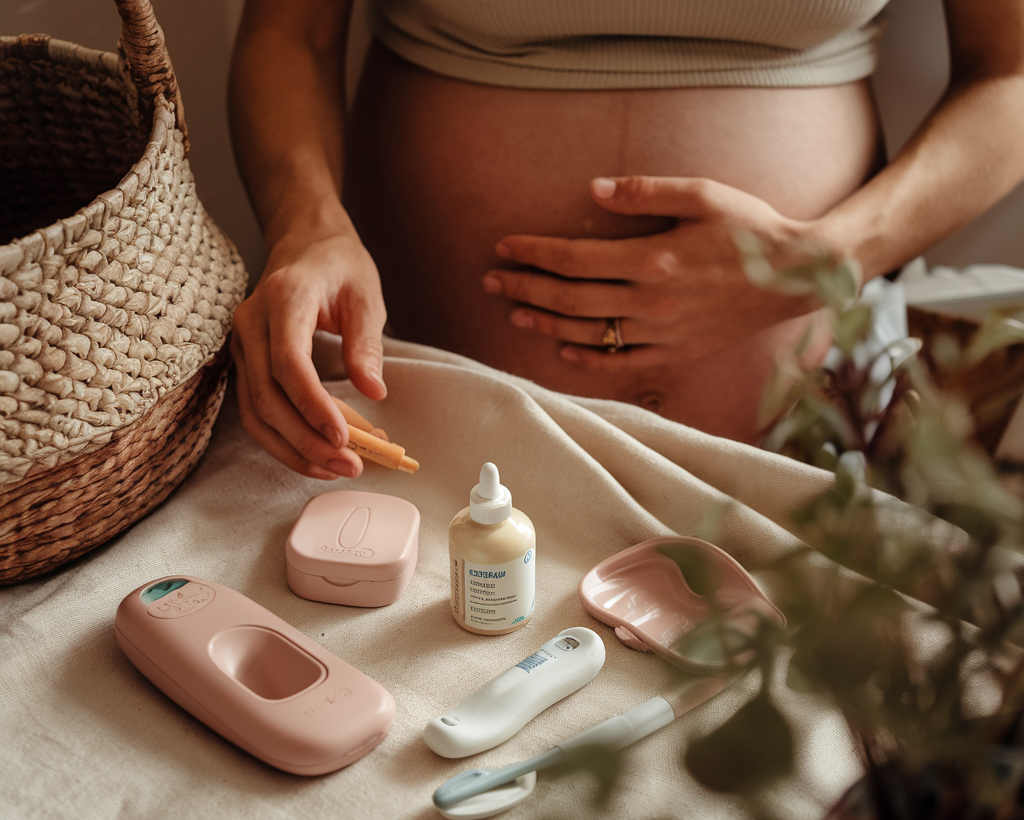
Being woken at midnight by a feverish, screaming baby while you’re searching the internet for paracetamol dosing information is a situation worth avoiding. These are the 20 items every parent should have before the baby arrives — bought in advance, stored accessibly, and ready to use.
Medications: Have These Before Birth
- Infant paracetamol suspension (120mg/5ml) — Calpol or generic equivalent. Safe from 2 months, 4kg+. Dose by weight. This is your most-used medication in the first year.
- Infant ibuprofen suspension (100mg/5ml) — Nurofen for Children or generic. Safe from 3 months, 5kg+. More effective than paracetamol for ear pain and teething; useful for alternating. Not for use in chickenpox.
- Nasal saline drops or spray — sterile saltwater for unblocking a congested baby’s nose before feeds. Non-medicated, safe from birth. Transformative for blocked-nose feeding difficulties.
- Nasal aspirator — the NoseFrida (a parent-operated suction device) is uncomfortable to describe but remarkably effective. Bulb aspirators exist; this is better.
- Oral rehydration solution sachets — Dioralyte or equivalent. For dehydration from gastroenteritis. Do not give plain water to an unwell young baby; these replace electrolytes correctly.
- Infant antacid drops — Infacol (simethicone) for wind and colic. Evidence for effectiveness is limited but it’s safe. Useful to have; useful to not expect miracles from.
Wound Care and Skin
- Digital thermometer — a rectal thermometer for under 3 months (most accurate); a temporal artery or ear thermometer from 3 months onward. A strip thermometer pressed to the forehead is not accurate enough.
- Zinc oxide barrier cream — Sudocrem, Bepanthen, or Metanium. For nappy rash; apply at every change during prone periods. Metanium is the most effective for established rash.
- Emollient cream — fragrance-free, for dry or eczema-prone skin. Aveeno Baby, Diprobase, or Doublebase. Apply generously and liberally; this is the cornerstone of eczema management.
- Sterile gauze pads and medical tape — for any minor wound until it can be assessed.
- Children’s antihistamine syrup — Piriton (chlorphenamine) for allergic reactions, itching from eczema or insect bites. Keep available from 6 months. Know the dose in advance.
- Coconut oil or baby oil — for cradle cap (apply, leave 20 minutes, brush gently, shampoo off). Also useful for newborn massage.
Tools and Equipment
- Medicine syringe (oral) — 5ml and 1ml syringes for accurate medication dosing. Most medicines come with one; have a spare. Never use a kitchen spoon.
- Nail scissors or baby nail file — newborn nails are razor-sharp and grow quickly. Scissors with rounded tips or a battery-operated file are safest.
- Soft baby hairbrush — doubles for cradle cap brushing and for the early tummy time scalp massage that many babies find calming.
- Nasal saline spray and aspirator — repeated from medications because this combination is so frequently needed.
- Baby nail clipper or electric trimmer — electric trimmers are safer for very young babies if scissors feel anxiety-inducing.
For the Parent’s Medicine Cabinet
- Paracetamol and ibuprofen for adults — obvious but easy to forget when you’re buying everything for the baby
- Arnica cream or gel — for perineal bruising and general birth recovery bruising (not on broken skin)
- Witch hazel pads or solution — for perineal discomfort in the first weeks
- Lansinoh nipple cream — if planning to breastfeed; start using after every feed from day one to prevent cracking
Storage and Practicalities
Keep everything in a designated, easily accessible location — not locked away, not at the back of a high shelf. A clear plastic box on a shelf accessible to adults but not to toddlers works well. Check expiry dates at the baby’s 6-month mark and replace anything that’s expired. Keep a printed dosing chart for paracetamol and ibuprofen by weight — you won’t want to calculate this at 2am.
Frequently Asked Questions
Can I give paracetamol and ibuprofen together?
You can give them simultaneously or alternately — they work through different mechanisms and don’t interact. Alternating (paracetamol, wait 3 hours, ibuprofen, wait 3 hours, repeat) can provide more sustained fever and pain management than either alone. Do this on your GP or health visitor’s recommendation rather than routinely.
When should I go to hospital instead of using home medications?
Any fever in a baby under 3 months (100.4°F / 38°C) regardless of how they look — this is always a same-day emergency. A fever above 40°C at any age. Any difficulty breathing. A non-blanching rash. Extreme lethargy or difficulty rousing. Inability to keep fluids down for more than 8 hours. Trust your instincts — if something feels wrong beyond what a medicine can address, call your GP or 111 (UK) / telehealth service (US).
Related Reading
Disclosure: This post contains affiliate links. We may earn a small commission at no extra cost to you. We only recommend products we genuinely trust.
Found this helpful? Save this page and share it with anyone who needs it. Sign up to the LylyMama newsletter for more honest, practical guides every week.