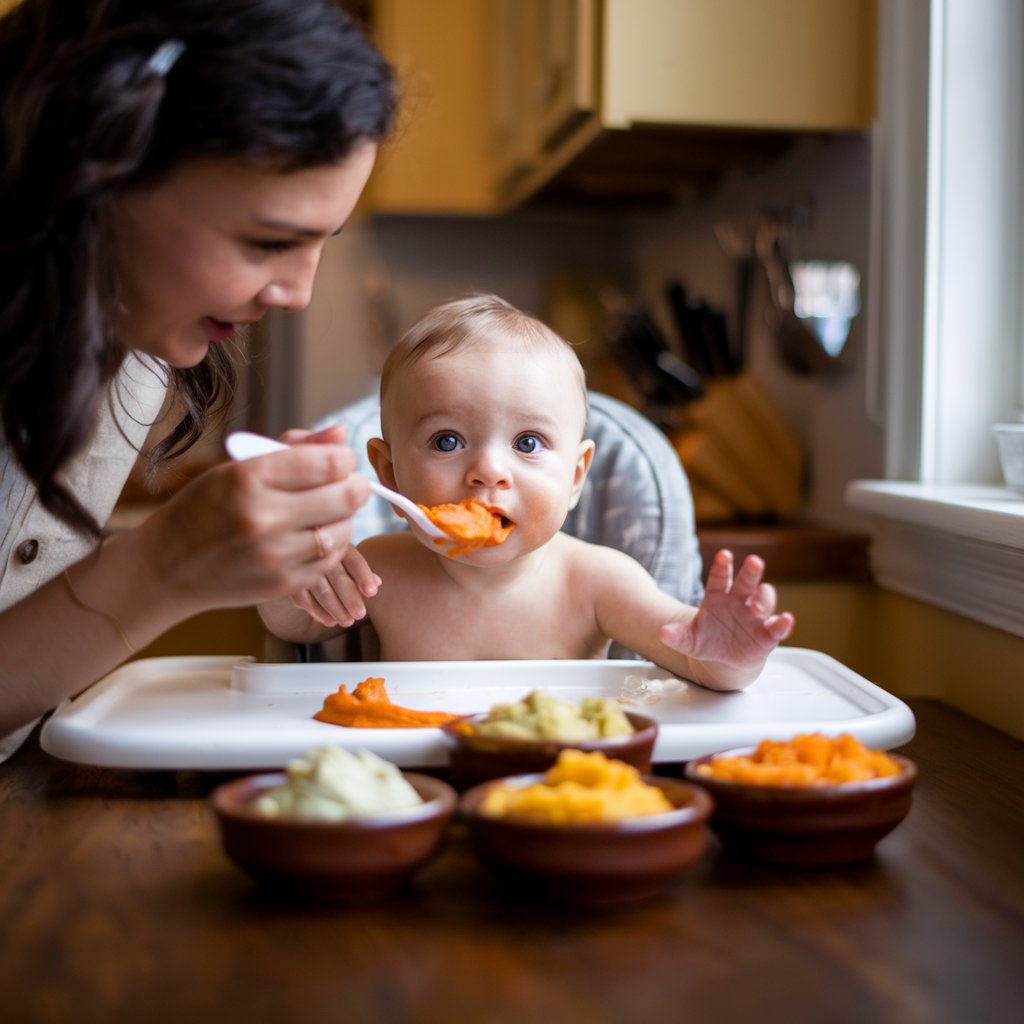
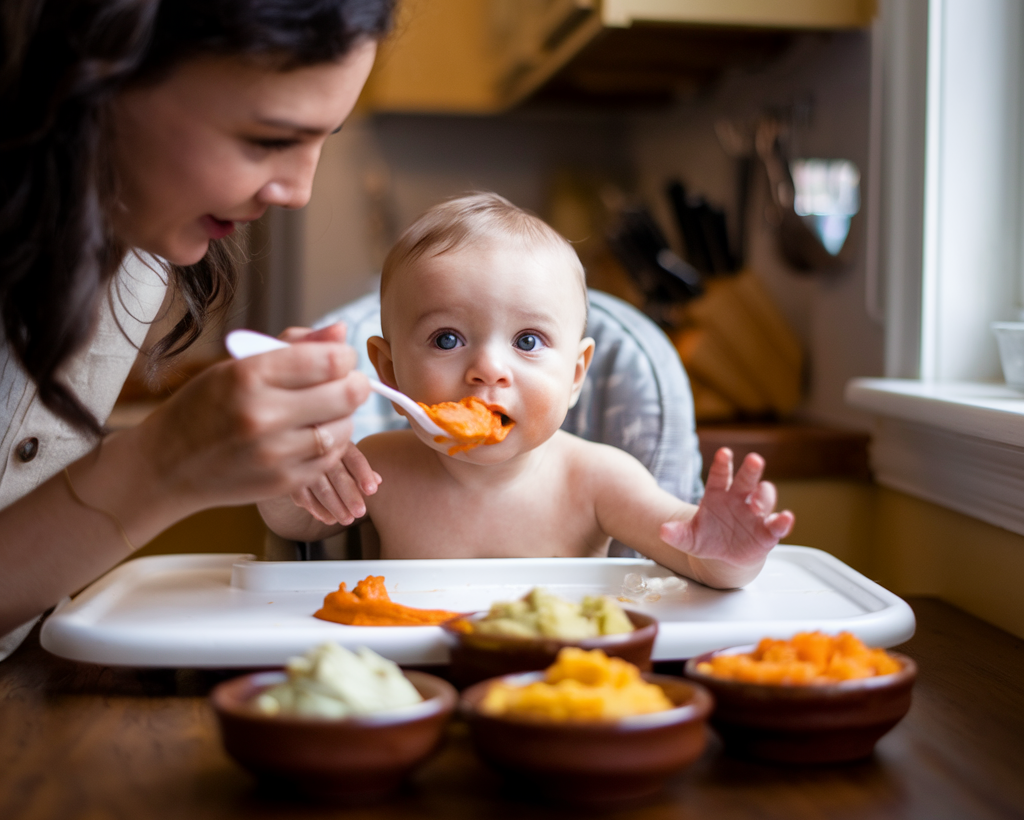
The first year of solid feeding is less complicated than the internet makes it look. This chart gives you a clear, age-by-age progression — what to introduce when, which allergens to prioritise, and what textures are appropriate at each stage.
Before Starting: The Three Readiness Signs
Age alone doesn’t determine readiness. All three of these must be present before starting solid foods: sitting with minimal support and holding the head steady; loss of the tongue-thrust reflex (not automatically pushing food back out); and clear interest in food. These typically emerge together at approximately 6 months. Never start before 17 weeks (4 months) regardless of other signs.
Stage 1: First Tastes (6 Months)
- Iron-rich foods first — this is the priority: fortified baby oat cereal (highest iron per serving), red lentil purée, chicken purée, minced beef, pea purée
- Vegetables — sweet potato, carrot, parsnip, butternut squash, courgette, broccoli. Single ingredient, smooth purée
- Fruit — apple, pear, mango, banana. Purée or very soft mash
- Allergen introduction starts now — peanut butter (smooth, thinned with water or milk), well-cooked egg (scrambled or hard-boiled), plain yogurt, soft cheese. One new allergen every 2–3 days
- Texture: smooth, single ingredient, runny to thick purée
- Frequency: once daily increasing to twice daily by end of month
- Amount: 1–4 teaspoons per meal — this is exploration, not nutrition
Stage 2: Building Variety (7–8 Months)
- Combinations — mix foods already accepted: sweet potato and lentil, chicken and vegetable, fruit and oat porridge
- Proteins — fish (check carefully for bones), tofu, more red meat, eggs in varied forms
- Grains — soft well-cooked pasta, rice, porridge oats
- Dairy — full-fat yogurt, soft cheese, cream cheese as ingredients
- Continue allergen exposure — maintain 2–3 times per week for any accepted allergen
- Texture: mashed and lumpy — not smooth. This transition matters for developing oral motor skills. Babies offered only smooth purée beyond 7 months are at higher risk of fussy eating at 7 years (research finding)
- Frequency: 2–3 meals per day
- Finger foods — soft pieces alongside purées: steamed broccoli florets, roasted sweet potato wedges, soft-boiled egg wedges
Stage 3: Family Food (9–12 Months)
- Adapted family meals — the same food you’re eating, cooked without salt, cut to appropriate size or minced
- Three meals per day plus 1–2 snacks
- Self-feeding advancing — spoon dipping, finger foods at every meal
- Proteins — all safe meats and fish, whole egg, full-fat dairy, legumes, tofu
- Grains — bread, pasta, rice, oats, couscous
- Fruits and vegetables — broad variety, including stronger flavours (garlic, mild spices, bitter vegetables)
- Texture: minced, chopped, soft pieces. Not purée. Most foods the family eats with adaptation
- Drinks: water in a cup at meals. Breast milk or formula continues as main milk drink
What Never to Give Under 12 Months
- Salt (no added salt in cooking — add to adult portions at the table)
- Sugar (no added sugar in any form; natural sugars in whole fruit are fine)
- Honey (botulism risk until 12 months)
- Whole nuts (choking risk until 5 years — ground nuts and nut butters are fine)
- Whole grapes, cherry tomatoes, blueberries (halve or quarter until 5 years)
- Hard raw vegetables — carrots, celery, raw apple (must be soft-cooked or grated)
- Cow’s milk as main drink (fine as cooking ingredient from 6 months; main drink from 12 months)
- Unpasteurised dairy
- High-mercury fish: shark, swordfish, king mackerel, bigeye tuna
Frequently Asked Questions
My baby is 7 months and eating mainly purées — is that a problem?
It depends on whether you’re progressing toward lumpier textures or staying at smooth. The evidence from the BLISS study and related research shows that babies who remain on smooth purées beyond 6–7 months without lumpier texture introduction are at higher risk of fussy eating and texture rejection at 7 years. Begin adding lumps and soft pieces alongside purées now — it doesn’t have to be all-or-nothing.
How many times should I offer a rejected food before giving up?
Research indicates 10–15 exposures before acceptance is typical for unfamiliar foods, with some foods requiring 20+ exposures. ‘My baby doesn’t like broccoli’ after three attempts is not a meaningful conclusion. Continue offering the same food regularly alongside accepted foods, without pressure, and acceptance typically develops over weeks.
Do I need to give vitamin D drops?
Yes — the NHS recommends vitamin D drops (400 IU daily) for all breastfed babies and formula-fed babies taking less than 500ml per day, from birth until 1 year. Solid foods don’t provide adequate vitamin D; supplementation fills this gap. In the US, the AAP recommends the same for breastfed infants.
Related Reading
- 6 month old baby: starting solids – a complete first-foods guide
- First baby purees: 15 easy recipes for 4-6 month olds
Disclosure: This post contains affiliate links. We may earn a small commission at no extra cost to you. We only recommend products we genuinely trust.
Found this helpful? Save this page and share it with anyone who needs it. Sign up to the LylyMama newsletter for more honest, practical guides every week.