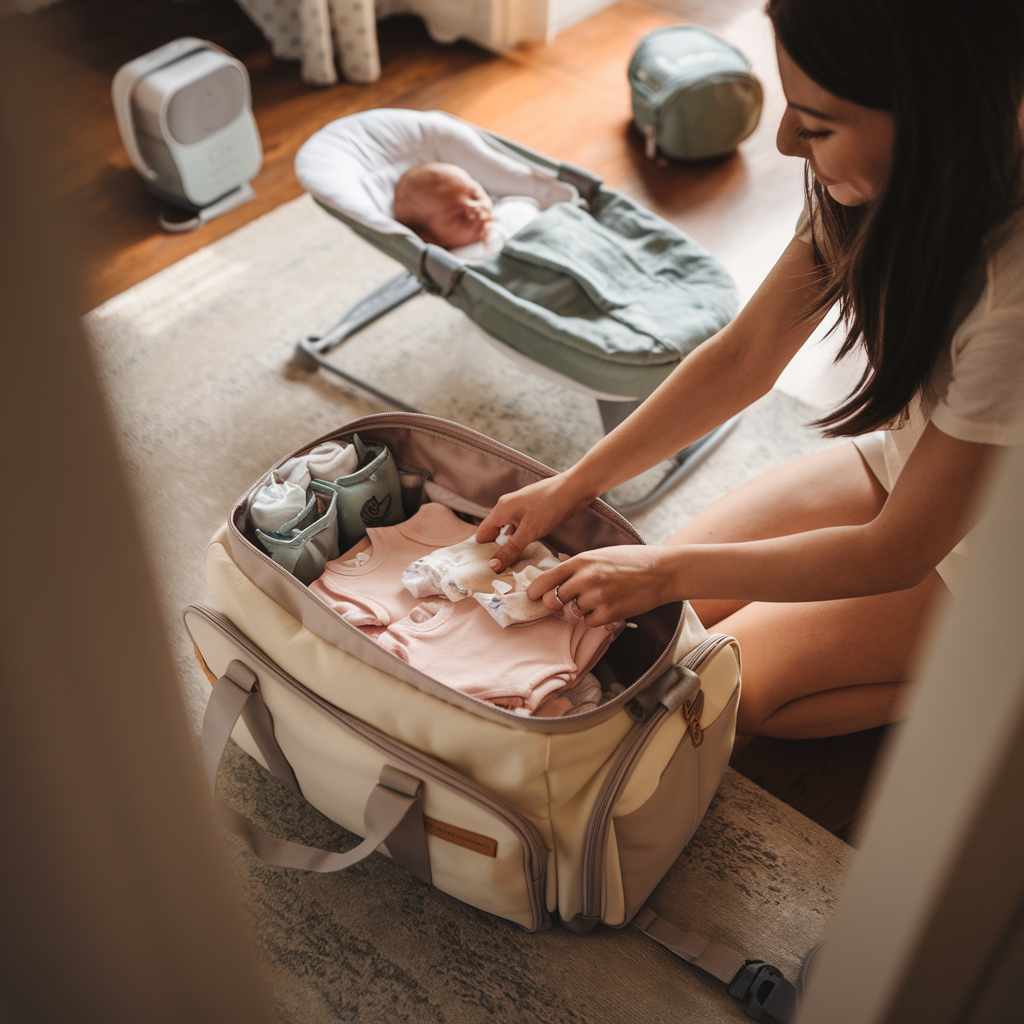
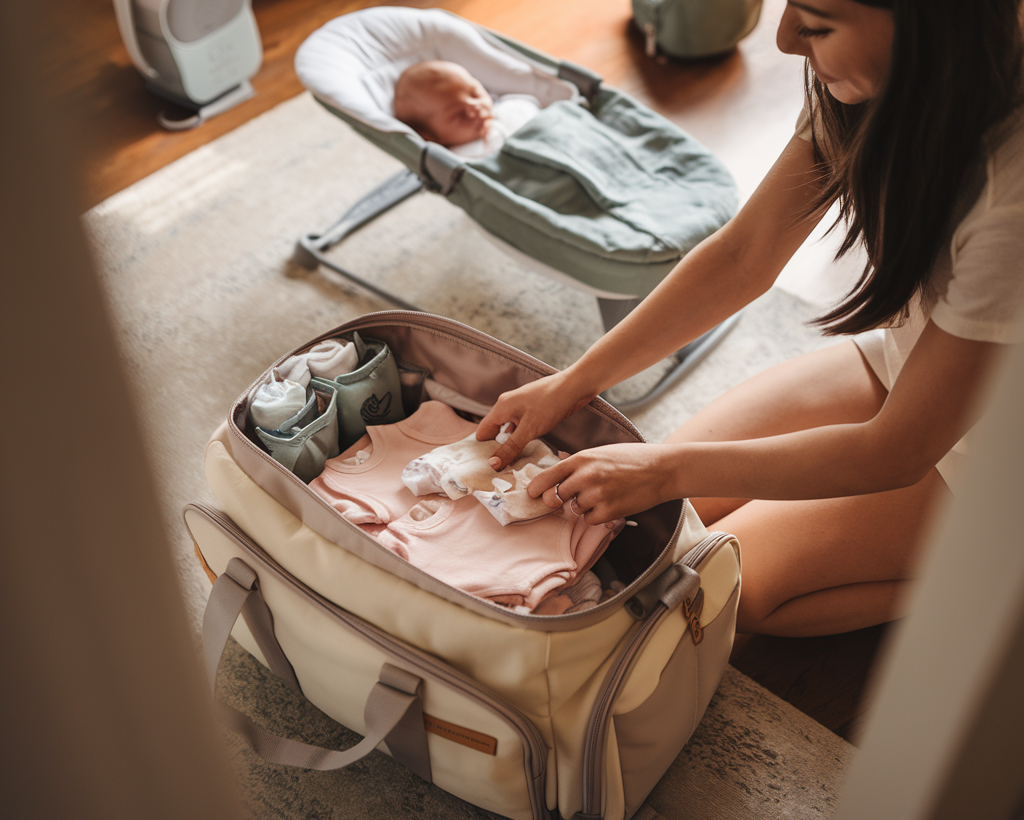
Travelling with a baby requires more planning than travelling without one — but considerably less than most people fear. The first trip is always the hardest because you don’t know what your baby needs on the move yet. Use this checklist, accept that you’ll forget something and can buy it at the destination, and go anyway.
Nappy and Changing Kit
- Nappies — enough for 2 per hour plus extras; for a 4-hour flight, bring 10
- Wipes — a large pack; wipes solve problems beyond nappy changes during travel
- Portable changing mat — most airport changing rooms have mats, but a personal one means any surface works
- Nappy bags — scented, for nappy disposal in places without bins
- Nappy cream — travel-sized
- 2–3 full outfit changes for baby — spit-up, nappy leaks, and general chaos are guaranteed on travel days
- 1 change of top for you — for the same reasons
Feeding Kit
- If breastfeeding: nursing cover (optional, for your own comfort), breast pads, nipple cream, hand pump as backup
- If formula feeding: pre-measured formula in individual dispensers for each feed, plus emergency spare; pre-sterilised bottles (travel steriliser bags for microwave sterilising at destination); bottled water (still, low sodium) for mixing
- If on solids: baby food pouches for travel days (the most practical format), baby spoon, bib
- Snacks for older babies: rice cakes, fruit pouches, soft finger foods in a sealed container
Sleep
- Portable blackout blind — the ‘GroAnywhere Blind’ or similar sticker blackout. Transformative for hotel rooms where curtains don’t close properly
- Travel cot — most hotels and holiday rentals provide these on request; confirm before travel. If bringing your own, practice assembling it before the trip
- 2 travel cot sheets — hotel cot mattresses are notoriously thin; your own sheets add familiarity
- White noise app on your phone — or a small portable white noise machine
- Sleep sack / baby sleeping bag from home — familiar smell matters more than you’d think
Health and Safety
- Infant paracetamol — many pharmacies at your destination won’t stock infant versions or exact equivalents
- Digital thermometer
- Your baby’s health insurance card or travel insurance policy details
- GP’s emergency contact number
- Any regular medications with enough supply for the trip plus 3 days buffer
- Antihistamine syrup if your baby has known allergies
- Sunscreen (SPF 50+ mineral, for babies over 6 months) and sun hat
- Insect repellent appropriate for baby’s age if travelling to high-risk destinations
On the Plane or in the Car
- New toys — small, novel objects hold attention for longer than familiar ones. Wrap them individually to extend the reveal
- Board books — quiet and familiar
- Phone or tablet with downloaded content (for babies over 18 months)
- Snacks — above and beyond what you think you need
- Carrier or sling — invaluable in airports, at boarding, and when baby needs settling on the move
- Empty feeding bottle or dummy for take-off and landing — sucking helps equalise ear pressure
- Change of clothes accessible at the top of your bag, not at the bottom
Common travel mistakes with a baby
- Not reserving a bassinette seat in advance. Bulkhead seats with hanging bassinettes are limited and cannot be pre-assigned on all airlines — call the airline directly rather than booking online.
- Bringing too many toys. Babies are captivated by novel simple objects: a water bottle, a set of keys, a sealed container of dry pasta. Pack 2 familiar items and improvise with everything else.
- Assuming a pushchair will fit as cabin luggage. Umbrella strollers are gate-checked free on most airlines; travel systems are checked baggage. Verify before you travel.
- Planning a full itinerary on the first day. The first day at the destination is adjustment day — for the baby and for you. Build in buffer time and keep the first day low-demand.
- Assuming the destination has your formula brand. If formula-dependent, bring more than you need. Formula brands, scoop densities, and formulations vary by country — never assume a local equivalent is identical.
Frequently Asked Questions
What age can babies fly?
Most airlines allow infants from 7–14 days old with a letter from a doctor. Healthy full-term babies are generally fine to fly from 2 weeks onward. Most paediatricians suggest waiting until 4–6 weeks for longer flights to allow the immune system some development. Very premature or medically complex babies should be assessed by their medical team before flying.
Do babies need their own seat on planes?
Under 2, most airlines allow an infant to travel as a ‘lap infant’ for free or a small fee on international flights. A baby in their own seat in an FAA-approved car seat is significantly safer in turbulence and crash scenarios — this is the recommendation of aviation safety experts. The practical trade-off: it doubles the seat cost. For short flights, lap infant is commonplace; for long-haul flights, a seat with a bassinet booking is worth the investment.
How do I handle the time zone for nap and sleep?
For short trips (less than 2 hours difference): stay on home time zone. For longer differences: start shifting naps and bedtime by 30 minutes per day in the direction of travel 3–4 days before departure. On arrival, expose to bright light at local morning time and keep the environment as dark as possible at local night time — this resets the circadian rhythm faster than anything else.
Related Reading
- Is it safe to fly with a baby?
- How to travel on a plane with a baby: seat, feeds and survival
- Best baby carriers 2025: wraps, ring slings and structured SSCs
Disclosure: This post contains affiliate links. We may earn a small commission at no extra cost to you. We only recommend products we genuinely trust.
Found this helpful? Save this page and share it with anyone who needs it. Sign up to the LylyMama newsletter for more honest, practical guides every week.