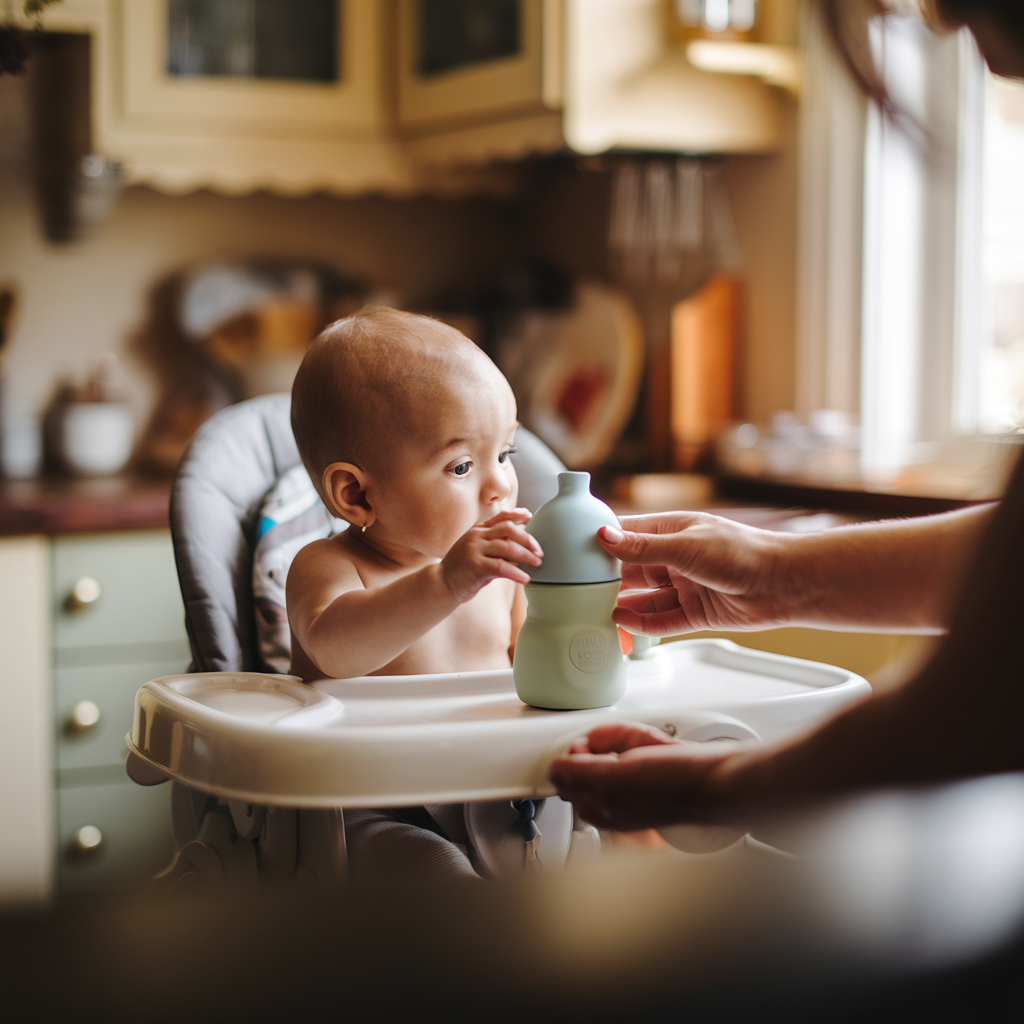
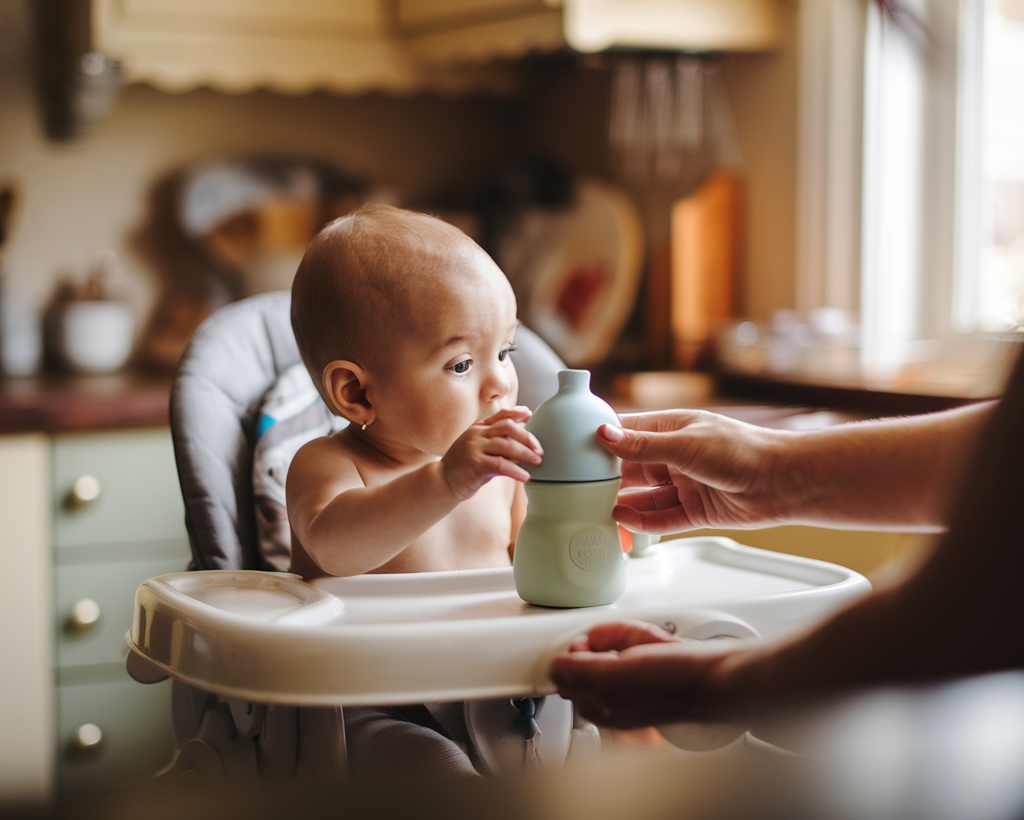
Quick answer: From 6 months — when solid foods begin, offer sips of water in a cup. Current NHS and AAP guidance recommends an open cup or a free-flow sippy cup rather than a valve-based spill-proof cup, which requires the same suckling action as a bottle.
Why cups matter for development
Learning to drink from a cup is a developmental milestone that affects oral motor development, speech, and dental health. The sucking mechanism used for bottles and valved sippy cups develops different oral muscle patterns than cup drinking. Open cup and straw drinking require a different tongue position and jaw movement that is closer to mature swallowing patterns and better supports the development of the oral motor skills needed for clear speech. The RCPCH and the NHS now recommend transitioning away from bottles and valved sippy cups by 12 months specifically for this reason.
Open cup vs free-flow vs valved cup
Open cup: the most developmentally appropriate option; takes patience but most babies can manage sips from a small open cup by 6–7 months with support. Free-flow sippy cup (no valve — tilting the cup releases liquid): acceptable and used in the NHS’s ‘start with a cup’ guidance. Valved spill-proof cup: requires active suckling to draw liquid through the valve — this is the same action as a bottle and provides no developmental advantage over bottles. Ideal for parents who need spill prevention, but not for developmental training. Straw cup: excellent option from 6–9 months — straw drinking is a good developmental stepping stone to open cup use.
What to offer and when
From 6 months: sips of water with meals in an open cup or free-flow sippy cup. Water only — no juice, squash, or sweetened drinks. Formula or breast milk should still come from the breast or bottle (from 6–12 months, cups are for water; formula/breast milk continues from its established route). From 12 months: transition main milk drink (now cow’s milk) to a cup — stop bottles by 12 months if possible, or by 18 months at the latest. Prolonged bottle use beyond 18 months is associated with dental caries and iron deficiency anaemia (studies show children drinking large volumes of cow’s milk from bottles often eat less iron-rich food).
Teaching a baby to use a cup
Start small: a tiny open cup (shot-glass sized) held by you, tipped gently to the baby’s lips for a small sip. Expect most of it to go down their chin at first — this is normal. Gradually increase what the baby receives and how much they participate in holding the cup. At 6 months, you’re offering experience; by 12 months, most babies can manage a free-flow cup with some independence. Avoid pressure — cup drinking is a skill that develops with practice, not instruction.
Frequently Asked Questions
My 9-month-old refuses all cups — what should I do?
Try different cup styles (open, straw, free-flow) and different liquids — some babies accept cups more readily with a small amount of breast milk or formula than with water. Try different times of day when baby is calm and not frantically thirsty. Avoid valved sippy cups if you’re trying to wean from bottles — the action is the same and doesn’t help. Persistence over weeks rather than days is usually needed.
Can babies have juice in a cup?
Not recommended under 12 months — juice provides sugar without the fibre of whole fruit, and even ‘natural’ fruit juice is associated with dental caries and crowding out more nutritious food. From 12 months, if given, juice should be well-diluted (1 part juice to 10 parts water), served with meals only, and in a cup rather than a bottle.
Should my baby be off bottles by 12 months?
This is the guideline recommendation (NHS, AAP), though in practice many families don’t fully achieve it until 18 months. The concern is for dental health (prolonged bottle use, especially bedtime bottles, and cow’s milk pooling against teeth) and for iron status. Gradual reduction from 12 months is more achievable and equally effective as a hard stop.
Related Reading
- 1 month old baby: milestones, sleep & feeding guide
- 6 month old baby: starting solids – a complete first-foods guide
- 9 month old baby: first words coming – how to encourage speech
- When can babies have water?
Found this helpful? Sign up to the LylyMama newsletter — evidence-based answers to the questions every new parent actually has.