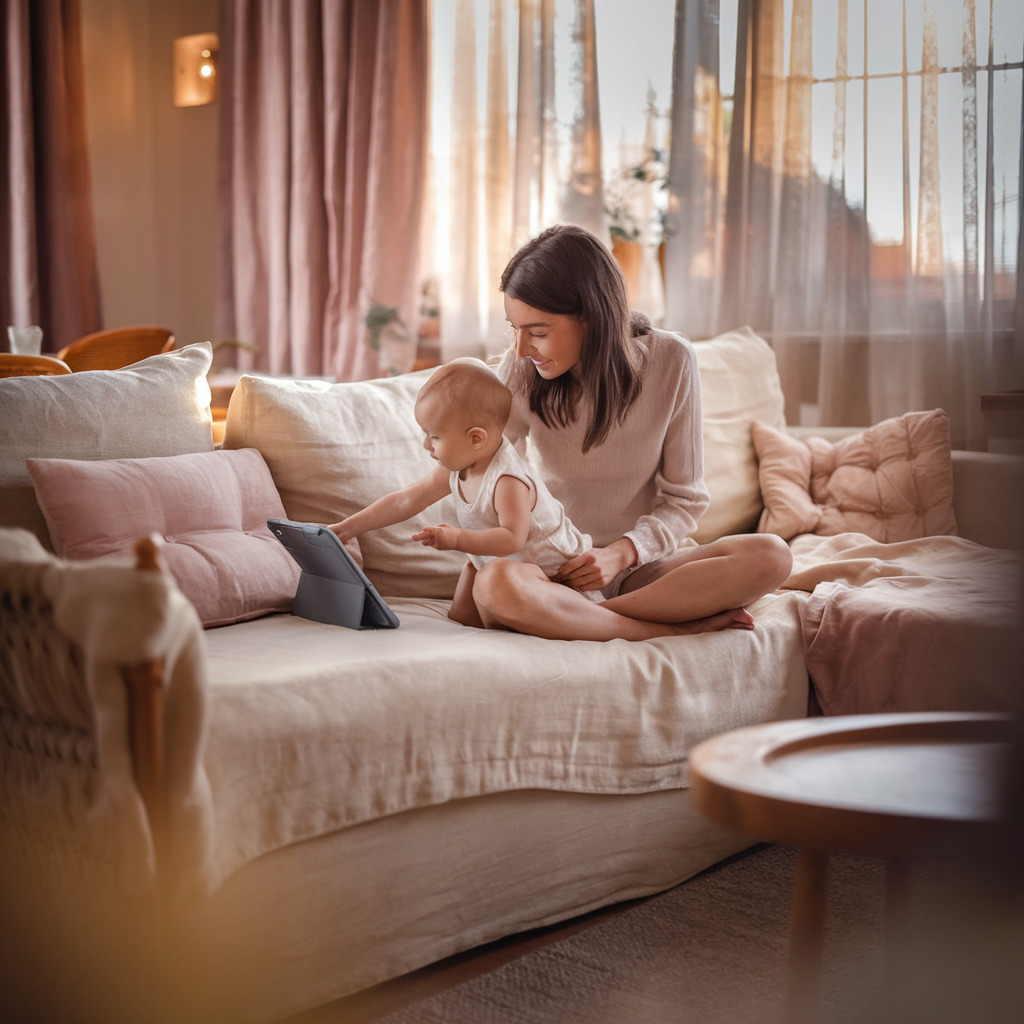
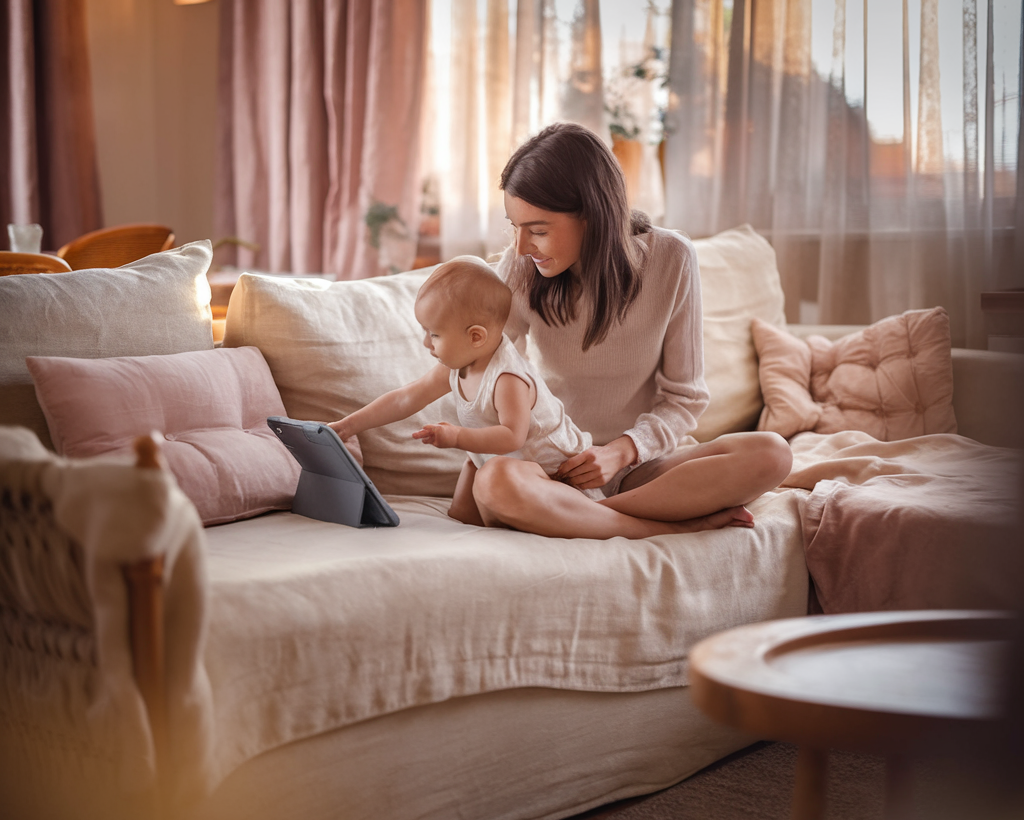
Quick answer: Screen time in infancy is one of the most googled parenting concerns — and one where parent behaviour and paediatric guidance have diverged most widely.
Screen time in infancy is one of the most googled parenting concerns — and one where parent behaviour and paediatric guidance have diverged most widely. Here’s what the current evidence actually shows.
Under 18 Months: The Guideline
The American Academy of Paediatrics (AAP) and WHO recommend avoiding screen time for babies under 18–24 months, with the exception of video calls. The evidence basis: language learned from screens is significantly less than language learned from live interaction (well-replicated finding — even at matched word exposure); background television reduces parent-child verbal interaction; screen time displaces physically and socially active play that supports development; and early screen exposure has associations with attention and language development in some longitudinal studies. This doesn’t mean a baby who occasionally sees a screen is harmed — it means intentional, regular screen use for babies under 18 months doesn’t provide developmental benefit and may displace better activities.
Video Calls: The Evidence-Based Exception
Video calls with known, familiar people (grandparents, family friends) are explicitly excepted from the under-18-month guidance. Why: they provide contingent, responsive interaction — a grandparent who responds to the baby’s sounds and movements in real time. Studies show babies can learn language from live video interactions with known people, though not as efficiently as in person. They don’t learn from recorded video regardless of how educational the content appears.
18–24 Months: The Transition Period
From 18 months, the AAP guidance shifts to: only high-quality content, co-viewing with a caregiver who explains and interacts around the content, and limited to 1 hour per day. ‘High quality’ is defined by content specifically designed for toddlers with slow pacing, clear language, repetition, and educational intent (Sesame Street, Bluey, Hey Duggee are commonly cited examples). Co-viewing transforms passive screen time into an interactive learning experience — naming characters, asking questions, and connecting screen content to real life.
How to Manage Screen Time Practically
- No screens during mealtimes — mealtimes are prime face-to-face interaction and language learning time
- No screens in the hour before sleep — blue light suppresses melatonin
- Keep screens out of bedrooms
- Be honest about parental screen use — babies and toddlers model adult behaviour
- When screens are on, engage with the content alongside baby rather than using it as a solo occupation
- The best screen alternative for an overwhelmed parent is not no screens — it’s safe, supervised independent play
What the research actually shows
The primary concern with early screen exposure is opportunity cost, not radiation or visual damage. Every hour a baby spends in front of a screen is an hour not spent in the contingent, responsive interaction that drives language and cognitive development. Studies by Patricia Kuhl at the University of Washington found that infants who watched Mandarin DVD programmes learned zero new phonemes — but infants who had live interaction with a Mandarin-speaking adult for the same duration made measurable phonological gains. The screen is not toxic; it simply does not provide what the developing brain needs.
Guidelines by age
- Under 18 months: No screen time other than video calls (FaceTime, Zoom). Video calls are the exception because they involve contingent real-time interaction — a face that responds to the baby’s sounds and movements.
- 18–24 months: High-quality programming only, watched with a parent who engages with the content. Passive background TV reduces parent-infant verbal interaction even when the baby appears not to be watching.
- 2–5 years: Up to 1 hour of high-quality programming per day, with co-viewing and discussion. BBC CBeebies generally meets quality criteria; fast-paced algorithmically recommended content does not.
What “high-quality” means
The AAP and RCPCH define high-quality children’s programming as: slow-paced, interactive in structure (pauses, questions directed at the viewer), age-appropriate language, and educational intent. Fast-paced action cartoons and YouTube recommendation-chain content do not meet this standard and are associated with attention difficulties in observational studies.
Frequently Asked Questions
Will occasional screen time harm my baby?
No — the guidelines are population-level recommendations for regular, habitual use. A baby who occasionally sees a screen while you’re briefly occupied, or who sees a family member on a video call, is not being harmed. Parental guilt about occasional screen exposure is disproportionate to the actual risk.
Are educational apps and videos actually educational for under-2s?
The evidence doesn’t support it. Studies testing whether babies learn from educational videos consistently find minimal or no learning compared to equivalent live interaction. The ‘video deficit effect’ is well-established — babies learn from people, not screens, in early infancy.
My toddler is obsessed with YouTube — how do I reduce it?
Gradual reduction is more effective than cold turkey for toddlers who are habituated. Use timers they can see. Offer engaging alternatives at the same time (sensory play, outdoor time, one-on-one attention). Remove devices from the environment when not in use. Set clear, consistent rules and maintain them — inconsistency increases the battle.
Related Reading
- Can babies watch TV?
- 12 month old baby: first birthday milestones & 1-year check-up
- Baby talk: how to encourage speech from day one
Found this helpful? Sign up to the LylyMama newsletter for evidence-based baby development guides delivered to your inbox every week.