Quick answer: Reading to babies from birth is one of the most evidence-backed parenting practices for language development, literacy, and cognitive growth.
Reading to babies from birth is one of the most evidence-backed parenting practices for language development, literacy, and cognitive growth. You don’t need to wait until your baby can sit up, pay attention, or understand words — the earlier you start, the better.
The Evidence on Reading and Language Development
Children who are read to regularly from birth enter school with significantly larger vocabularies, better pre-literacy skills, and stronger reading comprehension than those who aren’t. The mechanism: reading exposes babies to a dramatically wider range of vocabulary than everyday conversation, to complex sentence structures, to narrative structure, and to print concepts (that text runs left to right, that letters form words). The American Academy of Paediatrics recommends reading aloud from birth as a core health behaviour.
How to Read to a Newborn
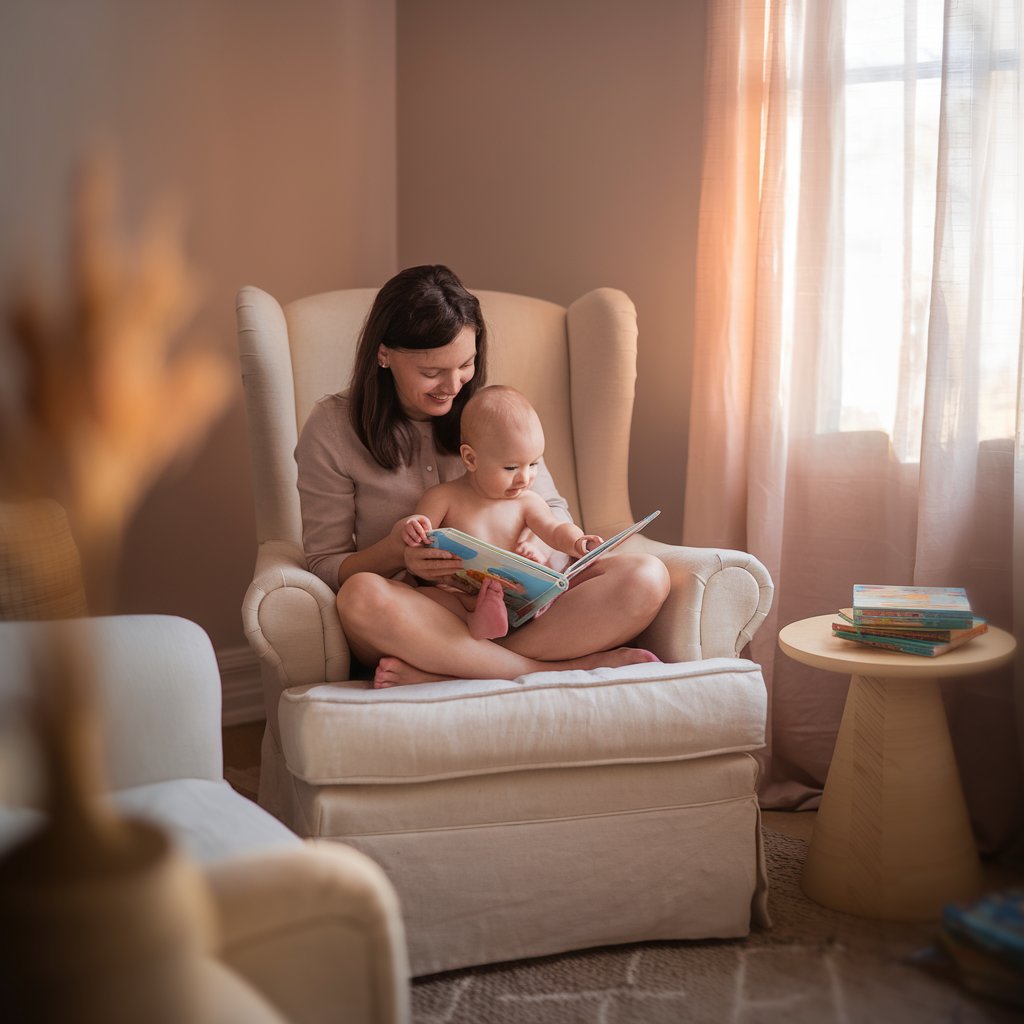
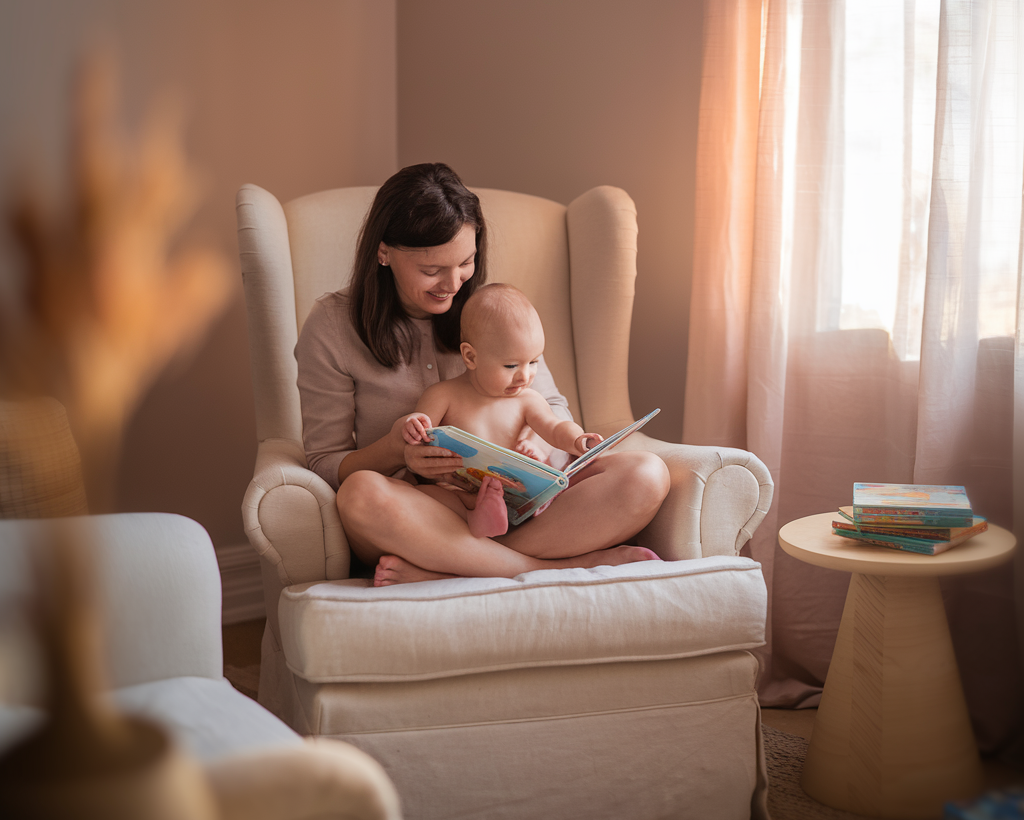
In the first few weeks, your baby can’t see the pictures or understand the words — but your voice, intonation, rhythm, and closeness are what matter. Read anything: a novel, a magazine, a board book. The content is irrelevant; the interaction is everything. Hold baby close or in your lap. Use animated voices — change pitch, pace, and expression. Pause and wait as if baby is responding. Point to pictures and name them even before baby can focus on them.
Books by Age: What Works Best
- 0–3 months: high-contrast black and white books, simple pictures, your voice most important
- 3–6 months: bright colour books with clear single objects per page, simple rhyming text
- 6–9 months: board books with thick pages (baby will grab and chew), flap books, texture books
- 9–12 months: simple storylines, books with ‘where is?’ participation, repetitive text, animal sounds
- 12 months+: longer simple stories, books about emotions, counting and concept books
Library Trips and Building a Book Habit
Public libraries offer free access to thousands of books, baby storytime sessions, and card membership from birth. Many libraries run baby rhyme time programmes specifically designed for 0–12 month olds. Building a daily reading habit — even 5–10 minutes at bedtime — pays lifelong dividends. You don’t need to buy books — the library is the most accessible reading resource available.
The evidence on reading and later literacy
The Reach Out and Read programme (US) and equivalent UK initiatives have produced consistent evidence that shared reading in infancy and toddlerhood is one of the strongest predictors of school-readiness literacy — independent of parental education level. The mechanism involves multiple concurrent processes: vocabulary acquisition (children who are read to regularly encounter vocabulary that is richer and more varied than everyday speech), print awareness (understanding that text carries meaning and is read left to right), phonological awareness (sensitivity to the sound structure of words, which predicts reading acquisition), and sustained attention practice. The frequency and interactiveness of reading matters more than the specific books chosen. A 15-minute daily reading habit from birth, maintained consistently, produces measurable vocabulary advantages at school entry compared to no reading habit — the effect is approximately equivalent to 6–8 months of additional language development.
Frequently Asked Questions
Should I read the book properly or just talk about the pictures?
Both are valuable and serve different purposes. Reading the text exposes baby to complex vocabulary and narrative structure. Talking about the pictures builds vocabulary through labelling and develops conversational interaction. Mix both approaches: read a page, then talk about it. ‘The cat sat on the mat. Where’s the cat? There he is! What colour is the cat?’
My baby grabs the book and chews it — should I stop?
No — mouthing is developmentally appropriate. Use board books specifically designed for this age, which are durable and non-toxic. Chewing the book is engagement with it, not destruction of it. A baby who grabs, chews, and shows interest is participating.
What if I don’t enjoy reading aloud?
Try: audiobooks playing while you hold baby (you don’t have to be the voice), libraries where professionals do storytime, magazines and newspapers read aloud (baby doesn’t know the difference), and remember that your voice is the primary gift — not your performance. Any reading beats no reading.
Related Reading
- Baby talk: how to encourage speech from day one
- Baby’s first words: what’s normal, what’s not
- 6 month old baby: starting solids — a complete first-foods guide
Found this helpful? Sign up to the LylyMama newsletter for evidence-based baby development guides delivered to your inbox every week.