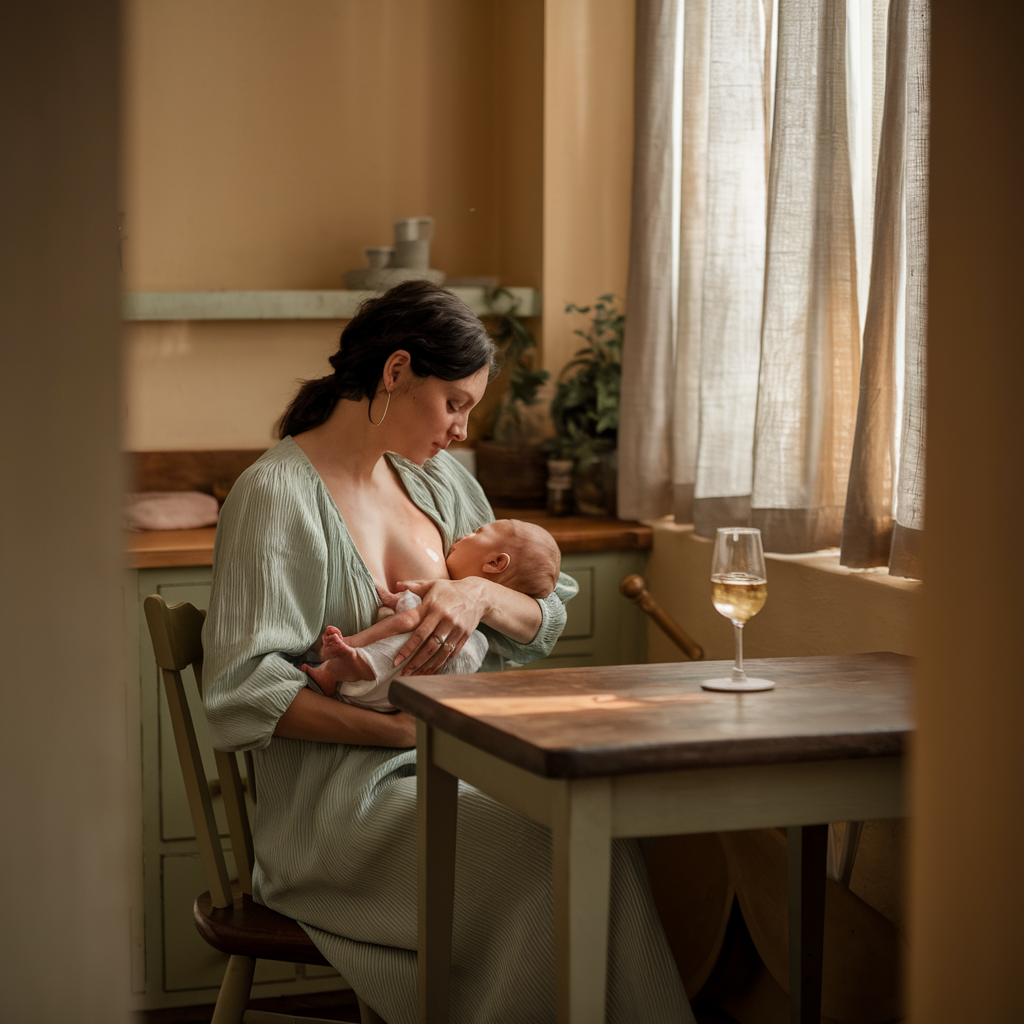
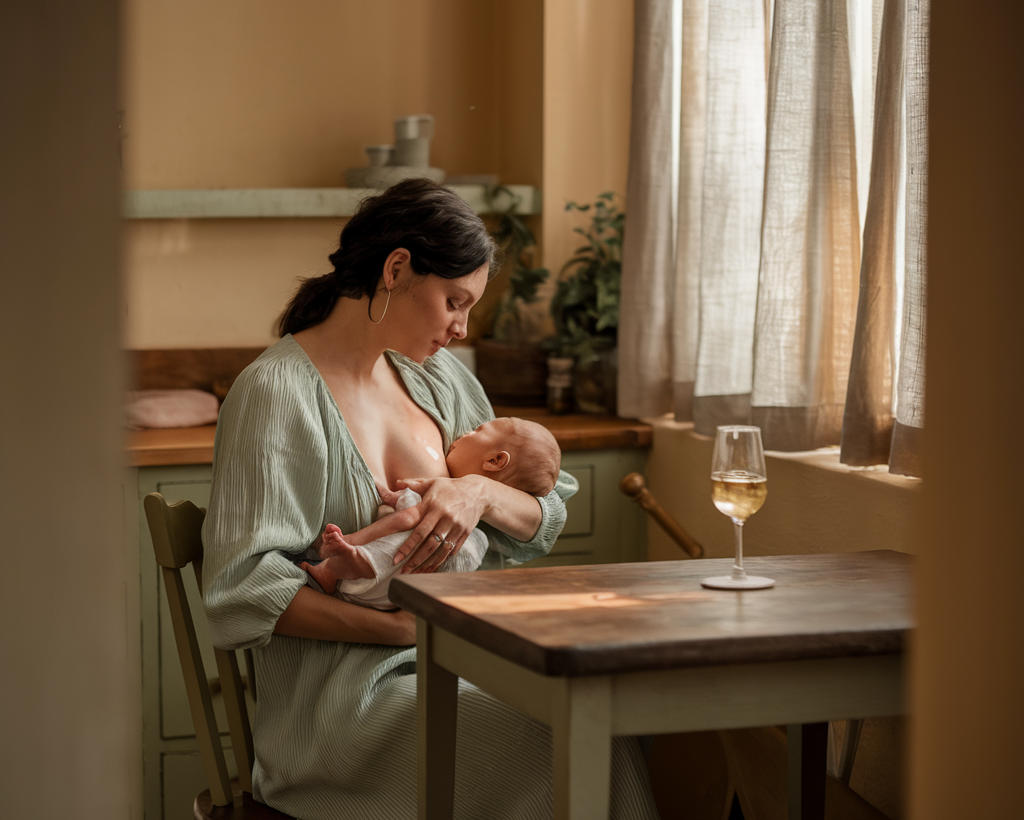
Quick answer: Occasional, moderate alcohol is compatible with breastfeeding — but timing and amount matter. The safest approach is to wait at least 2 hours per standard drink before feeding.
How alcohol moves into and out of breast milk
Alcohol doesn’t pool in breast milk — it moves freely in and out at the same concentration as your blood alcohol. This means ‘pumping and dumping’ does NOT speed up alcohol clearance from your milk. The only thing that clears alcohol from your milk is time. When your blood alcohol returns to zero, your milk alcohol returns to zero. Your milk alcohol peaks approximately 30–60 minutes after drinking (slightly slower if you’ve eaten), then declines as your body metabolises the alcohol.
The 2-hours-per-drink guideline
The widely used guideline is: wait at least 2 hours per standard drink before breastfeeding. Standard drinks: 12oz/355ml regular beer (5%), 5oz/150ml wine (12%), 1.5oz/45ml spirits (40%). So if you have two glasses of wine, wait at least 4 hours before feeding. This is conservative — most of the alcohol will clear faster than this. But 2 hours per drink provides a reliable safety margin. At the peak of a typical moderate drinking occasion (2 drinks), the actual breast milk alcohol level is under 0.08g/dL — lower than the legal driving limit.
Does alcohol affect milk supply?
Interestingly, yes — and this surprises most people. Alcohol inhibits oxytocin release, which delays the milk ejection reflex (‘let-down’). Studies show that after moderate drinking, milk output decreases by approximately 20% in the short term. Babies also tend to drink less milk in the first few hours after a mother has consumed alcohol — they seem to detect the changed flavour and reduced flow. These effects are temporary and reverse as alcohol clears.
Practical approaches for a night out or event
Several strategies work: feed or pump just before drinking to start with full breasts and buy time; use pumped or stored breast milk for feeds during and immediately after drinking; time any event with a longer natural gap in feeding (some parents plan a ‘celebration feed’ before going out); keep a breastfeeding app running to track timing. For women who don’t drink regularly, an occasional glass of wine at a wedding or birthday does not require stopping breastfeeding — just allow time before the next feed.
Frequently Asked Questions
Is it safe to drink any alcohol while breastfeeding?
Major health bodies (NHS, WHO, AAP) note that moderate alcohol consumption (1–2 drinks occasionally) is generally compatible with breastfeeding when timed appropriately. The NHS and AAP advise waiting at least 2 hours after drinking before feeding. Complete abstinence is the ‘safest’ position, but risk is dose-dependent and very low with occasional, moderate consumption.
Can alcohol in breast milk harm my baby?
At typical social drinking levels and with appropriate timing, the amount of alcohol in breast milk is extremely small — far below any level associated with developmental harm in research. Regular, heavy drinking while breastfeeding is harmful; occasional moderate drinking, properly timed, is not. Chronic alcohol exposure through breast milk is the concern, not a single glass of wine.
What if I drank too much — should I stop breastfeeding?
No — stop breastfeeding only if you are too intoxicated to safely hold or care for your baby, in which case you should have a sober adult care for the baby until you are sober. Don’t sleep with your baby if you’ve drunk alcohol — this significantly increases suffocation risk. Once sober, you can breastfeed normally.
Related Reading
- Can I drink coffee while breastfeeding?
- Breastfeeding diet: what to eat, what to limit, what to avoid
Disclosure: This post contains affiliate links. We may earn a small commission at no extra cost to you. We only recommend products we genuinely use and trust.
Found this helpful? Sign up to the LylyMama newsletter — evidence-based, honest answers to the questions every new parent actually has, straight to your inbox.