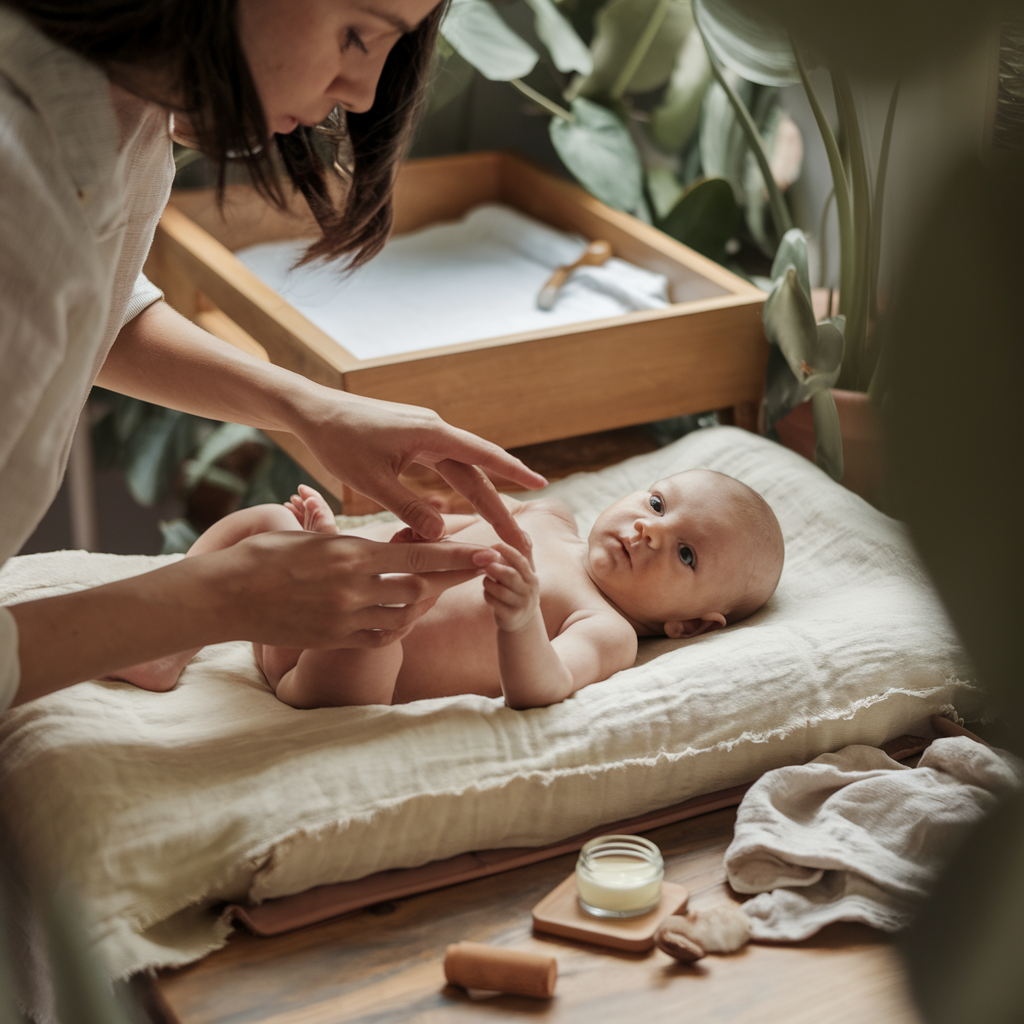

Quick answer: Most diaper rash clears within 2–3 days with: more frequent diaper changes, thorough drying before reapplying a diaper, generous application of zinc oxide barrier cream at every change, and diaper-free time. If it’s not improving in 3 days or looks raw and weepy, see your doctor — it may be fungal.
Why diaper rash happens
diaper rash (irritant contact dermatitis) develops when skin is in prolonged contact with urine and faeces. The primary mechanism: urine raises the pH of the diaper environment, and faecal enzymes activated by this alkaline environment break down the skin’s protective barrier. This damaged barrier allows further irritation and secondary infection. Risk factors include: diarrhoea (more faecal enzyme contact); teething (saliva changes gut pH, altering stool composition); antibiotic use (disrupts gut flora, causing more liquid stools); infrequent diaper changes; and certain wipe brands or washing powders in cloth diaper families.
The four-step management approach
1. Change more often. In an active rash, change diapers immediately after soiling and every 1–2 hours rather than every 3–4 hours. Prolonged contact is the primary driver — reducing it is the primary intervention. 2. Clean gently and thoroughly. Use warm water and cotton wool or plain water wipes rather than fragranced wipes during a rash episode. Pat dry completely — moisture trapped under the barrier cream perpetuates the rash. 3. Apply zinc oxide barrier cream thickly at every change. Sudocrem, Metanium, Bepanthen, and Zinc & Castor Oil all work. Metanium (containing titanium dioxide and zinc oxide) is the strongest and generally most effective for established rash — apply a thin layer. For prevention, Bepanthen or Sudocrem at every change is the standard approach. 4. diaper-free time. 20–30 minutes of air exposure 2–3 times daily allows skin to dry and recover without the diaper environment. Lay the baby on a waterproof mat or folded towels.
When to suspect fungal rash
The most common complication of diaper rash is secondary Candida (thrush) infection. Signs: rash is bright red, well-defined border, doesn’t respond to standard barrier cream treatment after 3 days, may have satellite spots (small red dots beyond the main rash margin). Fungal diaper rash requires antifungal cream (clotrimazole or miconazole, available from pharmacies) — zinc oxide barrier cream alone won’t clear it. If your baby has recently had antibiotics, Candida superinfection is very likely.
What not to use
Baby powder (talc or cornstarch) — talc is a respiratory hazard; cornstarch can feed yeast infections. Antiseptic creams not specifically designed for diaper areas. Adult hydrocortisone cream without doctor guidance — 1% hydrocortisone is sometimes appropriate for severe cases but is absorbed systemically through damaged diaper area skin and should not be used without medical advice. Fragranced baby products during a rash episode — the skin barrier is compromised and fragrances penetrate and irritate further.
Frequently Asked Questions
How long does diaper rash take to clear?
With appropriate treatment, mild to moderate diaper rash typically clears in 2–3 days. If there’s no improvement after 3 days of the above approach, see your doctor — fungal infection or another cause should be considered. Severe rash (raw, bleeding, or broken skin) warrants doctor assessment sooner.
Is reusable diaper rash different from disposable diaper rash?
Reusable diaper rash can be caused by detergent residue if diapers aren’t rinsed adequately, or by elastic irritation. Check for a distinctive ring or elastic-mark pattern. Extra rinsing cycles and ensuring no detergent residue remains often resolves this. Some babies are also more sensitive to the elastic or fastening components of specific reusable diaper brands.
Can diaper rash cause a fever?
Mild diaper rash does not cause fever. Severe diaper rash with infection (bacterial cellulitis — redness spreading beyond the diaper area, skin feels hot to the touch, baby is unwell) can. If your baby has a fever alongside a severe rash, seek same-day doctor assessment.
Related Reading
- Rashes in babies: a visual guide to common skin conditions
- diaper rash vs thrush: how to tell and treat each
Found this helpful? Sign up to the LylyMama newsletter — evidence-based answers to the questions every new parent actually has.