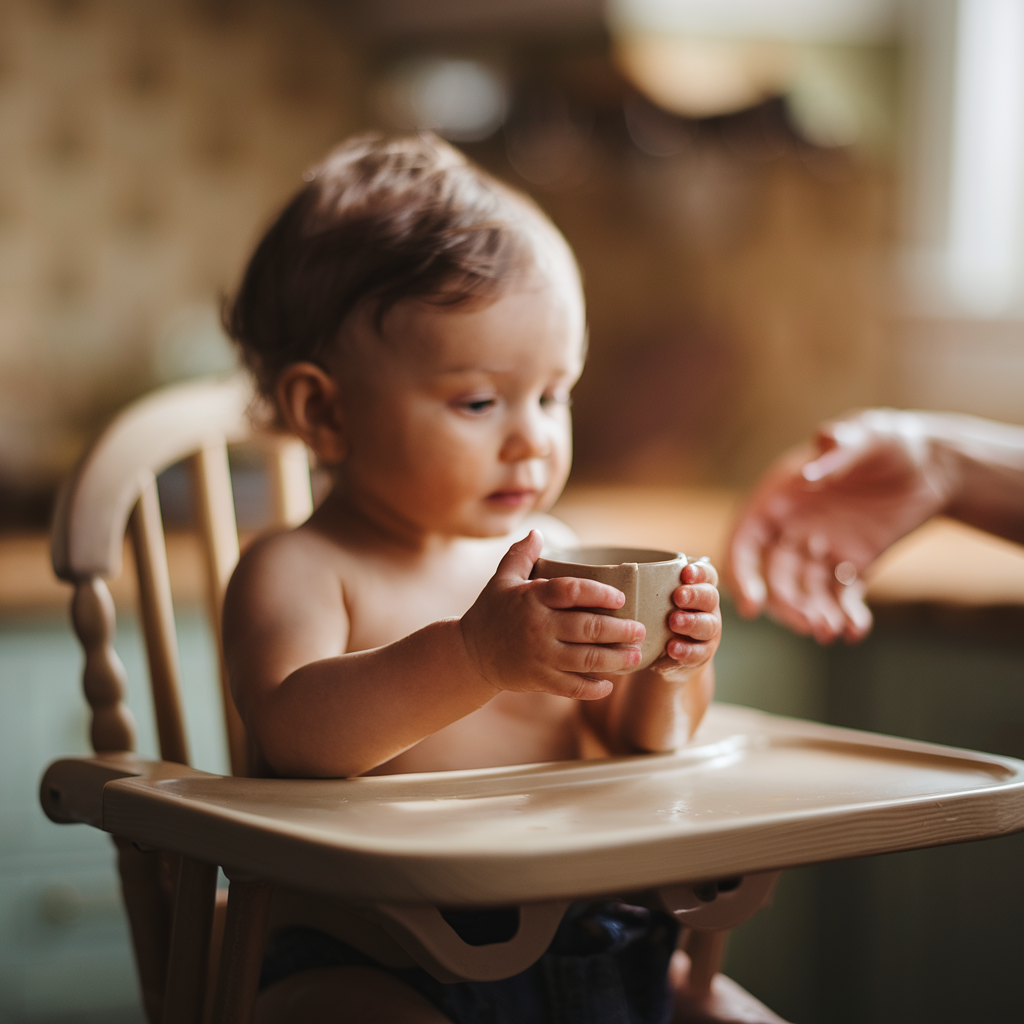
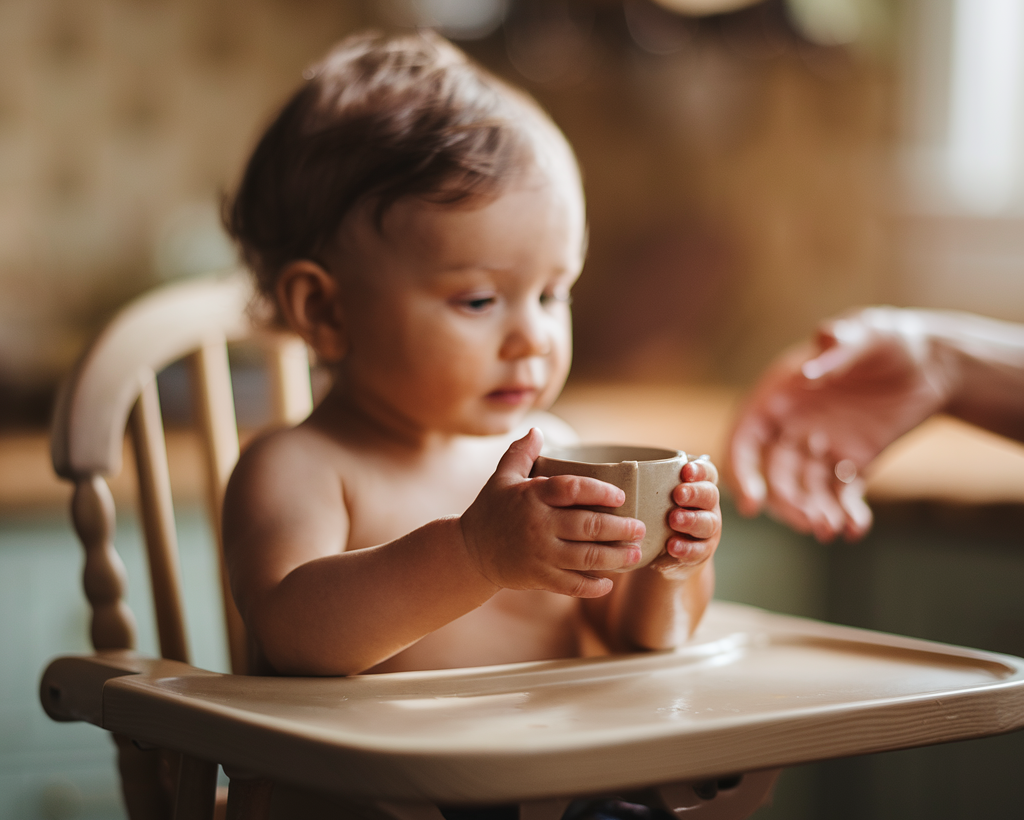
Quick answer: Transitioning from breast or bottle to a cup is a process that benefits from a gradual, low-pressure approach.
Transitioning from breast or bottle to a cup is a process that benefits from a gradual, low-pressure approach. Current guidance recommends completing the transition by 12–18 months to support dental health and reduce dependency — here’s how to get there step by step.
Open Cup at 6 Months
Open cup drinking can begin as early as 6 months when solid foods start — initially just a few sips of water at mealtimes. Benefits of starting early: babies learn cup mechanics gradually, reducing the need for a hard transition later; early open cup use supports oral motor development; and research suggests open cup early introduction reduces dental caries risk compared to prolonged bottle use. Use a small, weighted, easy-to-grip cup. Expect significant spilling — this is learning, not failure. Sippy cups with spill-proof valves require the same sucking action as a bottle and don’t develop the oral motor skills of an open cup, though they’re practical for transition.
Straw Cup at 9 Months
Straw cups (with a straw baby sucks through) are another step toward independent drinking without a teat. Straw drinking develops a different oral motor pattern from bottle/breast — more mature and closer to adult drinking. Most 9-month-olds can learn straw drinking with some practice. Help baby learn by placing the straw in a cup of water and placing your thumb over the end to trap a small amount — release into baby’s mouth to demonstrate. Weighted straw cups allow drinking from any angle.
The Bottle Drop Plan (By 12 Months)
The AAP recommends completing bottle weaning by 12–18 months. Gradual approach works better than cold turkey for most babies: Week 1–2: Replace the midday bottle with a cup. Week 3–4: Replace the morning bottle with a cup. Week 5–6: Replace the bedtime bottle with a cup. The bedtime bottle is often the hardest to drop — it’s associated with settling and comfort. Replace with a bedtime cup of milk followed by teeth cleaning, then the same settling routine without the bottle.
Dental Benefits of Cup Drinking
Prolonged bottle use (particularly with milk or juice) is strongly associated with early childhood dental caries — ‘bottle rot’. The mechanism: liquid pools around the teeth for extended periods, providing a sugar substrate for cavity-causing bacteria. Cup drinking directs liquid to the back of the mouth and throat more quickly, reducing tooth exposure time. Sippy cups, if used for long periods with anything other than water, carry similar risk to bottles.
Common cup transition mistakes
- Waiting until 12 months to introduce. Starting at 6 months with a small amount of water makes the transition gradual and low-stakes. Starting the transition at 11 months with a firm 12-month deadline is higher pressure for both parent and baby.
- Using a sippy cup as a bottle substitute. Sippy cups with no-spill valves require the same oral mechanics as a bottle — sucking rather than sipping — and don’t advance oral motor development. They’re a useful stepping stone but not a destination. Move toward free-flow sippy, straw cup, or open cup.
- Putting formula or breast milk in a no-spill sippy cup and letting the baby carry it around. Prolonged contact of milk with teeth — pooling in the mouth — is the primary mechanism of early childhood tooth decay. Milk in a cup should be served at mealtimes, not as a sippy cup carried throughout the day.
- Giving up after initial rejection. Most babies initially reject an open cup because it’s unfamiliar. Offering small amounts at every mealtime for several weeks is the approach — persistence over time works far better than brief intensive trials.
The NHS position on bottle weaning
NHS guidance recommends introducing a free-flow cup with meals from around 6 months and stopping using a bottle by 12 months. The dental rationale is primary: bottles allow milk to pool around the teeth, and night bottle feeding in particular is strongly associated with early childhood dental caries. A baby who feeds from a bottle at night past 12 months is at measurably higher risk of dental decay even before teeth are fully erupted. The NHS free-flow sippy cup recommendation means a cup without a no-spill valve — the valve prevents proper sipping mechanics and is considered an extended form of bottle feeding by dental health guidance.
Frequently Asked Questions
My baby refuses cups entirely — what should I do?
Try different cup types (open, straw, soft spout, hard spout), different temperatures of liquid, different times of day, and modelling drinking from a cup yourself. Some babies are most receptive when thirsty rather than given a cup alongside a bottle as an option. Remove bottles gradually rather than cold turkey. Most babies adapt within 2–4 weeks if the bottle is consistently unavailable.
Can I put formula or breast milk in a cup?
Yes — formula or expressed breast milk can go in a cup from 6 months. Warming is optional (room temperature is fine). From 12 months, full-fat cow’s milk (16–24 oz/day) replaces formula or breast milk as the main milk drink.
Is it okay to let my 18-month-old still use a bottle?
The longer bottle use continues, the harder the transition becomes as attachment deepens. Beyond 18 months, prolonged bottle use is associated with increased dental caries and iron deficiency anaemia (excess milk from bottles displacing iron-rich food). If you’re past 18 months, a gradual cold-turkey approach (replacing with a cup over 1–2 weeks) is more effective than slow reduction.
Related Reading
- 6 month old baby: starting solids – a complete first-foods guide
- When should babies start using a sippy cup?
Found this helpful? Sign up to the LylyMama newsletter for evidence-based baby development guides delivered to your inbox every week.