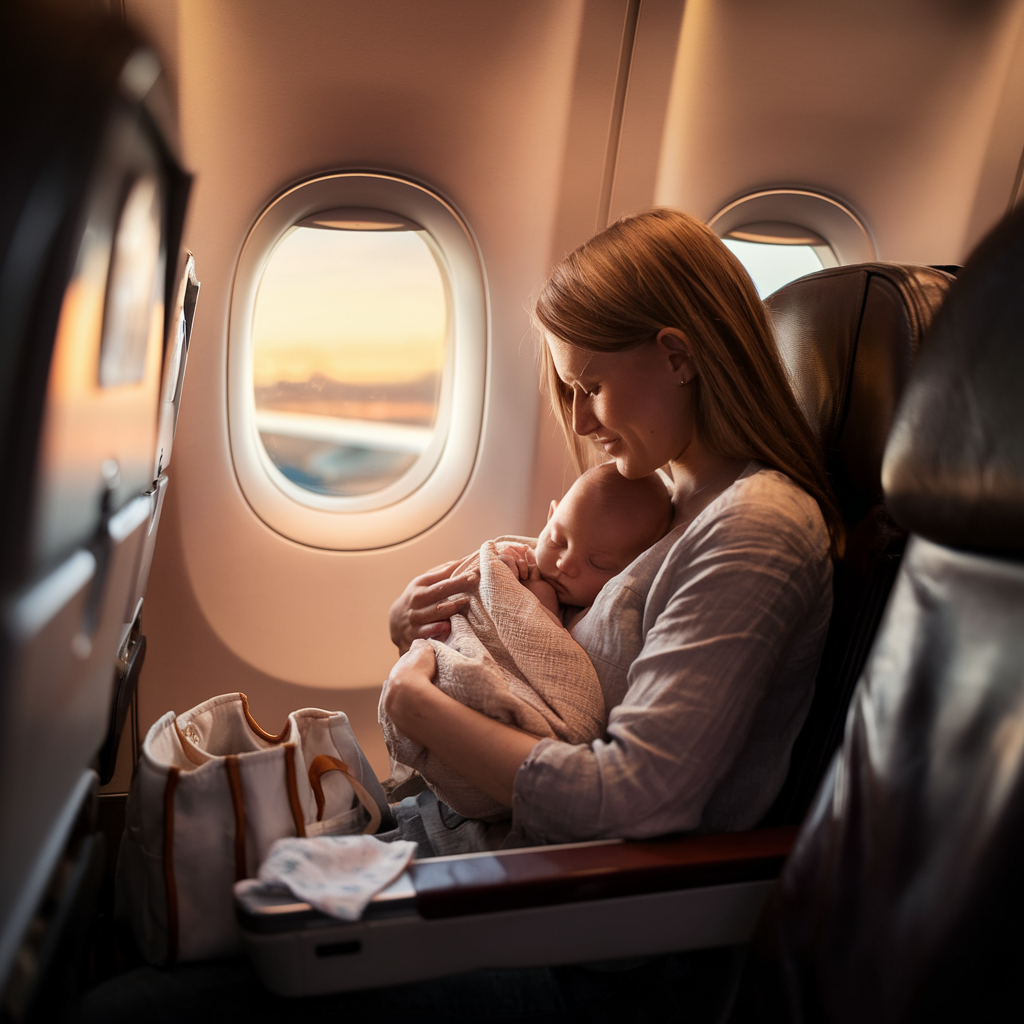
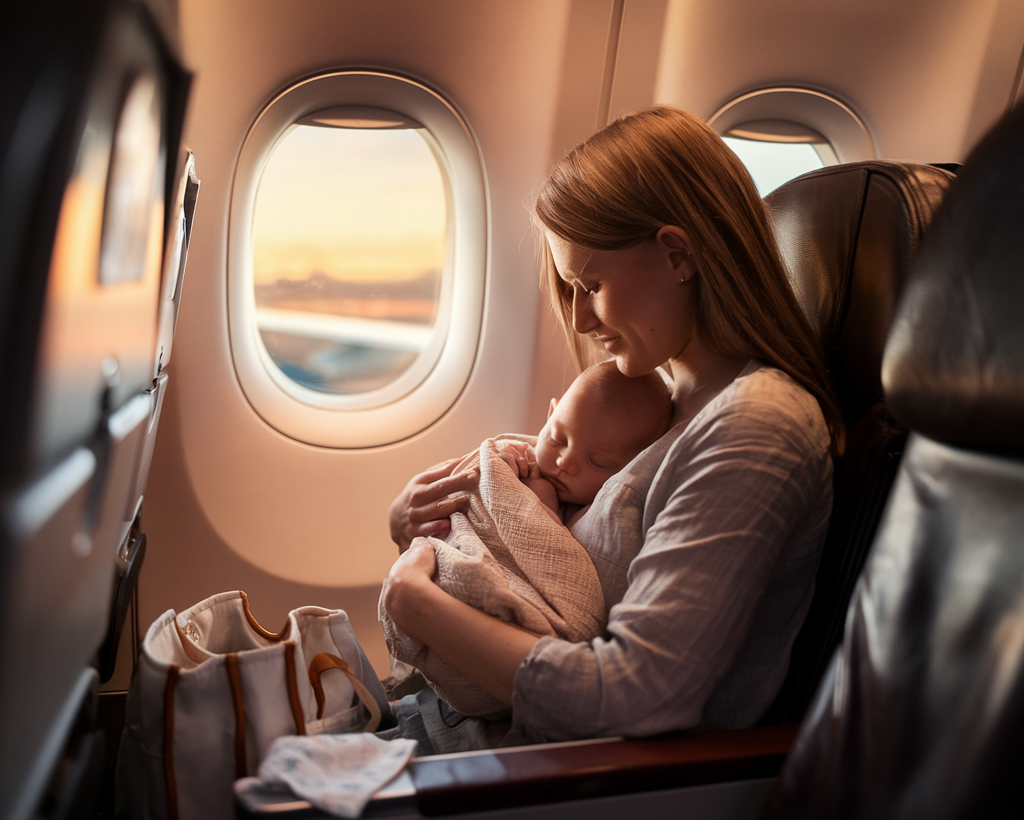
Quick answer: Doable — and better than most people fear before the first trip. The key variables are: the baby’s temperament, the flight duration, how well-equipped you are, and your own anxiety level. Preparation makes a much larger difference than luck.
Before you go: logistics
Book the seat configuration thoughtfully. For lap infants: an aisle seat allows you to stand and pace without disturbing neighbours; bulkhead rows on long-haul flights often have bassinet mounts (book early — limited numbers, airlines allocate to families first). Bring a carrier or sling: indispensable at boarding and disembarking when the buggy is gate-checked. Pack the changing mat in the accessible section of the cabin bag — aircraft changing tables are tiny and inconvenient to reach when fully loaded. Formula: pre-measure into a dispensing container; buy bottled water airside (past security) for mixing to avoid the security rules on liquids. Breastfeeding: easiest feeding on a plane — no equipment, no security issues, can be done seated.
During the flight: ear pressure
Ear discomfort from cabin pressure changes is the main baby discomfort during flights. Manage it by feeding (breast or bottle) or offering a pacifier during take-off and landing — swallowing equalises the pressure. Plan the feed: the baby should be hungry enough to feed actively at these moments. A baby who has just fed and falls asleep before take-off will wake to the pressure change without the ability to equalise. Timing the pre-flight feed so the baby wants to feed at take-off is worth the planning effort.
Packing the cabin bag
diapers: pack double the expected number for the flight duration. A 4-hour flight needs 10–12 diapers minimum. Changes of clothing for the baby: 3 sets. A change of top for you: 1. Baby wipes: a large pack. Snacks for babies on solids: pouches are the most practical format. Toys: new, novel objects hold attention longer than familiar ones — wrap small new items individually to extend the reveal. Download entertainment before flying (for older babies, from around 12 months, a screen held by a parent can work for short periods).
Frequently Asked Questions
What’s the best age to fly with a baby?
There’s no universally best age — each stage has different challenges. Under 3 months: small, portable, feeds and sleeps; but medical caution applies (see safety section). 3–6 months: often the easiest window — before mobility, before separation anxiety, relatively predictable. 6–12 months: harder as babies become mobile and impatient. 12–24 months: the hardest age for most families — old enough to want to explore, not old enough to understand the situation. 2+ years: the second easiest window — can engage with screens, understands some instructions.
Do I need to bring a car seat on the plane?
Only if your baby has their own seat. Many families choose not to — the lap infant option is standard practice. If you do bring a car seat for a booked seat, ensure it is FAA-approved (for US carriers) or meets carrier requirements. Airlines can require you to gate-check seats that don’t meet requirements, so verify in advance.
How do I handle time zones with a young baby?
Under 3 months, babies don’t have an established circadian rhythm and are relatively adaptable. From 3–6 months: adjust sleep and feed times by 30 minutes per day starting 3–4 days before travel. On arrival: bright natural light in the morning at the destination and darkness at bedtime are the most powerful circadian reset tools.
Related Reading
- Travel with baby checklist: don’t forget a thing
- Is it safe to fly with a baby?
- Best baby carriers 2025: wraps, ring slings and structured SSCs
Found this helpful? Sign up to the LylyMama newsletter — evidence-based answers to the questions every new parent actually has.