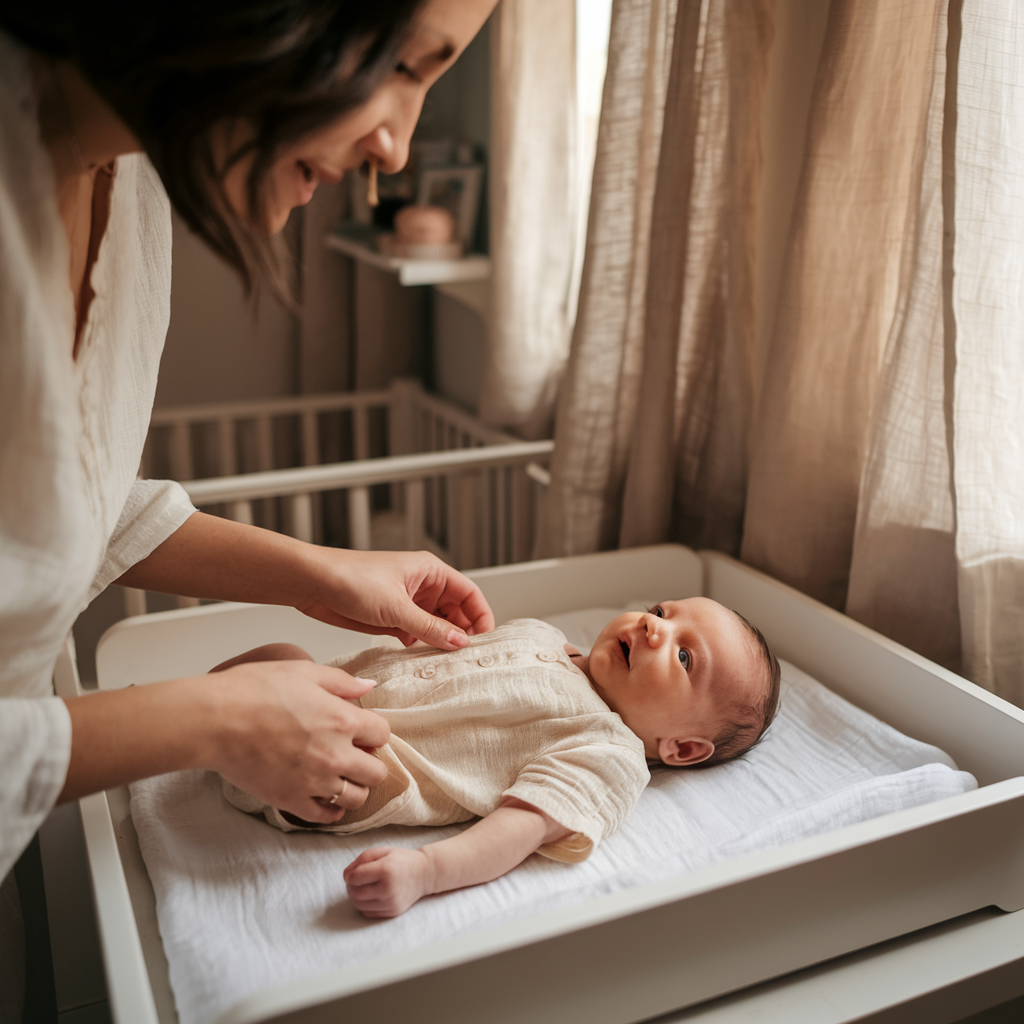
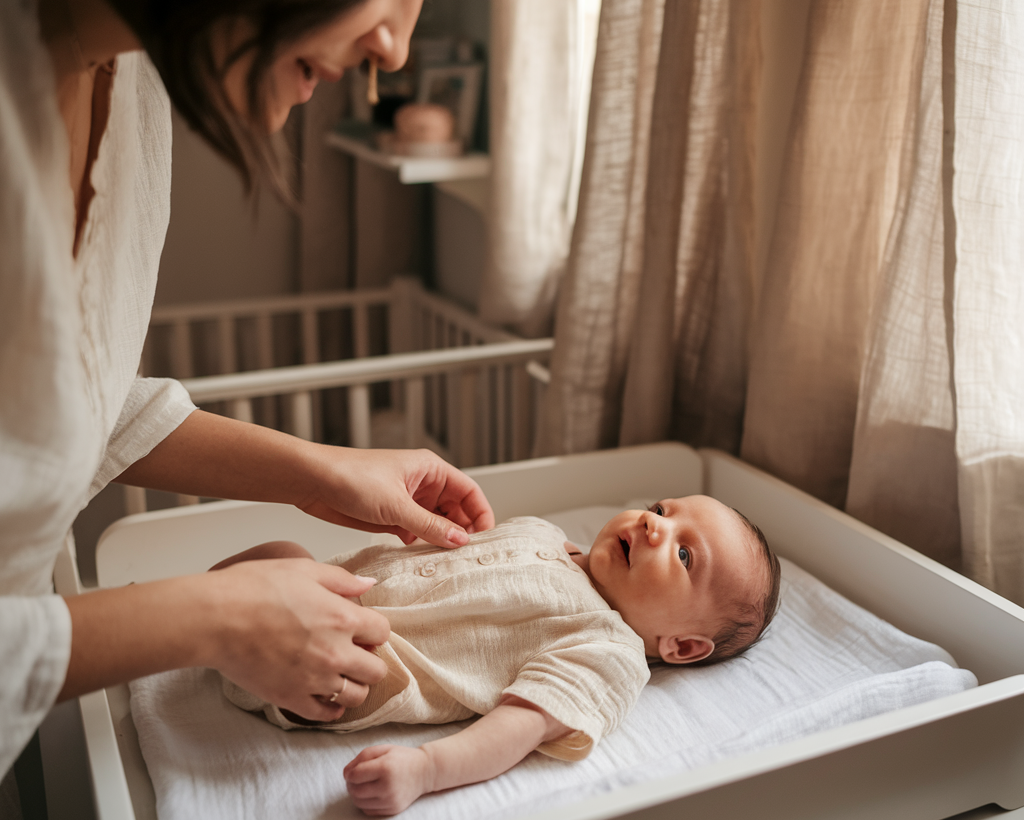
Quick answer: Dress baby in one layer of lightweight cotton in hot weather. Check temperature at the back of the neck, not hands. The target room temperature remains 16–20°C — use fans and blackout blinds rather than adding layers. Sun protection, not UV clothing, is the priority outdoors.
The overheating risk in summer
Overheating is an independent risk factor for SIDS in multiple large studies. Babies cannot sweat efficiently (sweat glands are immature) and cannot remove their own clothing — they rely entirely on the caregiver to manage their thermal environment. In summer, the risk shifts from underdressing to overdressing: parents who worry their baby is cold can inadvertently overheat them. The assessment principle is unchanged: back of the neck or chest, not hands. Hot or sweaty: remove a layer immediately.
What to wear in warm weather
Room temperature above 24°C: a diaper and a light cotton vest or a 0.5 tog sleeping bag is sufficient for sleep. Outdoors in warm sun: a single layer of loose, lightweight, breathable cotton. Avoid synthetic fabrics (polyester, nylon) — they trap heat. Dark colours absorb more solar radiation — light colours in direct sun are preferable. UPF-rated sun suits are useful for beach and pool environments where extended sun exposure is expected. For everyday outdoor activities with shade available, regular cotton clothing is adequate.
Room temperature management
Keep the baby’s room cool during hot weather: close blinds and curtains during the day to reduce solar heat gain (the sun heating a closed room significantly raises temperature); open windows in the evening when outside air is cooler than the room; use a fan to circulate air (not pointing directly at the baby, but improving air movement in the room). A fan in the room modestly reduces SIDS risk by improving air circulation and reducing humidity. Don’t use portable air conditioning units that dry the air significantly without a humidifier — very dry air can affect infant respiratory passages.
Sun protection
For babies under 6 months: avoid direct sun exposure entirely where possible; use a pram canopy, a tree’s shade, or the shade of a building. Sunscreen is not recommended under 6 months — keep out of sun physically. For babies 6 months and older: SPF 50+ mineral sunscreen (zinc oxide or titanium dioxide based) is appropriate on exposed skin; apply before going out and reapply every 2 hours or after water contact. A wide-brimmed hat with a brim of 5–7cm protects face, neck, and ears. Never leave a baby in a pram with a sun cover or blanket over it — these create a heat trap; a muslin allows some air circulation.
Frequently Asked Questions
My baby feels cool when I pick them up in summer — are they too cold?
Check the back of the neck or chest, not the arms. A baby with a warm neck and chest but cool-feeling limbs is appropriately dressed. Cool extremities are normal physiology. Only add a layer if the neck feels cool.
Can I put my baby in a paddling pool in summer?
Babies under 6 months: water must be 32°C minimum (cooler than most paddling pools at ambient temperature — add some warmed water from a kettle). Supervision is always direct and hands-on. Brief dipping (5–10 minutes maximum under 3 months) is fine. Never leave a baby alone near water of any depth. From 6 months: paddling pools are a great summer activity; 15–20 minute sessions with appropriate water temperature.
Does a baby need to drink more water in summer?
Under 6 months: breast milk or formula provides all fluid needed, including in hot weather (breastfed babies may want to feed more frequently). No additional water needed or recommended under 6 months. From 6 months: sips of cooled boiled water alongside meals can be increased in hot weather, but the main fluid source remains milk.
Related Reading
Found this helpful? Sign up to the LylyMama newsletter — evidence-based answers to the questions every new parent actually has.