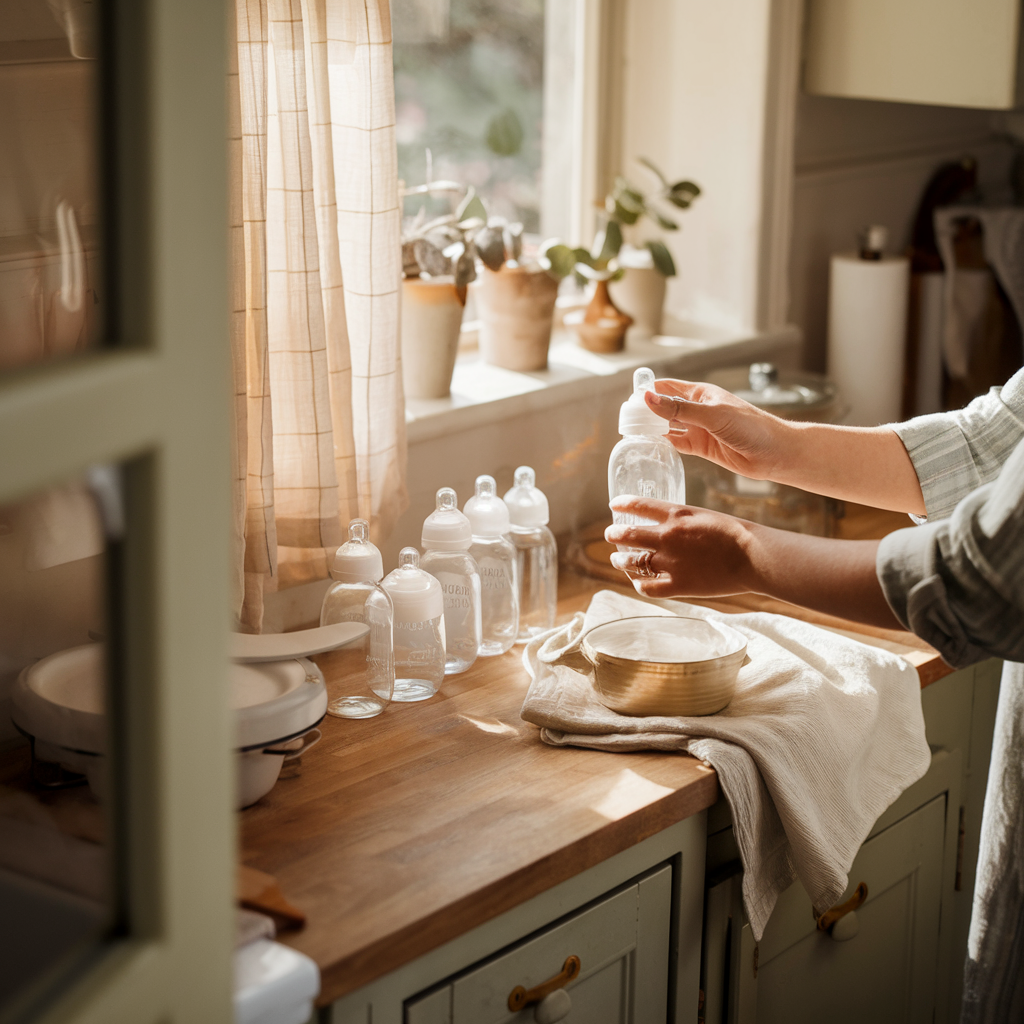
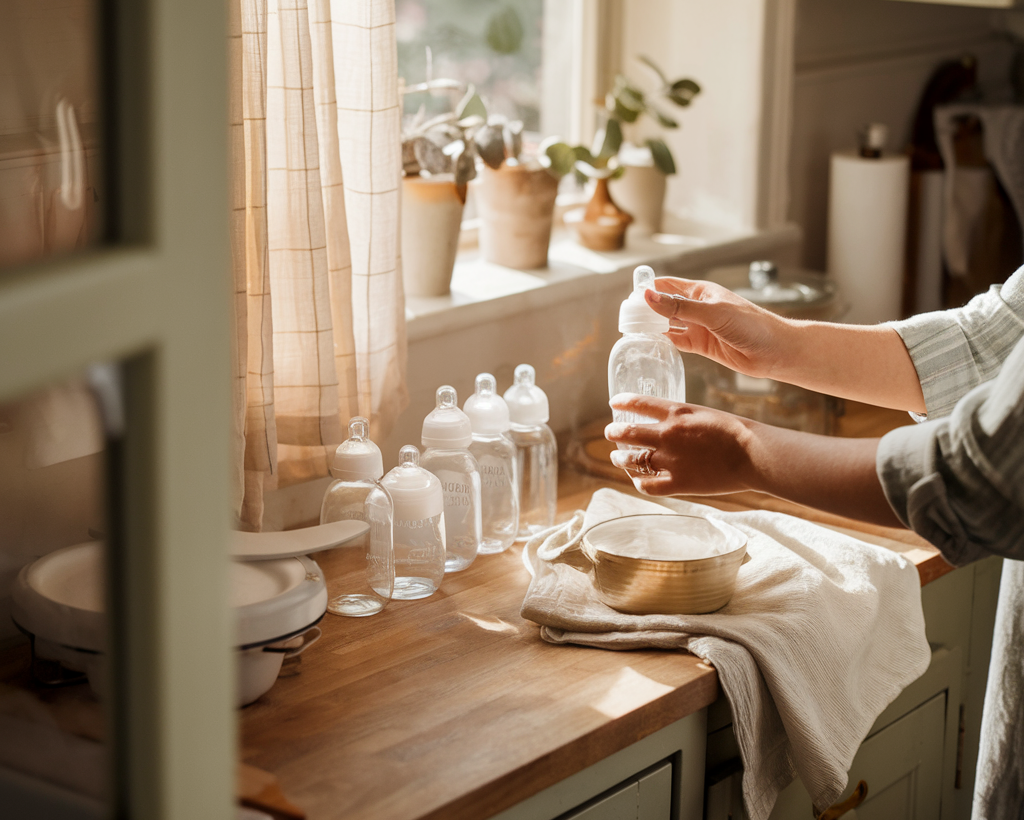
Quick answer: Yes — until 12 months, sterilise all feeding equipment (bottles, teats, breast pump parts that contact milk) after every use. From 12 months, the immune system is mature enough that normal cleaning in hot soapy water or a dishwasher is sufficient.
Why sterilisation matters under 12 months
The immune system in the first year is significantly less capable than in older children. Bacteria and viruses that a 2-year-old clears without illness can cause serious infection in a young baby. Feeding equipment provides an ideal environment for bacterial growth: milk residue, warmth, and moisture create ideal conditions for pathogens including Salmonella, E. coli, Cronobacter (Enterobacter sakazakii — particularly dangerous to newborns and specifically associated with formula preparation), and Listeria. Sterilisation kills these organisms. Hot soapy washing removes milk residue but doesn’t reliably kill all pathogens in the quantities needed for infant safety.
Sterilisation methods compared
Electric steam steriliser: the most widely used and time-efficient home method. Typically sterilises a full load (6–8 bottles and parts) in 8–15 minutes. Items remain sterile in a sealed steriliser for 24 hours. Microwave steam steriliser: faster (4–8 minutes) and cheaper to buy but requires the microwave to be in regular use and sterilises fewer items simultaneously. Cold water steriliser (Milton or equivalent): uses a sterilising solution (sodium hypochlorite); bottles must be fully submerged for minimum 30 minutes. Effective but slower. Items can remain in the solution until needed. Boiling: items submerged in boiling water for 5–10 minutes. Effective but degrades teats faster than other methods and is less practical for daily use. All methods work — choose based on your kitchen setup and usage pattern.
What needs sterilising
Every item that contacts milk: bottles, teats, caps, rings, breast pump flanges, valves, tubing (if applicable). Teething toys and general feeding accessories (plates, spoons) don’t need sterilising — clean in hot soapy water. Formula mixing equipment (jug, stirrer) should be sterilised. Pump parts: all components that contact milk should be sterilised after each use.
Cleaning before sterilising
Sterilisation does not substitute for cleaning — milk residue must be removed first or it prevents adequate steam or solution penetration. Before sterilising: rinse all items in cold water first (hot water sets milk protein); wash with hot soapy water using a bottle brush; rinse thoroughly. Then sterilise. Putting unwashed equipment directly into a steriliser does not produce clean, safe feeding equipment.
What actually causes contamination risk in baby feeding equipment
The sterilisation requirement before 12 months exists because young babies’ immune systems cannot reliably neutralise pathogens that older children handle without difficulty. The primary risk organisms in baby feeding equipment are Cronobacter sakazakii (found in powdered formula and able to survive in inadequately sterilised teats and bottle interiors) and various gram-negative bacteria that colonise residual milk film. Washing alone — even in a dishwasher at 60°C — does not achieve sterilisation. The temperature required to kill Cronobacter reliably is 100°C (boiling) or the equivalent achieved by steam sterilisers. Cold water sterilisation using sodium hypochlorite solution (Milton) achieves the same result chemically. After 12 months, the immune system has developed sufficient capacity that standard dishwasher cleaning is adequate.
Frequently Asked Questions
Can I put baby bottles in the dishwasher instead of sterilising?
A dishwasher with a hot programme (at least 65°C) can sanitise but doesn’t technically sterilise — the temperatures and steam contact don’t reliably kill all pathogens at the level a dedicated steriliser does. For healthy term babies over 6 months, many families use the dishwasher with good results. For newborns, premature babies, or immunocompromised babies, dedicated sterilisation is recommended throughout the first year.
Do I need to sterilise equipment that only contacts formula powder?
Yes — the mixing equipment (jug, scoop, lid) contacts milk once the formula is prepared. Sterilise before use. The formula powder container itself does not need sterilising.
After 12 months — is any sterilising needed?
No — at 12 months, a thorough wash in hot soapy water or a dishwasher is adequate. You can store away the steriliser at this point.
Related Reading
- Formula feeding guide: types, amounts and prep safety
- Best infant formula 2025: nutritional comparison guide
- When should I introduce a bottle to a breastfed baby?
Found this helpful? Sign up to the LylyMama newsletter — evidence-based answers to the questions every new parent actually has.