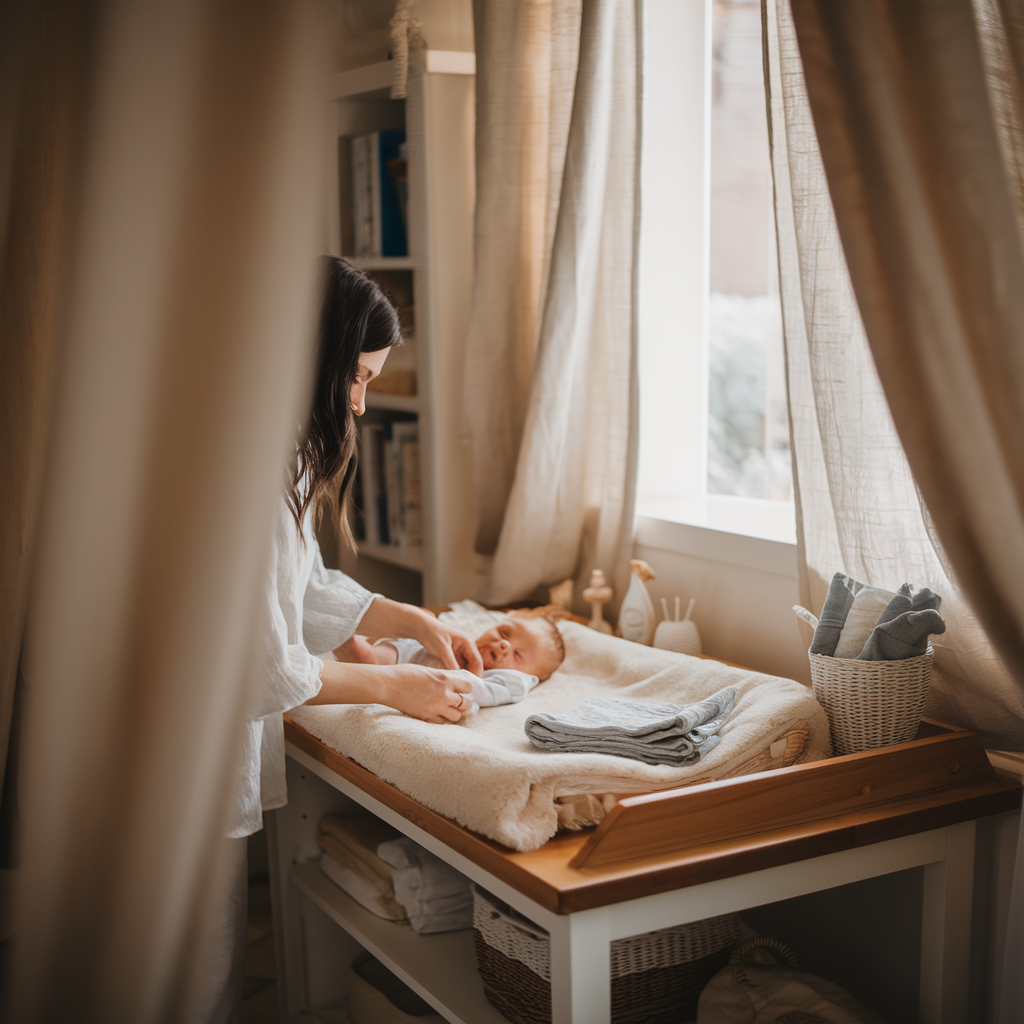
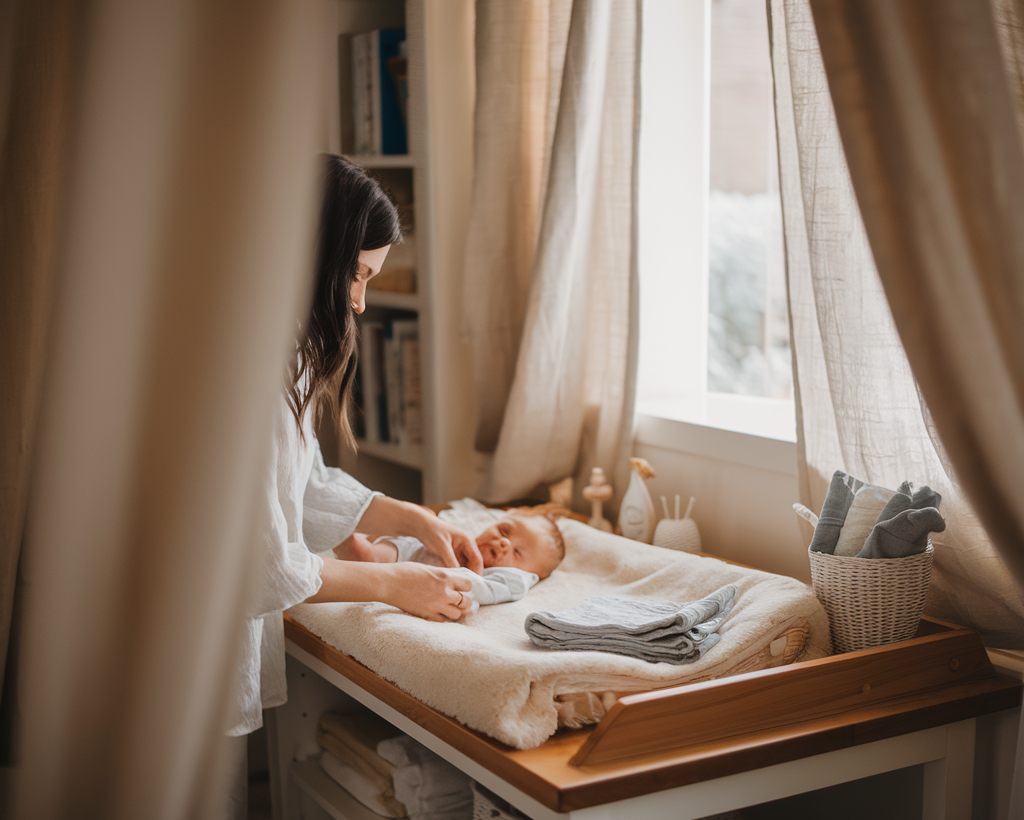
Changing tables and mats are used thousands of times in the first two years — ergonomics and hygiene features matter significantly more than aesthetics.
What makes a changing station functional
Safety — changing tables should have a safety strap and raised sides; never leave a baby unattended on an elevated surface. Height — standard height (90cm) reduces back strain. Waterproofing — the mat surface must be fully waterproof and wipe-clean. Storage — organised storage within arm’s reach significantly reduces the one-hand-holding-baby problem.
Budget: IKEA Skötsam Changing Pad + Hemnes Dresser — ~£15 for the pad + existing furniture
A waterproof changing pad with raised edges, safety strap, and wipeable cover designed to sit on top of the Hemnes or Malm dresser. At £15 for the pad it’s the most economical approach — when the changing years are over, you have a functional dresser without a piece of nursery furniture to rehome.
Pros: Very affordable, uses existing furniture, dresser remains useful after changing, safety strap
Cons: No dedicated storage at changing height, dresser must be at appropriate height
Best for: Parents who want to avoid a dedicated changing table or those converting existing furniture
Mid-range: Mamas & Papas Franklin Changer — ~£300
Dedicated changing unit with mat, safety strap, and three-tier open storage below for organised nappy essentials. Height (88cm) is ergonomic for most parents. Open shelves rather than drawers make one-handed access while holding a baby actually possible. Matches other Mamas & Papas nursery ranges.
Pros: Dedicated height, open storage for easy access, safety features, matches nursery ranges
Cons: Becomes redundant at ~2–3 years, significant floor space, price for limited-life piece
Best for: Families buying coordinated nursery furniture who want dedicated storage at the changing station
Portable: Skip Hop Pronto Signature Portable Changing Mat — ~£25
A compact, padded, wipeable mat that folds into its own case with a shoulder strap. Fits inside most nappy bags and turns any clean floor space into a usable changing area. At £25 an essential purchase regardless of whether you also have a fixed changing station.
Pros: Genuinely portable, compact, padded, wipeable, affordable, works anywhere
Cons: No raised sides — requires constant hand on baby, no storage
Best for: Every family as a travel/portable option; and families who prefer floor changing
How to set up without a dedicated unit
Whatever your changing setup, buy the portable changing mat before birth — it becomes essential at the first GP visit, the first supermarket trip, the first visit to a house without a changing table. The Skip Hop Pronto folds to approximately the size of a thick paperback and fits in any nappy bag. A changing pad with built-in pockets (wipes, nappies) reduces the number of items you’re managing one-handed. All changing surfaces: hand must remain on the baby at all times on any elevated surface.
Frequently Asked Questions
Is a dedicated changing table worth buying?
For most families: no. A wipeable mat on a dresser top at the right height is functionally equivalent. The exception: families who want specific storage organisation of a dedicated unit.
At what age do I stop using a changing table?
Most children can be reliably nappy changed on a floor mat from about 9–12 months.
How do I make nappy changes less of a battle with a mobile baby?
From approximately 6 months when babies start rolling: always have a distraction ready before you begin — a specific toy only used for changes, a song, a particular object to hold. Change on a mat on the floor rather than an elevated surface once the baby is mobile — safer and reduces wrestling risk. Standing nappy changes (using pull-up nappies) become practical from approximately 12 months. Consistency and speed both help.
Related Reading
- Nursery essentials checklist: what you actually need vs nice-to-haves
- Baby’s first bath: step-by-step guide for nervous parents
- Best baby bath seats and tubs safe and practical
Disclosure: This post contains affiliate links. If you buy through our links we may earn a small commission at no extra cost to you. We research products independently and are never paid to recommend specific items.
Found this helpful? Sign up to the LylyMama newsletter for honest, researched guides on everything you need in pregnancy and early parenthood.
The Skötsam’s raised edges on three sides (the back edge is open for sliding the baby onto the mat) prevent rolling off. Safety strap provides additional security. The PVC surface wipes completely clean with one cloth. At £15, replacing it after heavy use is economically straightforward. The fit on the Hemnes dresser is precise — Hemnes top dimensions accommodate it correctly.
The open shelving below the changing surface is the Franklin’s practical advantage over closed drawers — reaching for a nappy while keeping one hand on the baby is actually possible with shelving; it requires two hands on a drawer. The surfaces throughout are wipe-clean. At 88cm height it’s ergonomic for average adult height; measure against your own height before buying.
The Pronto’s fold produces a compact rectangle approximately 23 × 14 × 5cm — fits in the main compartment of any nappy bag. The padded surface is adequate for outdoor and tiled floor changes. Two pockets on the exterior hold 2–3 nappies and a wipes packet — everything needed for a standard change without opening the main bag.