
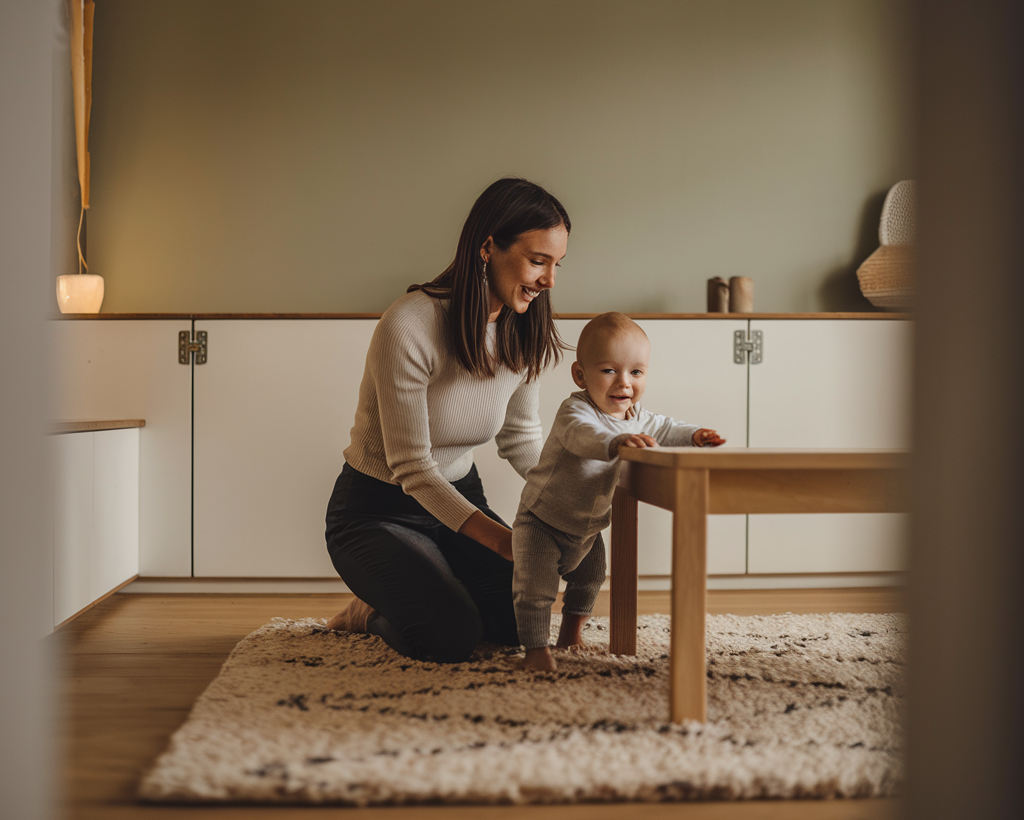
Quick answer: Baby-proofing transforms your home from a comfortable adult space into a safe environment for a rapidly mobile, endlessly curious baby. This guide covers the principles and priorities behind each safety measure — for a quick room-by-room action list, see the Babyproofing checklist.
Baby-proofing transforms your home from a comfortable adult space into a safe environment for a rapidly mobile, endlessly curious baby. This guide covers the principles and priorities behind each safety measure — for a quick room-by-room action list, see the Babyproofing checklist. The critical insight: start before mobility arrives — most parents baby-proof reactively, after their baby has already accessed a hazard.
When to Start
Begin baby-proofing by 4–5 months — before rolling begins. Rolling leads to unexpected repositioning; crawling follows sooner than most parents anticipate. Complete the most critical safety measures before your baby is mobile: stair gates, socket covers, securing heavy furniture, and removing obvious hazards from low levels. You will add to baby-proofing progressively as mobility and reach increase.
Kitchen Safety
The kitchen is the highest-risk room. Priority measures: cabinet locks on all lower cabinets (particularly cleaning products, knives, and medications — ideally stored separately in locked cabinets anyway), appliance locks on the oven and dishwasher, stove knob covers, turning pot handles inward, ensuring the fridge has a child lock if baby can reach it, securing the rubbish bin, and storing plastic bags completely out of reach. When cooking, use back burners where possible and avoid holding hot beverages while carrying baby.
Living Room
Corner and edge bumpers on coffee tables and sharp furniture edges. Secure heavy furniture (bookshelves, TVs, chests of drawers) to the wall with anti-tip straps — TV-tip and furniture-tip accidents kill multiple children annually. Socket covers on all accessible outlets. Secure blind cords (strangulation risk) out of reach or replace with cordless blinds. Remove heavy objects from low surfaces. Secure floor lamps.
Bathroom
Bathroom door locked or kept closed at all times — young children drown in inches of water. Non-slip bath mat. Hot water thermostat set to 120°F / 49°C maximum to prevent scalding. All medications, toiletries, and cleaning products stored in locked or out-of-reach cabinets. Toilet lock if baby reaches that height.
Stairs and Outdoor Areas
Stair gates at both top and bottom of stairs — pressure-mounted gates are only appropriate for bottom of stairs; hardware-mounted gates required at the top. Check gate fit regularly as baby grows. Outdoors: pool gates (self-closing, self-latching), balcony balustrade gaps under 4 inches (10cm), garden gate latches out of reach, secure compost bin and garden chemicals.
Frequently Asked Questions
What are the most dangerous household hazards for babies?
In order of injury and death statistics: drowning (bath, pool, buckets), falls (from furniture, down stairs), choking (small objects, food), poisoning (medications, cleaning products, button batteries), and burns (hot liquids, oven, fireplace). Button batteries (the flat round batteries in remote controls, keys, and small electronics) are a particular concern — if swallowed they cause severe internal burns within 2 hours. Keep all devices containing button batteries completely secured.
At what age can I relax baby-proofing?
Baby-proofing evolves rather than ends. The acute measures (socket covers, stair gates, lower cabinet locks) can typically be phased out between 3–4 years when children develop sufficient judgment and can follow safety instructions. However, some measures (pool gates, locked medications, secured heavy furniture) should remain permanent regardless of age.
Do socket covers actually prevent electrocution?
Traditional socket covers have actually been questioned as a safety measure — some studies suggest curious toddlers can remove them and in doing so, access the socket more easily. Modern tamper-resistant outlets (with internal shutters that only open when pressure is applied to both sides simultaneously) are more effective and are standard in new construction in many countries. Check your sockets and replace if needed.
Disclosure: This post contains affiliate links. We may earn a small commission at no extra cost to you. We only recommend products we genuinely trust.
Related Reading
- 8 month old baby: crawling, standing & stranger danger
- Babyproofing checklist: room-by-room safety guide
- 9 month old baby: first words coming — how to encourage speech
Found this helpful? Sign up to the LylyMama newsletter for evidence-based baby development guides delivered to your inbox every week.