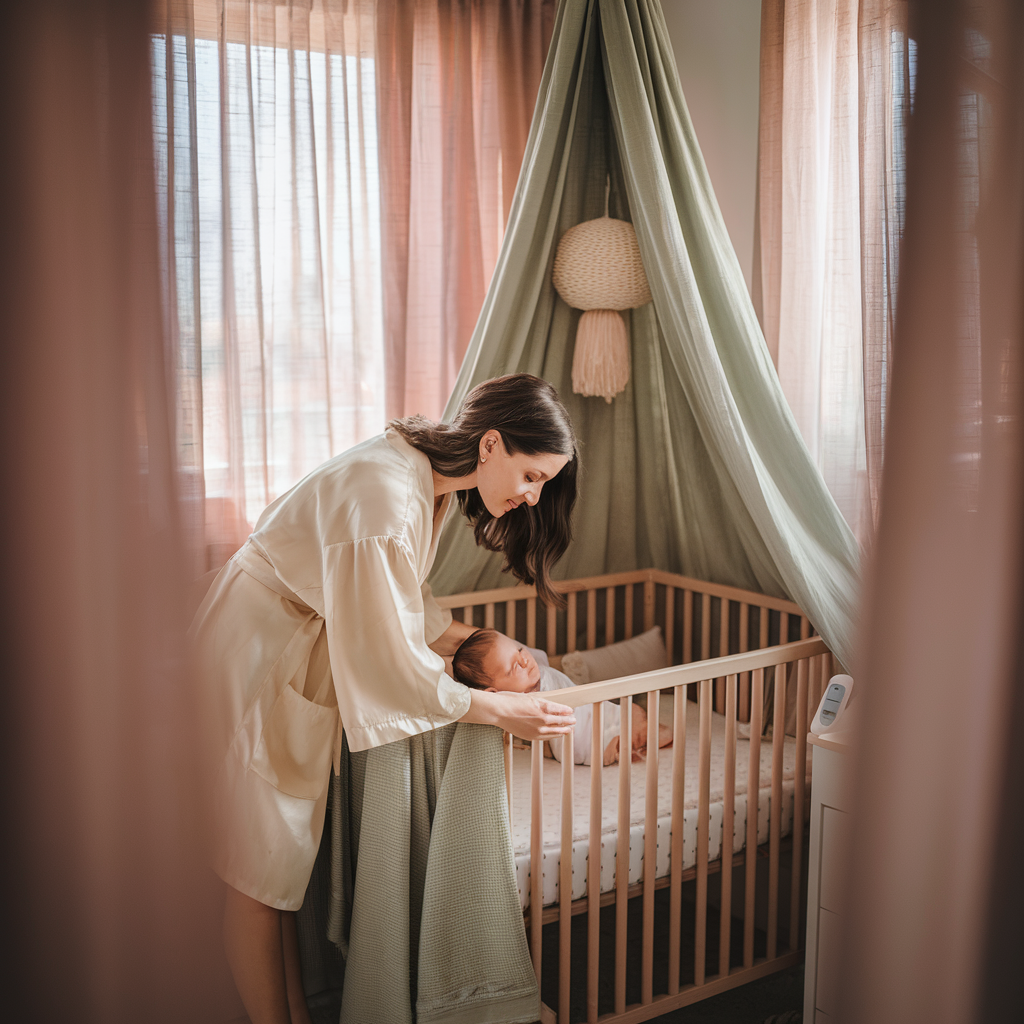
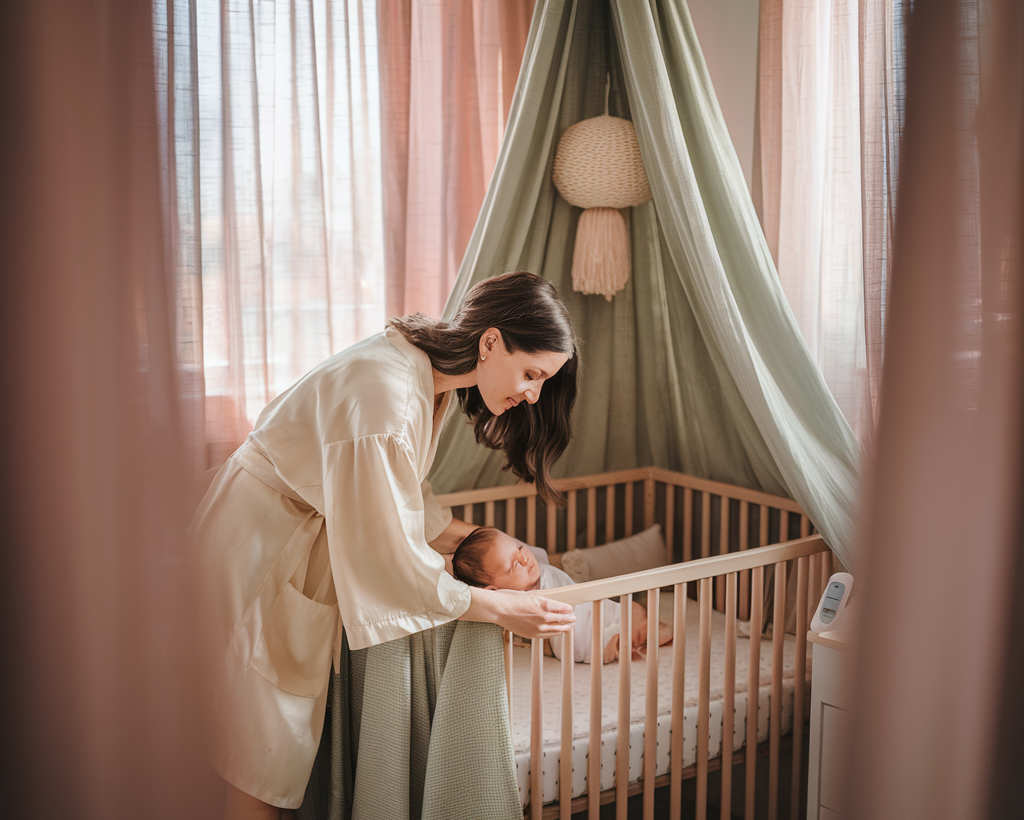
Quick answer: The recommended baby room temperature is 16–20°C (61–68°F), with 18°C (65°F) being the ideal target. Overheating is an independent risk factor for SIDS — cooler is safer than warmer within this range.
Why temperature matters for SIDS risk
Overheating has been identified as an independent risk factor for SIDS (Sudden Infant Death Syndrome) in multiple large studies. Babies cannot regulate their body temperature as efficiently as adults — they primarily cool through their head (which is why keeping the head uncovered during sleep is so important), and they cannot remove blankets or adjust their environment when they get too warm. A 2014 meta-analysis found that overheating (defined as sweating on the neck, damp hair, or flushed appearance during sleep) increased SIDS risk by approximately 3 times.
How to dress baby appropriately for the room temperature
The general guideline: dress baby in one more layer than you would be comfortable in. This is a rough rule — what matters is how the baby feels, not how many layers they’re wearing. Check your baby’s temperature by placing your hand on the back of their neck or their chest (not their hands or feet, which are normally cooler). Baby should feel warm but not hot, and definitely not sweaty. A useful framework for nightly dressing: 24°C+ room temperature: diaper and a thin baby sleeping bag (0.5 tog). 20–24°C: vest and a light sleeping bag (1 tog). 18–20°C: vest, a babygrow, and a 2.5 tog sleeping bag. 16–18°C: vest, babygrow, and a 3.5 tog sleeping bag or a warmer sleeping bag.
How to measure and maintain room temperature
A room thermometer is worth having — your perception of room temperature is unreliable, and the temperature at adult height is different from the temperature at cot level (cooler air sinks). Position the thermometer at cot height. For controlling temperature: in summer, keep blinds or curtains closed during the day to reduce solar heat gain; use an electric fan in the room (not pointing directly at baby) — this reduces humidity and improves air circulation without overcooling; avoid direct heat sources pointing at the cot (radiators, electric heaters). In winter: 18°C is easily maintained with standard central heating; don’t have the heating on all night in the baby’s room unless the house is very cold.
The ‘one safe place’ principle
All temperature management happens at the sleep environment level — there’s no need to worry about temperature fluctuations during daytime play, feeding, and carrying. The sleep environment is where temperature management matters because that’s where baby is immobile and unable to communicate thermal discomfort for extended periods. During feeds and awake time, baby’s temperature self-regulates through movement and your body contact.
Frequently Asked Questions
My baby’s hands are cold at night — should I be worried?
No — cool hands and feet are normal in babies and don’t indicate the baby is cold. Peripheral circulation is less efficient in babies, and hands and feet are not reliable indicators of core temperature. Check the back of the neck or chest instead. A baby with warm chest but cool hands is fine.
Can I use a fan in a baby’s room?
Yes — a fan in the room (not pointing directly at baby) is safe and may modestly reduce SIDS risk by improving air circulation. A 2008 study (Coleman-Phox et al., Archives of Pediatrics & Adolescent Medicine) found that fan use during sleep was associated with a 72% reduction in SIDS risk compared to no fan use. The finding has not been replicated in large RCTs, but the principle — that air circulation reduces the rebreathing of exhaled CO₂ near the baby’s face — is biologically plausible and consistent with safe sleep guidance.
Is a heated mattress or electric blanket safe for babies?
No — electric blankets, heated mattresses, and any heating element directly in the sleep surface are not safe for babies. Baby’s temperature management should come from the room temperature and appropriate clothing layers, not from heating the sleep surface.
Related Reading
- Safe sleep for newborns: the complete ABCs guide
- Best baby thermometers 2025: fast, accurate and parent-approved
Disclosure: This post contains affiliate links. We may earn a small commission at no extra cost to you. We only recommend products we genuinely use and trust.
Found this helpful? Sign up to the LylyMama newsletter — evidence-based, honest answers to the questions every new parent actually has, straight to your inbox.