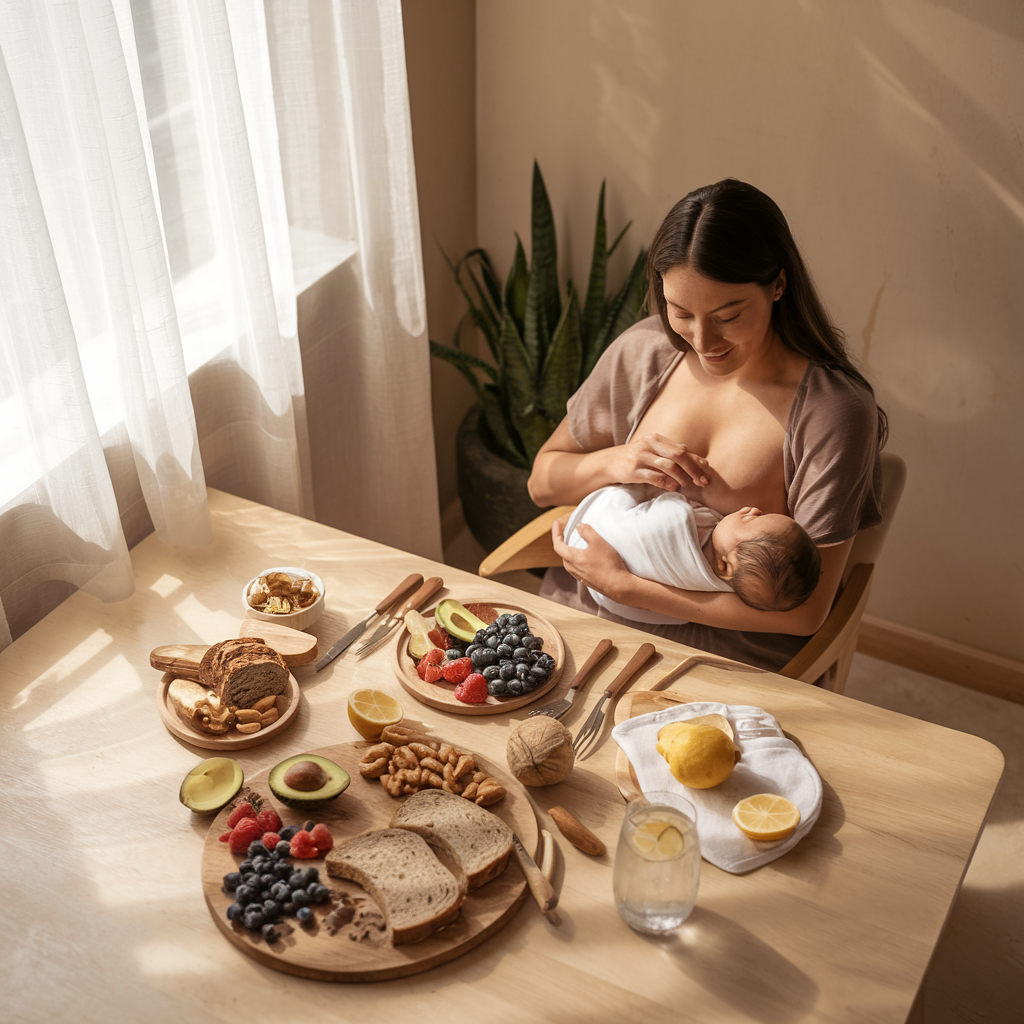
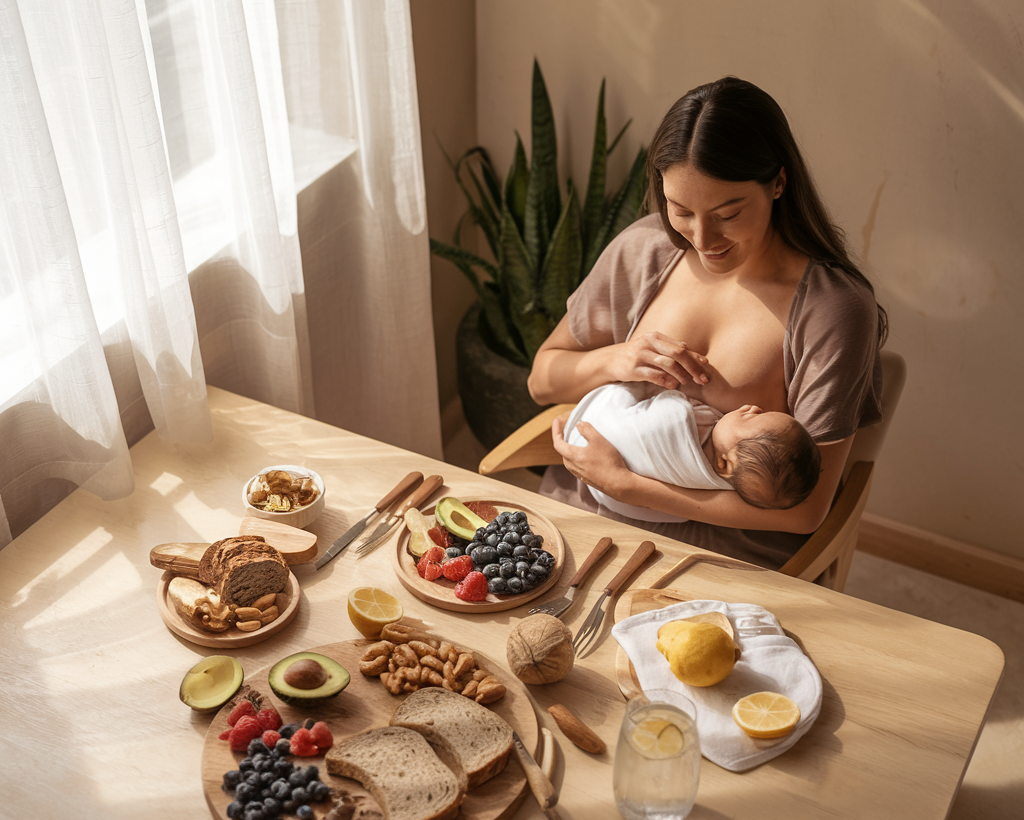
Breastfeeding nutrition is one of the most confusing topics in new parenthood — surrounded by myths, conflicting advice, and often excessive restriction. Here’s what the evidence actually says about what to eat, what to limit, and what you definitely don’t need to avoid.
Your Increased Calorie Needs
Breastfeeding requires approximately 400–500 extra calories per day above your pre-pregnancy maintenance level — more than pregnancy itself. This is not the time for calorie restriction. Inadequate caloric intake is one of the most common (and underrecognised) contributors to low milk supply and postpartum fatigue. Focus on nutrient-dense whole foods rather than counting calories. If you’re hungry, eat. Your body is extremely good at prioritising milk production — but it does so at the expense of your own nutrient stores if intake is insufficient.
Key Nutrients to Prioritise
Calcium (1000mg daily): Your body will pull calcium from your bones to ensure adequate breast milk calcium content. Dairy, fortified plant milks, canned salmon with bones, broccoli, and leafy greens. Iodine (290mcg daily): Critical for baby’s thyroid and brain development. Often deficient in plant-based diets. Best sources: dairy, eggs, seafood, and iodised salt. Check your prenatal/postnatal vitamin contains iodine. Vitamin D (continues to be important): Breast milk is naturally low in vitamin D regardless of maternal intake. Babies need a separate supplement (400 IU/day). Continue your own supplementation. DHA omega-3: Transferred to breast milk for baby’s brain development. Sources: oily fish 2–3 times weekly (salmon, sardines, mackerel), algae-based supplements if not eating fish. Iron: Blood loss at birth depletes iron stores. Iron-rich foods (red meat, legumes, leafy greens with vitamin C) support recovery. B12: Exclusively passed to baby through breast milk. Vegans must supplement consistently.
What to Limit
Caffeine: Limit to 200mg per day (one 12oz coffee or equivalent). Caffeine passes into breast milk, peaks approximately 1 hour after consumption, and young babies metabolise it slowly. Most babies tolerate this level well. Alcohol: Alcohol passes freely into breast milk at the same concentration as blood alcohol. Wait 2 hours per unit consumed before feeding (not ‘pumping and dumping’ — that doesn’t speed elimination). Occasional moderate drinking is generally considered compatible with breastfeeding. High-mercury fish: Same restrictions as pregnancy — avoid shark, swordfish, king mackerel, tilefish, bigeye tuna. Low-mercury fish (salmon, sardines, cod, trout) are encouraged.
What You Don’t Need to Avoid
The list of things breastfeeding women are told to avoid is far too long. You do NOT need to avoid: spicy food (does not affect breast milk meaningfully), garlic (may flavour breast milk but babies generally tolerate this well), dairy (unless baby shows specific signs of dairy sensitivity), cruciferous vegetables (broccoli, cabbage — gas-forming for you, not for baby), or citrus (no evidence it causes problems). Eliminating foods without specific indication reduces dietary variety and nutritional quality unnecessarily.
Diet and Milk Supply
Your milk supply is primarily determined by feeding frequency and effectiveness — not diet. No food reliably increases supply, and no food reliably decreases it (except significant caloric restriction). If supply is a concern, the priority is: feed or pump frequently (8–12 times per 24 hours), ensure effective latch, and ensure adequate caloric and fluid intake. Specific foods (oats, brewer’s yeast, fenugreek) have limited evidence — they may help marginally but won’t fix an underlying supply issue.
Frequently Asked Questions
Does what I eat affect my baby’s colic or gas?
Occasionally yes — in a subset of babies with cow’s milk protein allergy (CMPA), dairy proteins in breast milk can cause GI symptoms. For most babies, maternal diet doesn’t cause colic or gas. If you suspect a link, try a strict 2-week dairy elimination to test (under dietitian guidance). Don’t routinely restrict foods without evidence.
Do I need to eat more to make more milk?
Adequate caloric intake is a floor condition for good milk production — you need enough to support it. Beyond adequacy, eating more doesn’t make more milk. Milk volume is regulated by demand (how much milk is removed) not by caloric excess.
Can I diet to lose baby weight while breastfeeding?
Gradual, gentle weight loss (0.5–1 lb per week maximum) is generally compatible with breastfeeding if caloric intake remains above approximately 1,800 calories. More significant restriction can impair milk supply and nutritional quality. Most breastfeeding women find that eating well and gradually increasing activity leads to natural weight loss without any specific diet.
Disclosure: This post contains affiliate links. We may earn a small commission at no extra cost to you. We only recommend products we genuinely use.
Related Reading
- Can I drink alcohol while breastfeeding?
- Lactation cookies recipe: ingredients thought to support milk supply
Found this helpful? Sign up to the LylyMama newsletter for more recipes, weaning guides, and honest parenting content every week.