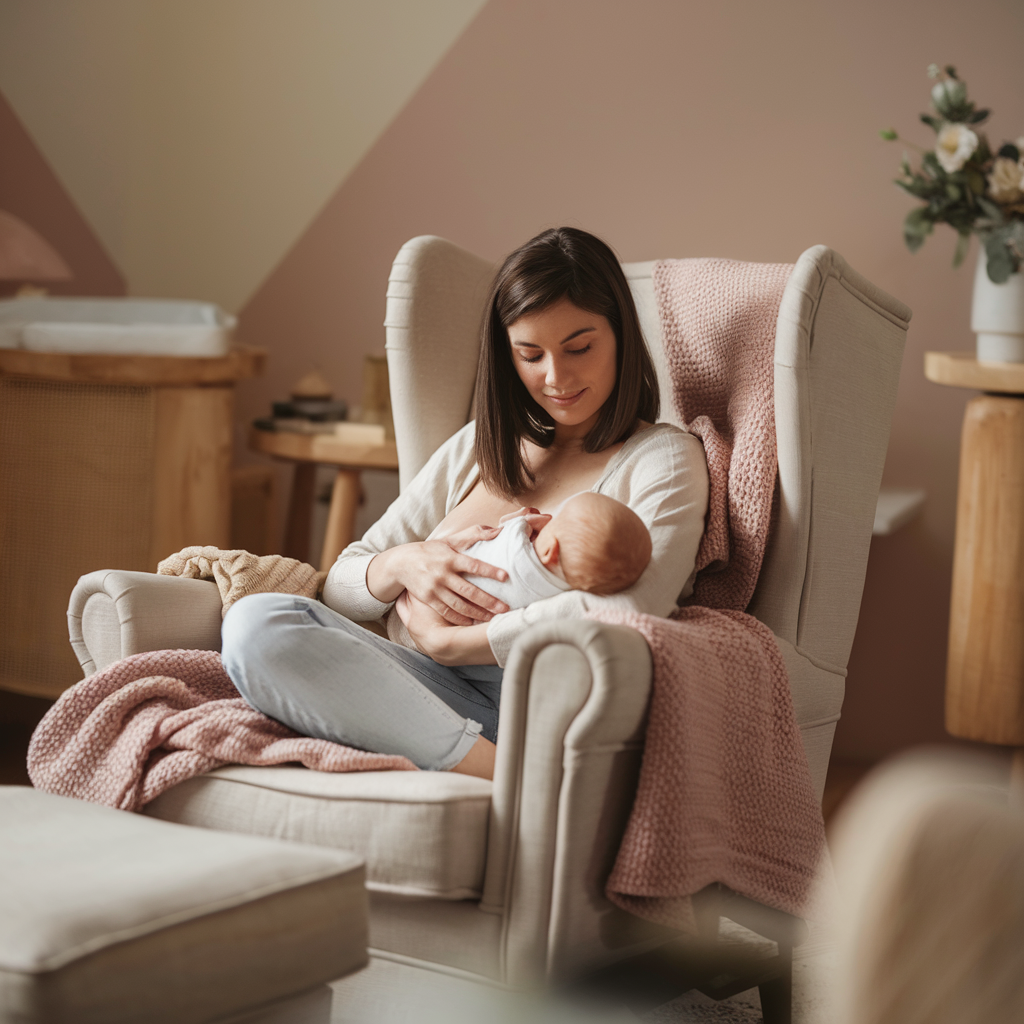
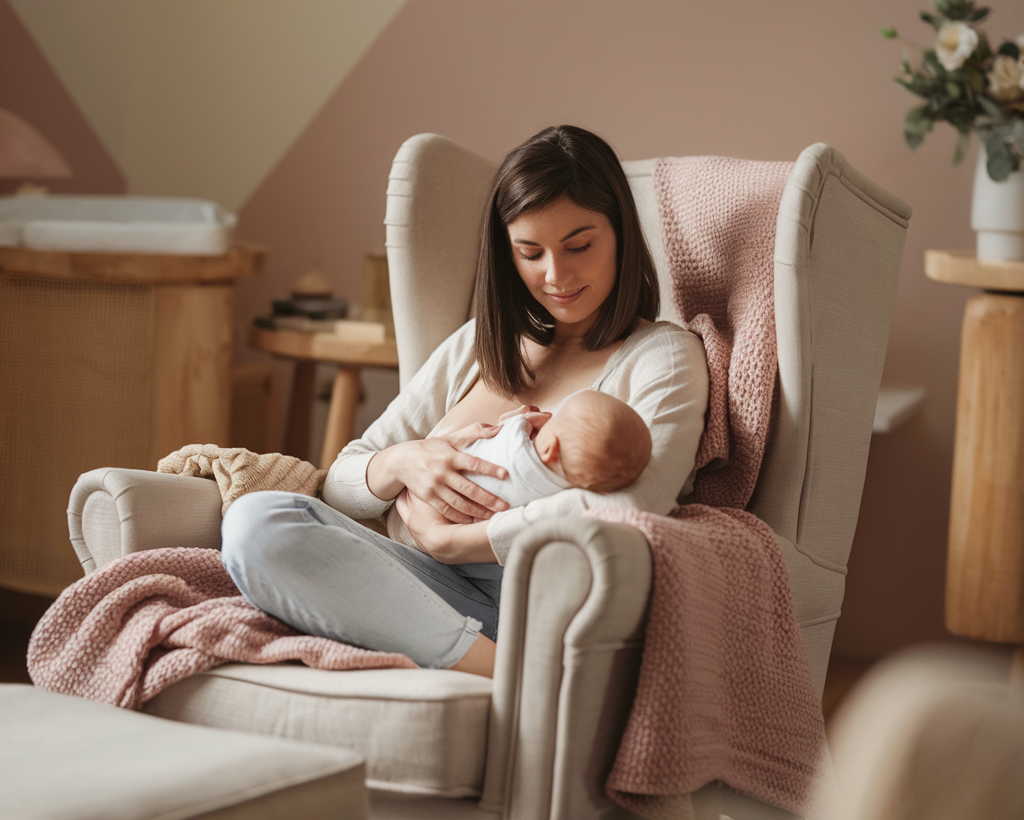
A good nursing bra makes breastfeeding significantly more manageable. A poor one causes discomfort, contributes to blocked ducts, and makes already-difficult feeds more frustrating. This is the one area of breastfeeding equipment where buying cheap reliably causes problems.
Why nursing bra fit matters more than brand
Fit — get measured in the third trimester. Expect to need refitting at milk come-in (days 3–5) when breasts are significantly larger. Wire-free for the first 6–8 weeks — underwire can press on milk ducts and contribute to mastitis. One-handed opening mechanism — you will be holding a baby with the other hand.
Budget: Cake Maternity Croissant T-Shirt Nursing Bra — ~£30
Consistently well-reviewed for balancing support and comfort. Wire-free, soft-cup, suitable for the first weeks and night feeding. The crossover clip opens one-handed easily. Available A–H cup. Machine washable. For a first nursing bra to have ready before birth, this is the sensible starting point — buy 2–3 before birth, refit at 6–8 weeks once supply has regulated.
Pros: Good range of cup sizes, wire-free, one-handed clip, comfortable for day and night
Cons: Less structured than underwire options, stretch fabric not for everyone
Best for: First nursing bra, night feeding, early postpartum weeks when wire-free is essential
Mid-range: Freya Active Underwire Nursing Bra — ~£40–45
From 6–8 weeks when mastitis risk from underwire reduces, a structured underwire bra provides significantly better support — important for larger-busted women. Freya’s sizing extends to K-cup and the support quality for larger sizes is considerably better than most nursing bra brands. Machine washable.
Pros: Excellent support for larger cup sizes, good range up to K-cup, structured support
Cons: Not for early postpartum weeks, requires careful fit
Best for: Larger-busted women from 6–8 weeks postpartum who need structured underwire support
Sleep/night feeding: Bravado Designs Body Silk Seamless Nursing Bra — ~£35
Widely considered the gold standard sleep nursing bra. The seamless construction eliminates pressure points overnight; the stretchy fabric accommodates fluctuating breast size in the first weeks; and nursing access is usable half-asleep. Many breastfeeding women own 3–4 to cover the washing cycle.
Pros: Most comfortable sleep bra available, accommodates size changes, usable while drowsy
Cons: Very little support (sleep use only), stretch fabric loses shape after 6–12 months
Best for: Night feeding — every breastfeeding woman who has one wishes she’d bought it earlier
How and when to get fitted
Get professionally measured before buying nursing bras — by 34–36 weeks for the first purchase and again at 6–8 weeks postpartum when supply has regulated. Both John Lewis and M&S offer free nursing bra fittings by trained staff. The most common mistake is buying in the wrong cup size — post-birth breast volume changes are large and unpredictable, and fitting from pre-pregnancy measurements is inaccurate. Buy 3 as a minimum for rotation: one on, one washed, one spare.
Frequently Asked Questions
When should I buy nursing bras?
By 34–36 weeks. Buy 2–3 wire-free bras before birth and plan to refit at 6–8 weeks.
How many nursing bras do I need?
Three is the minimum: one on, one in the wash, one spare. Most breastfeeding women end up with 4–6 across different styles.
Is it ok to sleep without a bra while breastfeeding?
Yes — many women find sleeping without a bra most comfortable when supply has regulated and leaking has reduced (typically after 6–8 weeks). In the early weeks when engorgement and leaking are common: a soft wireless sleep bra with breast pads is more comfortable than going without. The Bravado Body Silk is the most consistently recommended for this purpose. There is no clinical reason to wear a bra overnight when comfortable.
Related Reading
- Breastfeeding pain: causes and solutions that actually work
- Pumping breast milk: how to build and maintain supply
Disclosure: This post contains affiliate links. If you buy through our links we may earn a small commission at no extra cost to you. We research products independently and are never paid to recommend specific items.
Found this helpful? Sign up to the LylyMama newsletter for honest, researched guides on everything you need in pregnancy and early parenthood.
The crossover front design — where one cup folds down with one hand by pulling the strap — is genuinely operable while the other hand holds a baby. Available from A to H cup across a range of band sizes. The fabric is substantial enough to provide light support without wiring. Machine washable at 30°C. For a first nursing bra to have ready before birth, this is the practical starting point.
Freya’s speciality is larger cup sizes — the range extends to K cup and the support quality for G cup and above is significantly better than most nursing bra brands that nominally offer large cup sizing but produce inadequate support in practice. From 6–8 weeks once supply has established and positioning is reliable, underwire correctly positioned below and outside the breast tissue is appropriate.
The seamless construction eliminates any pressure point against breast tissue overnight — relevant when breasts are full and tender in the early weeks. The stretch fabric accommodates the size fluctuation between feeds that characterises the first weeks. Many women buy 3–4 for the washing cycle. Useful life: typically 6–12 months of daily wear before the stretch fabric begins to lose recovery.