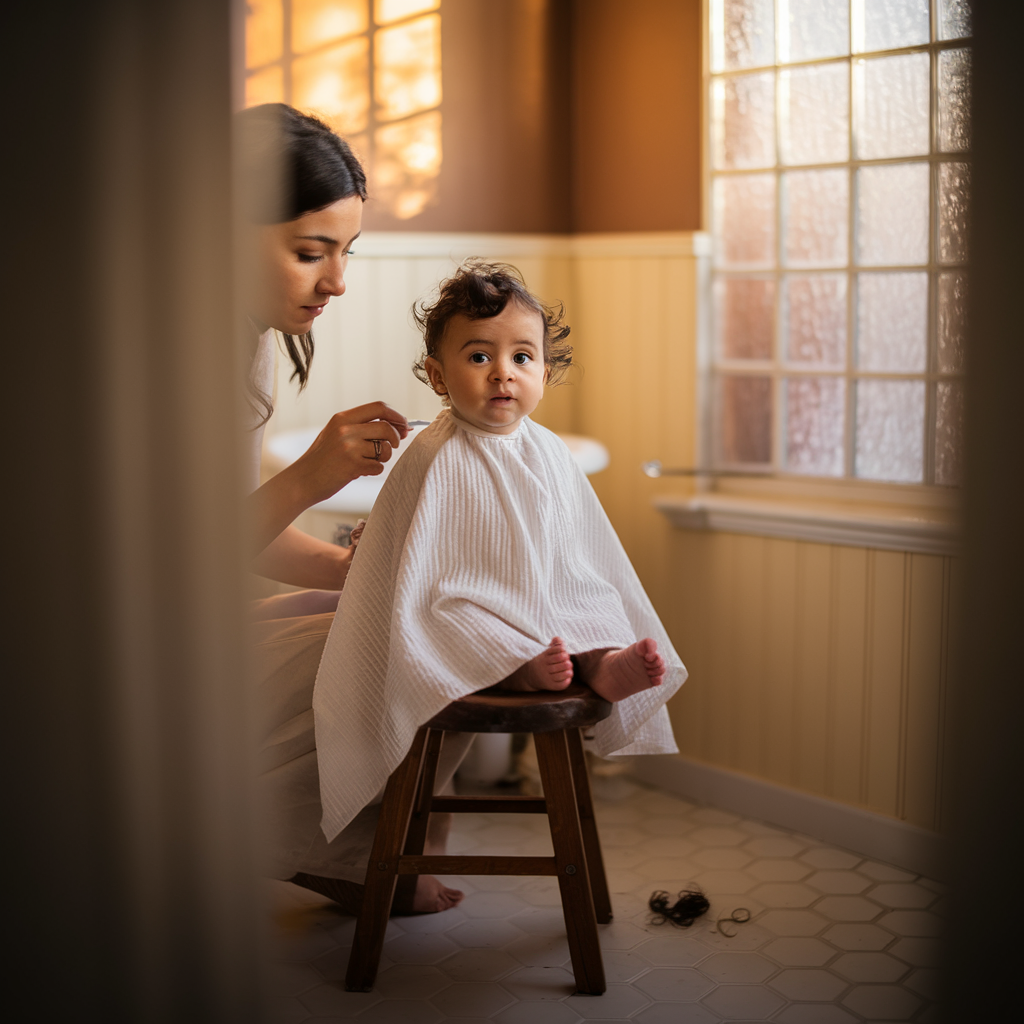
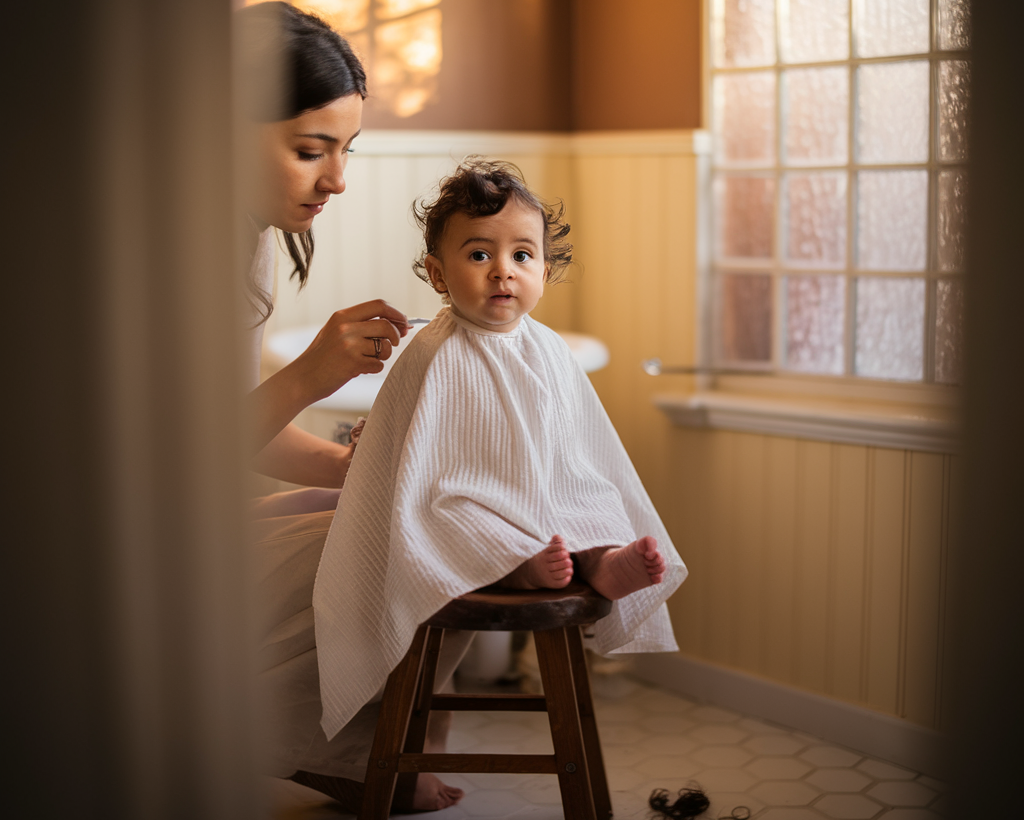
Quick answer: Babies are ready for a first haircut when their hair grows long enough to interfere with their vision or comfort — timing varies from 3 months to 2 years, and there’s no developmental milestone or health reason that determines the right time.
The timing of a baby’s first haircut varies enormously — some babies arrive with a full head of thick hair that needs trimming by three months, others are nearly bald at their first birthday.
Baby’s first haircut is a milestone that arrives at wildly different times — some babies need a trim at 6 months; others have barely a wisp at 2 years. There’s no developmental significance to hair growth timing, but when it does happen, here’s how to make it go smoothly.
When to Have the First Haircut
There’s no right age — it depends entirely on hair growth, which is genetically determined and enormously variable. Signs that a trim is needed: hair falling into eyes (safety concern for vision development, and a practical annoyance), hair that’s difficult to manage or causing discomfort, or simply personal preference. The average age for a first haircut is 12–18 months, but this is just an average — normal range is 6 months to 3 years. Don’t let cultural expectations around first birthday haircuts pressure you if your baby has barely grown hair yet.
At Home vs. Salon: Pros and Cons
At home: No waiting, no unfamiliar environment, no strangers, and you can do it in a nappy with a distraction snack. Appropriate for simple trims (fringe/bangs, or tidying around the ears). Use baby or children’s scissors with rounded tips — never adult scissors. Have a second adult to distract. Accept imperfection. Children’s hair salon: Professionally trained staff who work with wriggly, unhappy babies, themed seats and entertainment, and results that are cleaner than most parental attempts. Worth it for the first cut if you want a proper keepsake memory or if baby has significant hair needing an actual style. Book during a well-rested, well-fed time of day.
Keeping Hair Out of Baby’s Eyes Safely
Before a first haircut, practical options for fringe management: baby hair clips (use only when supervised — remove before sleep), soft elastics and baby ponytails (for babies who have enough hair), headbands (comfortable fabric, not tight), or simple wet-combing to the side after bath. Avoid clips with small parts that could detach and be swallowed, and anything that creates pressure points on the scalp during sleep.
The Keepsake
Many families keep a small curl from the first haircut as a memento. If you want to: have a small envelope or keepsake box ready before the appointment, ask the stylist to save a lock, or take a small cutting yourself before or during. First haircut certificate cards are available on Etsy if you want to document it formally alongside the curl. This is purely sentimental — but these small rituals of marking milestones are meaningful, particularly during a year that passes faster than you expect.
Frequently Asked Questions
Does cutting baby’s hair make it grow back thicker?
No — this is a persistent myth. Hair thickness is determined by follicle size (genetic) not by cutting. Cutting hair removes the tapered, potentially damaged ends, which can make hair appear thicker and more even, but doesn’t change follicle size or the rate of growth.
My toddler is terrified of haircuts — what should I do?
Normalise by watching haircut videos together, playing ‘hairdresser’ with dolls or stuffed animals, and visiting a children’s salon to watch before booking an appointment. During the actual cut: a favourite snack or tablet, sitting on a parent’s lap rather than the chair alone, and going to a child-specialist stylist who is experienced with anxious children. Accept that some distress is normal and doesn’t mean permanent hair-phobia.
Is there any cultural significance I should know about?
Yes — in many cultures, first haircut rituals carry significant meaning. In many Muslim traditions, the aqiqah ceremony involves shaving the baby’s head within the first week. In Hinduism, the mundan (head-shaving) ceremony is performed at various ages depending on regional tradition. In some Jewish communities, boys have their first haircut at age 3 (upsherin). If cultural or religious tradition shapes your approach, that’s entirely valid — there’s no medical or developmental reason to override tradition.
Related Reading
- 6 month old baby: starting solids — a complete first-foods guide
- 12 month old baby: first birthday milestones & 1-year check-up
- Can babies watch TV?
Found this helpful? Sign up to the LylyMama newsletter for evidence-based baby development guides delivered to your inbox every week.