Quick answer: Teething does not cause fever above 100.4°F (38°C), diarrhoea, vomiting, or significant respiratory symptoms. It may cause mild temperature (up to 37.9°C), drooling, gum rubbing, and mild irritability. Any fever is illness, not teething.
What teething actually causes
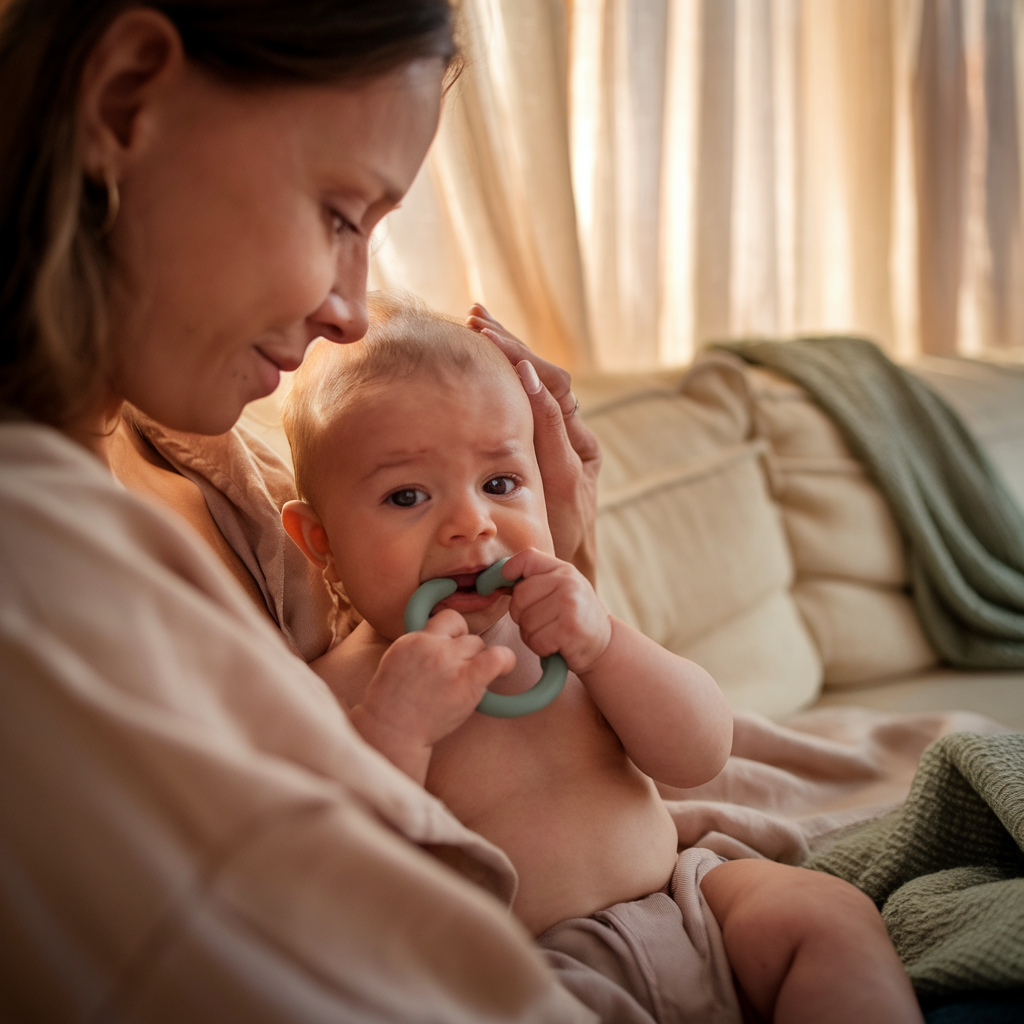
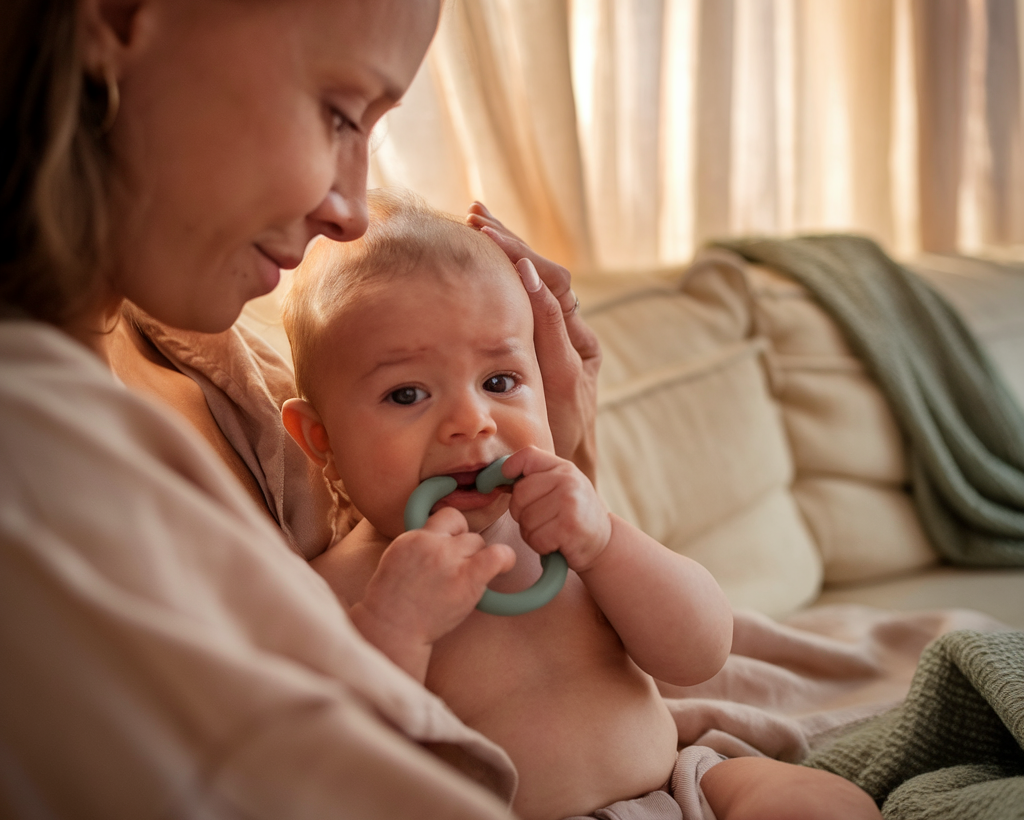
Multiple well-controlled studies have clarified this. Confirmed teething symptoms: increased drooling from salivary gland stimulation; gum rubbing and chewing; mild irritability in the 3–5 days around eruption; very mild temperature elevation up to 37.9°C (below the 100.4°F (38°C) clinical fever threshold); and reduced appetite from gum discomfort. A 2016 systematic review in Pediatrics confirmed these as the reliably associated symptoms. Symptoms not caused by teething: fever of 100.4°F (38°C) or above; diarrhoea; vomiting; cough or runny nose; any rash. These findings are consistent across multiple independent research groups.
Why the confusion persists
Teething occurs most intensively between 6–24 months — precisely the age range when babies are also having their highest rate of viral infections as maternal antibodies wane and the immune system encounters environmental pathogens for the first time. Coincidental infections are common during teething periods. A baby who is teething and then gets a cold has two independent concurrent processes. The danger of attributing fever or diarrhoea to teething is that genuine illness goes unassessed and medical attention is delayed. Many paediatric organisations specifically warn against the teething attribution error.
The temperature distinction in practice
A temperature of up to 37.9°C during a period of active tooth eruption is biologically plausible and may be teething-related. A temperature of 100.4°F (100.4°F (38°C)) or above is a fever that requires investigation regardless of whether teeth are coming through. This 0.1-degree distinction has real clinical significance — particularly for babies under 3 months where any fever (100.4°F (38°C)+) is a medical emergency. Never attribute a fever to teething without checking for an infection source.
How to tell the difference
Teething: symptoms cluster around the gum area (drooling, gum rubbing, visible swollen gum ridge); appear just before and during actual eruption; resolve within 3–5 days; no fever above 100.4°F (38°C). Sick: fever, changed bowel pattern, respiratory symptoms, feeding refusal beyond mild gum discomfort, lethargy. A practical guide: give appropriate-dose paracetamol and observe. A teething baby may show modest comfort improvement. A baby with an ear infection, UTI, or other illness will not significantly improve from paracetamol alone and other symptoms will persist or progress.
Frequently Asked Questions
My baby always seems to get a cold when teething — is that a coincidence?
Yes — it’s a coincidence born of timing. The peak teething period (6–24 months) is exactly when babies most commonly get upper respiratory infections as they encounter new viruses. The two events are correlated in time but not causally linked. Research studies have failed to find a mechanism by which tooth eruption could cause viral respiratory infections.
How can I tell if a gum is actively teething?
Place a clean finger on the gum ridge and palpate gently. An erupting tooth produces a firm, bony ridge beneath the gum surface. Sometimes a blue-grey fluid-filled blister appears on the gum (eruption cyst) — harmless and usually resolves when the tooth breaks through the surface.
My baby has seemed to be teething for 4 weeks with no tooth emerging — is that normal?
Teething symptoms can precede visible tooth eruption by 2–6 weeks. Some babies have an extended run-up before the tooth finally breaks through. What is not normal: 4 weeks of consistent fever attributed to teething. Fever lasting more than 5 days warrants doctor assessment regardless of teething status.
Related Reading
- Teething timeline: when teeth come in and how to help
- Baby fever: temperature chart, when to go to ER
Found this helpful? Sign up to the LylyMama newsletter — evidence-based answers to the questions every new parent actually has.