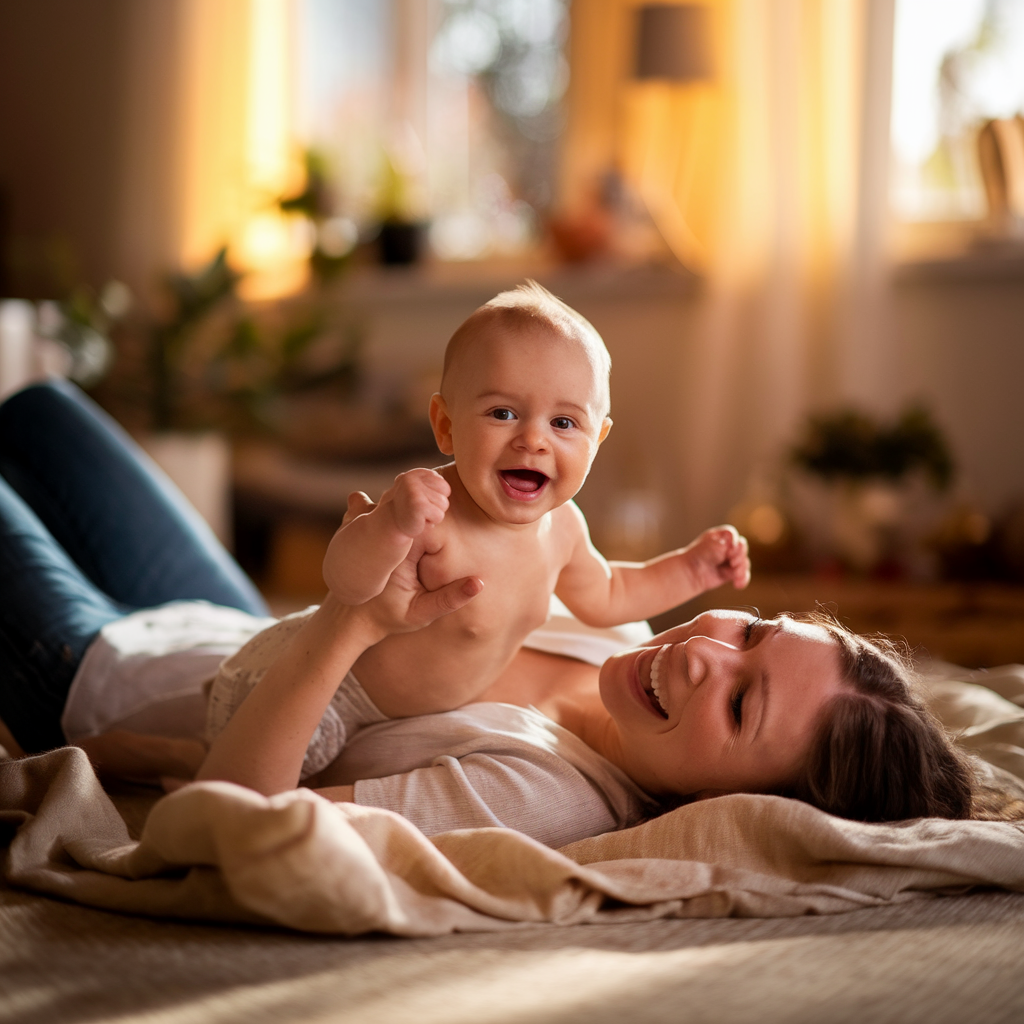
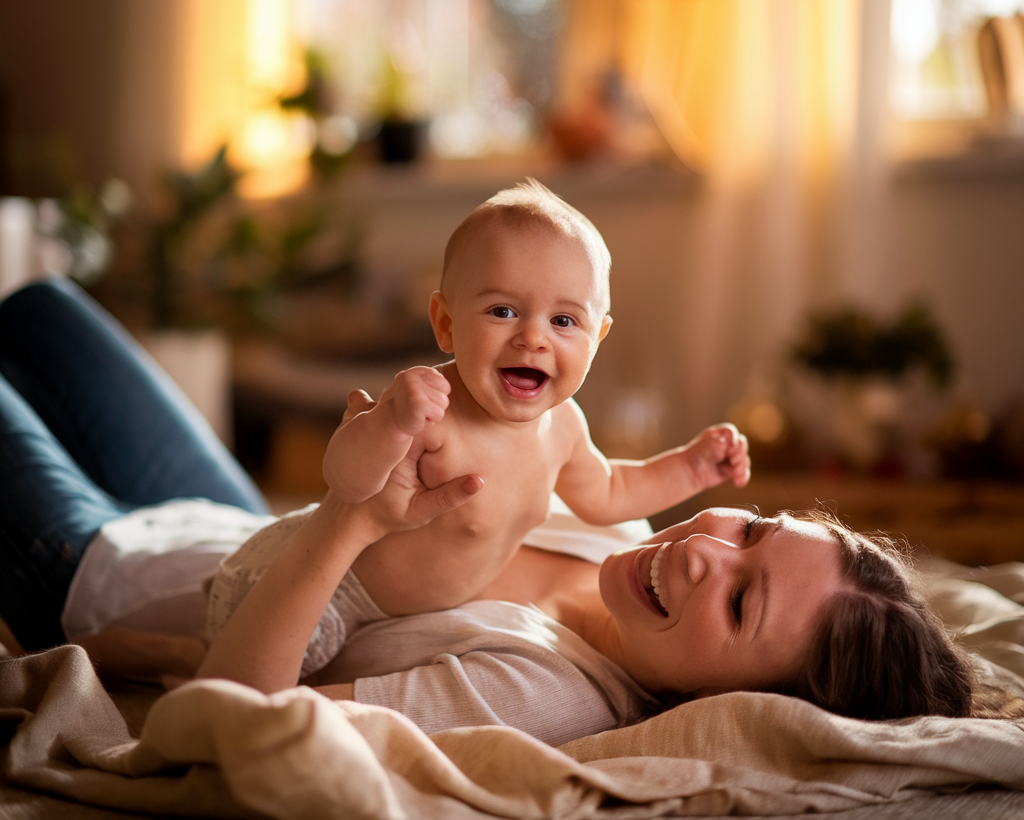
Quick answer: Laughter is one of the most rewarding developmental milestones of early infancy — and hearing your baby’s genuine giggle for the first time is genuinely one of parenthood’s greatest moments.
Laughter is one of the most rewarding developmental milestones of early infancy — and hearing your baby’s genuine giggle for the first time is genuinely one of parenthood’s greatest moments. Here’s when it typically arrives and what you can do to encourage it.
When Babies Typically Laugh: 3–4 Months
The first genuine laughs typically emerge between 3–5 months, with most babies laughing out loud by 4 months. The social smile comes first (6–8 weeks), then the giggle. Early laughter is often triggered by physical stimulation — being bounced on a knee, light blowing on the tummy, or being lifted in the air — before social and cognitive causes of laughter emerge. By 6 months, babies laugh in response to social games, funny faces, and unexpected sounds. By 9–12 months, anticipation becomes funny — waiting for the ‘boo’ in peekaboo is as funny as the boo itself.
What Makes Babies Laugh: The Science
Laughter in infants is linked to: surprise and violation of expectation (something unexpected happens — a common theme in peekaboo and slapstick-style physical games), social bonding (laughter in response to a caregiver’s laughing face — contagious social laughter), relief from mild tension (being tickled, being chased, mild startle followed by safety), and mastery (successfully doing something they’ve been working on — motor accomplishments become a source of delight). Later in the first year, cognitive understanding deepens the humour — babies begin to understand when something is incongruous (putting a shoe on a head) and find it funny.
Games That Get Babies Giggling
- Raspberry blowing on the tummy — classic, effective from 3 months
- Peekaboo in all its forms — covers face, covers baby’s face, pops up from behind furniture
- Lifting and swooping through the air while making sound effects (safely, supporting head)
- Funny faces — exaggerated expressions, especially surprise
- Incongruous actions — putting objects in wrong places (hat on foot, sock on hand)
- Mimicry games — copy baby’s sounds back to them; many babies find this hilarious
- Gentle chase and anticipation — crawling ‘menacingly’ toward a mobile baby
If Laughter Is Delayed
No laughter by 6 months is worth mentioning to your paediatrician — not as an emergency, but as part of a broader developmental picture. Laughter is a social milestone as much as a developmental one, and absence alongside other social communication differences (reduced eye contact, not responding to name, limited smiling) may warrant early assessment. However, significant variation in timing is common in typically developing babies.
Laughter, play, and emotional development
Laughter in infancy is more than a charming milestone — it is part of the development of social cognition and emotional regulation. The transition from physical laughter (tickling, bouncing) to social laughter (responding to funny faces and games) to cognitive laughter (finding incongruity funny — a sock on Daddy’s head) maps onto the development of theory of mind, the understanding that others have mental states. A baby who laughs at incongruity is demonstrating that they have an expectation of how things should be, and they find the violation of that expectation amusing. This is a significant cognitive moment.
Reciprocal laughter — laughing together — is one of the earliest and most powerful co-regulation experiences. When a parent and baby laugh together, both experience reduced cortisol and increased oxytocin. Laughing together during play teaches the baby to associate joyful social engagement with the safety of the primary attachment relationship. Research by Caspar Addyman at Goldsmiths has mapped infant laughter in detail — babies most commonly laugh in contexts of touch and movement (physical games), surprise and repetition (peekaboo, peek-and-chase), and social games initiated by caregivers. Crucially, they laugh more with familiar people than strangers, confirming the social bonding function.
What to do if laughter is delayed
Some babies are more reserved temperamentally and laugh less readily without this indicating a problem. However, if a baby shows no social smile by 10 weeks, no response to playful interaction by 4 months, and no laughter of any kind by 6 months, this warrants a discussion with your health visitor. Absence of social smiling and laughter are early indicators reviewed at the 9–12 month developmental assessment as part of social-emotional development screening. A baby who seems uninterested in playful interaction or does not make eye contact during social games should be discussed with a health professional.
Frequently Asked Questions
Is it normal for some babies to laugh more than others?
Yes — temperament significantly influences how much and easily a baby laughs. Some babies are more reactive and expressive; others are more serious observers. This is a temperamental trait, not a developmental concern, as long as baby is socially engaged, smiling, and responsive to interaction even if not a frequent laugher.
My 3-month-old smiles but doesn’t laugh — is that normal?
Yes — social smiling at 6–8 weeks typically precedes laughing by several weeks. Most babies who smile socially will laugh by 4–5 months. Smiling is the earlier and more critical milestone.
Does laughing together affect my baby’s development?
Yes — shared positive affect (mutual joy and laughter between caregiver and baby) is a rich form of serve-and-return interaction that builds emotional attunement, trust, and social communication. Play that includes laughter is not just fun — it’s developmentally meaningful.
Related Reading
- 3 month old baby: sleep regression or just a growth spurt?
- 4 month old baby: rolling, grabbing & the 4-month sleep regression
- Sensory play ideas: activities for babies 0-12 months by age
Found this helpful? Sign up to the LylyMama newsletter for evidence-based baby development guides delivered to your inbox every week.