Quick answer: The question ‘when can I exercise after having a baby?’ has a more nuanced answer than most new mothers receive at the 6-week check.
The question ‘when can I exercise after having a baby?’ has a more nuanced answer than most new mothers receive at the 6-week check. The evidence-based framework distinguishes clearly between what’s appropriate at 6 weeks, 12 weeks, and beyond — and it’s more conservative than gym culture would have you believe.
Why ‘Cleared at 6 Weeks’ Is Incomplete
The 6-week postnatal check is an important appointment, but ‘being cleared for exercise’ at 6 weeks is not a comprehensive medical assessment — it’s an acknowledgement that the acute healing phase has concluded. What it doesn’t assess: pelvic floor function, which takes 3–6 months to rebuild adequately; linea alba tension (relevant for diastasis recti); internal healing from caesarean (full uterine scar maturation takes 6 months); and ligament laxity from relaxin, which persists for up to 6 months postpartum in breastfeeding women. Running, jumping, heavy lifting, and high-impact exercise before these systems are recovered creates a risk environment for pelvic floor dysfunction, prolapse, and injury that gym culture consistently underestimates.
The Evidence-Based Return to Exercise Timeline
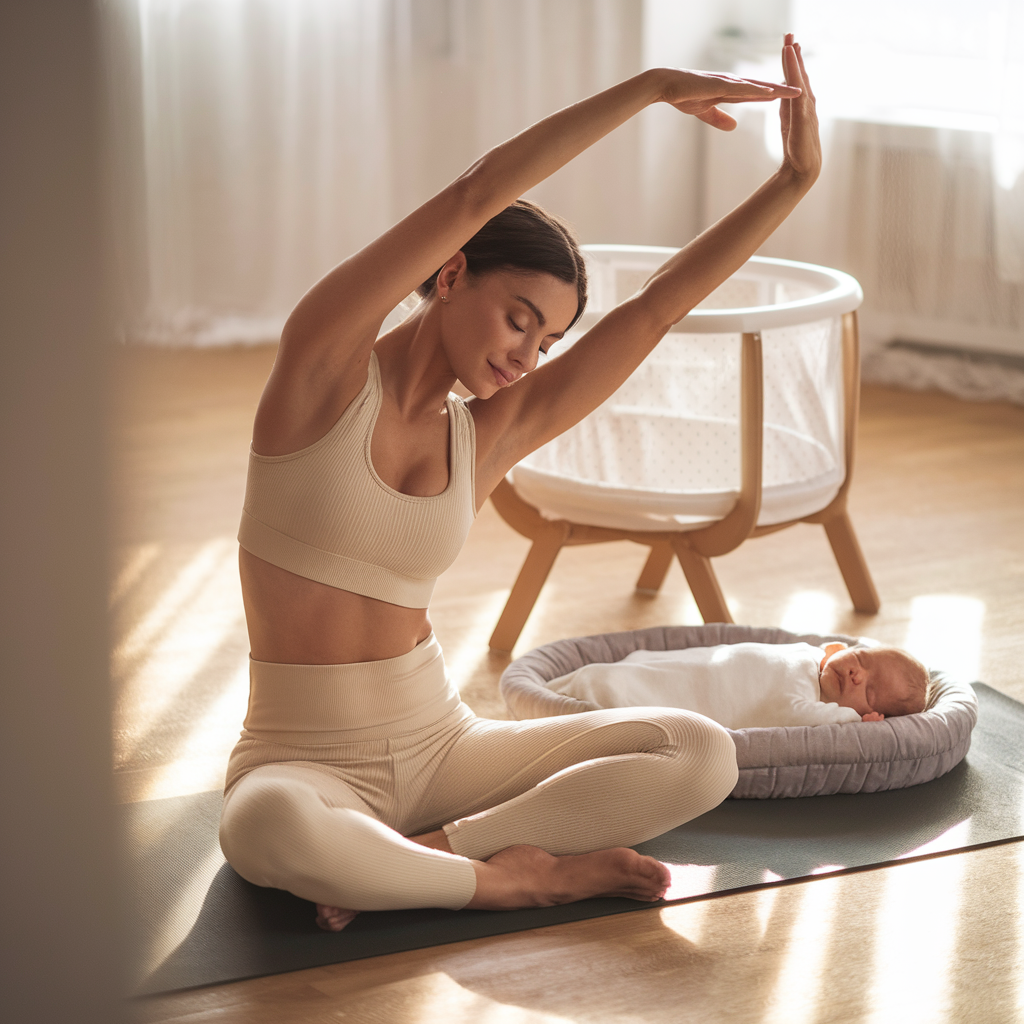
Weeks 0–6: Pelvic floor exercises (start day one — see pelvic floor guide); walking, building gradually from short walks to 30 minutes by week 6; gentle stretching; breathing and posture awareness. Caesarean recovery: be guided by pain; avoid lifting more than your baby; focus on the pelvic floor and breathing. Weeks 6–12: Progress walking; low-impact exercise such as swimming (once bleeding has stopped and perineum is healed, typically week 6); gentle cycling; yoga and pilates with modifications. Begin assessing readiness for more progressive exercise — ideally with a women’s health physiotherapist who can assess your specific pelvic floor and abdominal recovery. Weeks 12+: This is when most women are ready to begin progressive strength training and low-impact cardio. The 2019 guidance from the Sports and Exercise Medicine specialist community (Groom, Donnelly, Brockwell) recommends this as the baseline for beginning more demanding exercise. Running and high-impact: The same guidance recommends 3 months minimum before returning to running — and only when specific benchmarks are met (see below).
The Running Readiness Benchmarks
The 2019 clinical guidance on return to running postpartum identifies specific criteria that should be met before returning to running, regardless of how many weeks postpartum you are: 10 single-leg calf raises without pain or leaking; 10 single-leg bridges without pain or leaking; 10 single-leg sit to stands without pain or leaking; a 30-minute walk at a brisk pace without symptoms; and being able to jog on the spot for 1 minute without leaking, prolapse symptoms, or pain. These are functional tests that assess load-bearing capacity and pelvic floor response to impact — not arbitrary barriers. Many women at 12 weeks postpartum do not yet meet these criteria and benefit from more time and physiotherapy before returning to impact.
Signs to Stop and Seek Assessment
- Leaking urine, bowel, or wind during exercise
- Heaviness, dragging, or bulging sensation in the vagina during or after exercise
- Pelvic or lower back pain during or after exercise
- Abdominal ‘doming’ or ‘coning’ during exercise (visible ridge or peak at the midline of the abdomen)
- Pain at the perineum or caesarean scar during exercise
Frequently Asked Questions
I ran until 36 weeks of pregnancy — can I start running again quickly?
Fitness level before birth doesn’t change the postpartum healing timeline. The pelvic floor has been under load for 40 weeks regardless of how fit you are; the hormonal changes affecting ligament laxity apply equally; and birth — vaginal or caesarean — is a significant physical event regardless of your training. Your fitness will return faster than it did pre-pregnancy, but the protective conservative timeline still applies.
What about Crossfit, HIIT, and heavy lifting?
The same principles apply with higher stakes: these activities involve high intra-abdominal pressure, heavy impact, and heavy load — all of which stress the pelvic floor, linea alba, and healing abdominal wall significantly. The 3-month minimum guideline applies, and a clearance from a women’s health physiotherapist is more appropriate than a GP’s generic clearance.
I’m breastfeeding — does exercise affect my milk supply?
Moderate to vigorous exercise does not significantly affect milk volume or nutritional composition. Very high-intensity exercise (>75% VO2 max) has been associated with temporary lactic acid increases in milk that some babies find unpalatable — waiting 1–2 hours after very intense exercise before feeding addresses this. Ensure adequate hydration and caloric intake if exercising heavily while breastfeeding.
Related Reading
- Pelvic floor exercises after birth: complete guide
- Diastasis recti: how to check for it and what to do
Disclosure: This post contains affiliate links. We may earn a small commission at no extra cost to you. We only recommend products we genuinely use and trust.
Found this helpful? Sign up to the LylyMama newsletter — honest, evidence-based content for real mothers, delivered every week.