Quick answer: Pregnancy and the postpartum period change your hair — sometimes dramatically. Understanding what’s actually happening, what products can and can’t do, and what timelines to expect helps you make sensible decisions and a
Pregnancy and the postpartum period change your hair — sometimes dramatically. Understanding what’s actually happening, what products can and can’t do, and what timelines to expect helps you make sensible decisions and avoid wasting money on things that don’t work.
Hair Changes During Pregnancy
Many women experience the best hair of their lives during pregnancy: thicker, faster-growing, and shinier. The mechanism: elevated oestrogen extends the anagen (active growth) phase of the hair cycle, meaning more hairs are in growth at any one time and fewer are shedding. You’re literally retaining hair you’d normally be losing. Scalp oiliness may increase (progesterone stimulates sebaceous glands), which can affect styling but also makes hair more lustrous. Some women — particularly those with naturally curly hair — find texture changes during pregnancy, sometimes temporarily and sometimes with lasting effects on curl pattern.
The Postpartum Shed: The Real Picture
Postpartum hair loss (telogen effluvium) begins at 2–4 months postpartum and peaks around 4 months, lasting 3–6 months. All the hair that was retained during pregnancy begins shedding simultaneously rather than gradually. The shed is dramatic-looking but represents the hair you ‘owe’ from the previous months — you’re not losing more hair than you would have normally, you’re just losing it all at once. Most women’s hair density is fully restored by 12 months postpartum. The regrowth — the short fluffy hairs appearing along the hairline and parting — is clearly visible in many women from 6 months onward. These baby hairs signal active recovery.
What Actually Helps
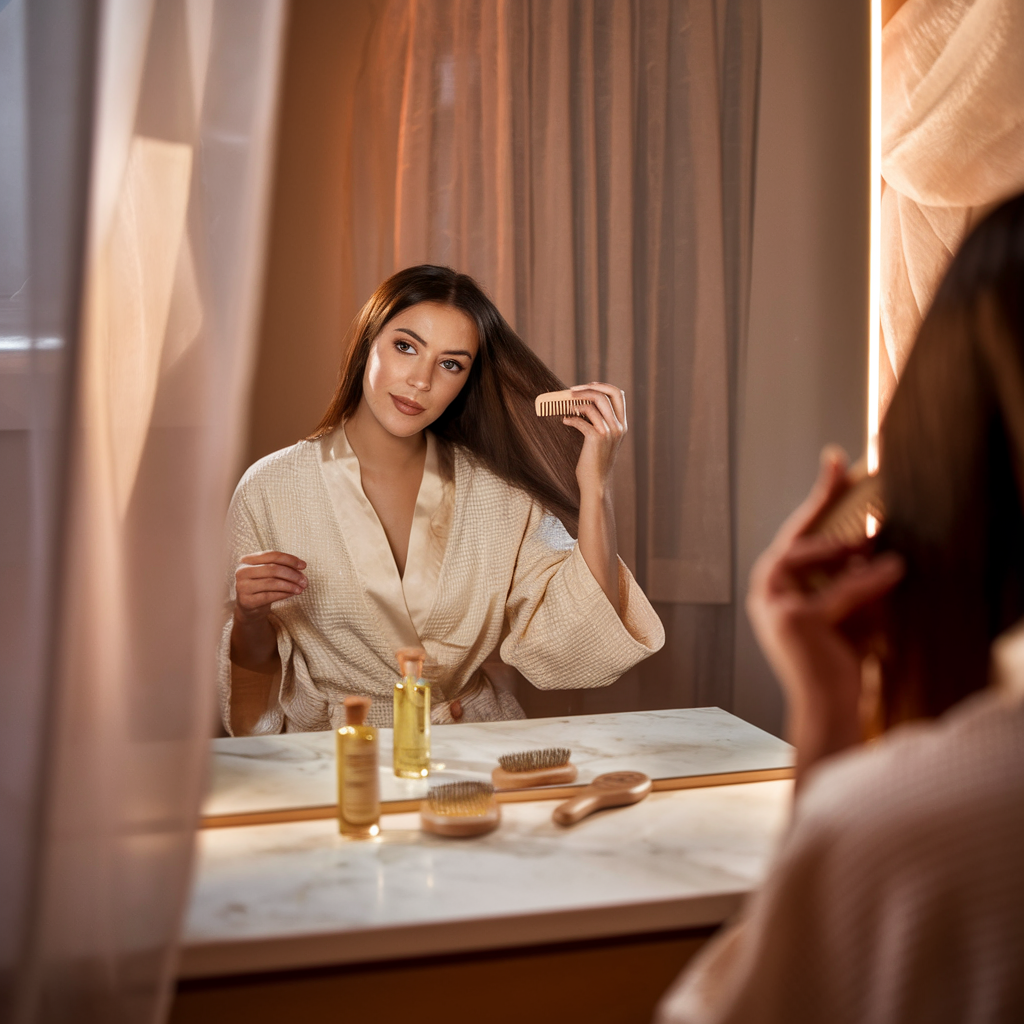
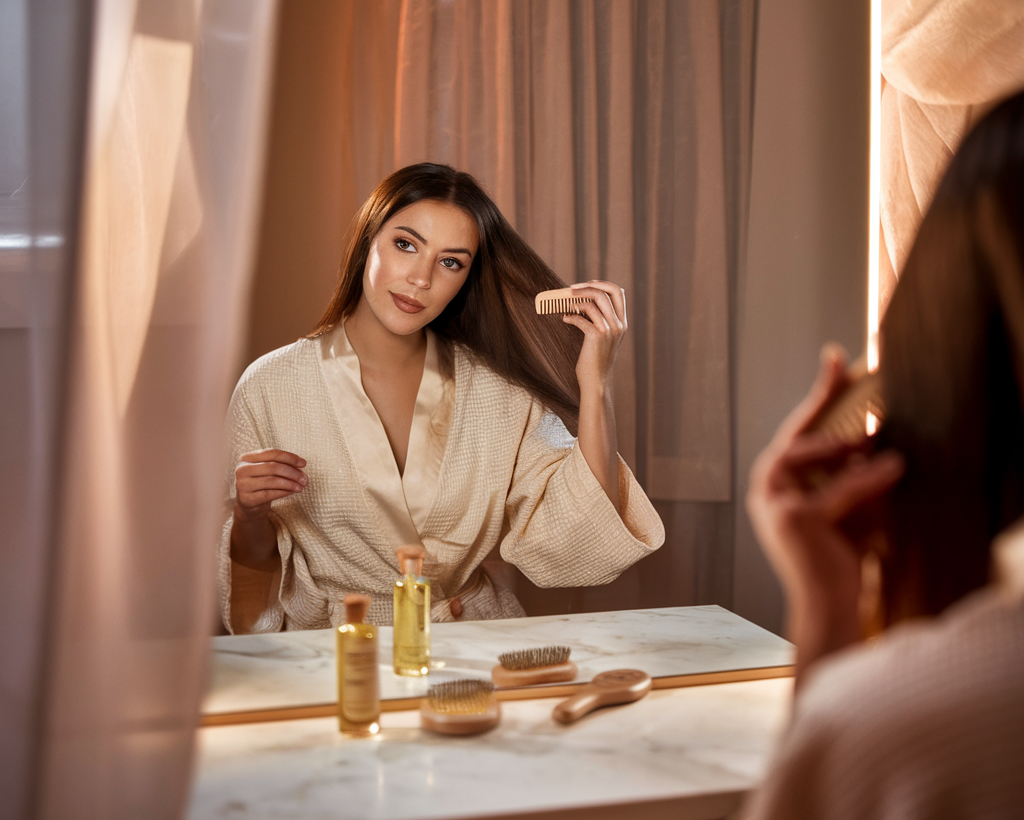
Ferritin (iron stores): The most important modifiable factor. Deficiency significantly extends and worsens the shedding phase. Get your ferritin level checked — ideally above 70 ng/mL for hair health. Iron-rich foods and supplementation if levels are low. Protein: Hair is made of keratin. Inadequate protein intake delays regrowth. Aim for 70–80g daily. Zinc, biotin, B vitamins: Deficiencies contribute to hair loss; a postnatal supplement covering these is reasonable. Scalp health: Massaging the scalp for 4 minutes daily has a small but genuine effect on hair thickness in studies — it stretches the hair follicle dermal papilla cells, stimulating them. Use your fingertips firmly, circular motions. Gentle handling: Avoid tight hairstyles (ponytails, braids) on already-fragile regrowth; use wide-tooth combs; minimise heat.
What Doesn’t Help
Topical biotin shampoos and conditioners — biotin needs to be ingested to have any effect; it doesn’t penetrate the hair follicle transdermally. Expensive ‘hair growth’ serums — most are marketing rather than mechanism. Cutting hair shorter to ‘make it grow faster’ — cutting affects the appearance of ends but doesn’t affect follicle function or growth rate. Minoxidil (Rogaine) — has evidence for androgenetic alopecia (female pattern hair loss) but is not recommended while breastfeeding; it’s not treating telogen effluvium in any case.
Frequently Asked Questions
Will my hair grow back exactly the same?
For the vast majority of women, yes. Some women notice texture differences in the regrowth — slightly wavier, finer, or coarser — that typically normalise over 12–18 months. A smaller number of women find their curl pattern has shifted more permanently, possibly related to hormonal changes affecting the follicle shape.
Can I dye my hair postpartum?
Yes — the limited concerns about hair dye chemicals during pregnancy (largely precautionary rather than confirmed) don’t apply postpartum. Standard hair colourants are safe. If breastfeeding, there’s no evidence of harm — the scalp absorption of hair dye chemicals is minimal, and transfer to breast milk at those concentrations is negligible.
My hairline looks dramatically thinner — is this permanent?
The frontal hairline and temples are commonly the most visibly affected areas of postpartum shedding, producing what looks like receding hair. For almost all women, this fully recovers — the short regrowth hairs at the hairline by 6–8 months postpartum are the recovery evidence. True female pattern hair loss (androgenetic alopecia) has a different pattern — diffuse widening of the parting — and doesn’t recover spontaneously. If you’re uncertain which you’re experiencing at 12–15 months postpartum, a GP or dermatologist assessment is worthwhile.
Related Reading
- Postpartum hair loss: why it happens and when it stops
- Postpartum recovery: week-by-week what to expect physically
- Body image after baby: loving your postpartum body
Disclosure: This post contains affiliate links. We may earn a small commission at no extra cost to you. We only recommend products we genuinely use and trust.
Found this helpful? Sign up to the LylyMama newsletter — honest, evidence-based content for real mothers, delivered every week.