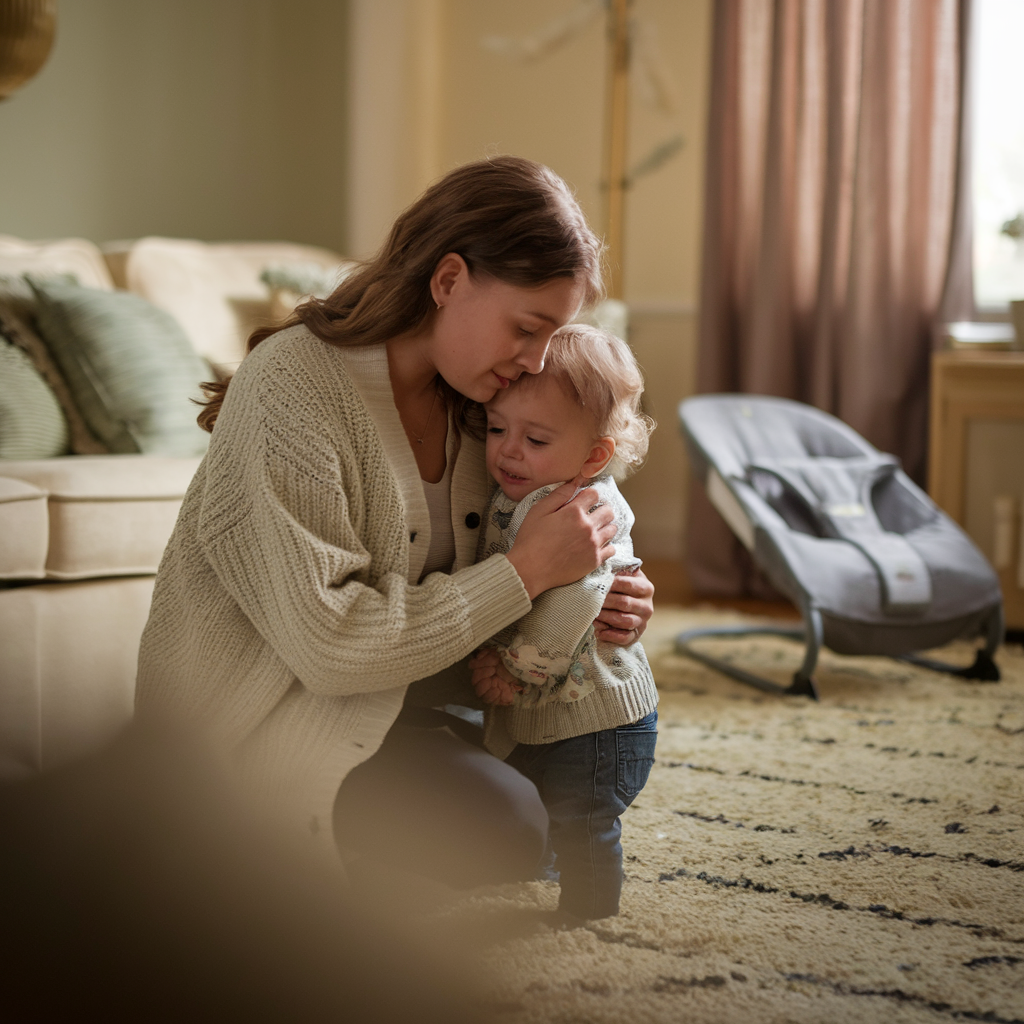
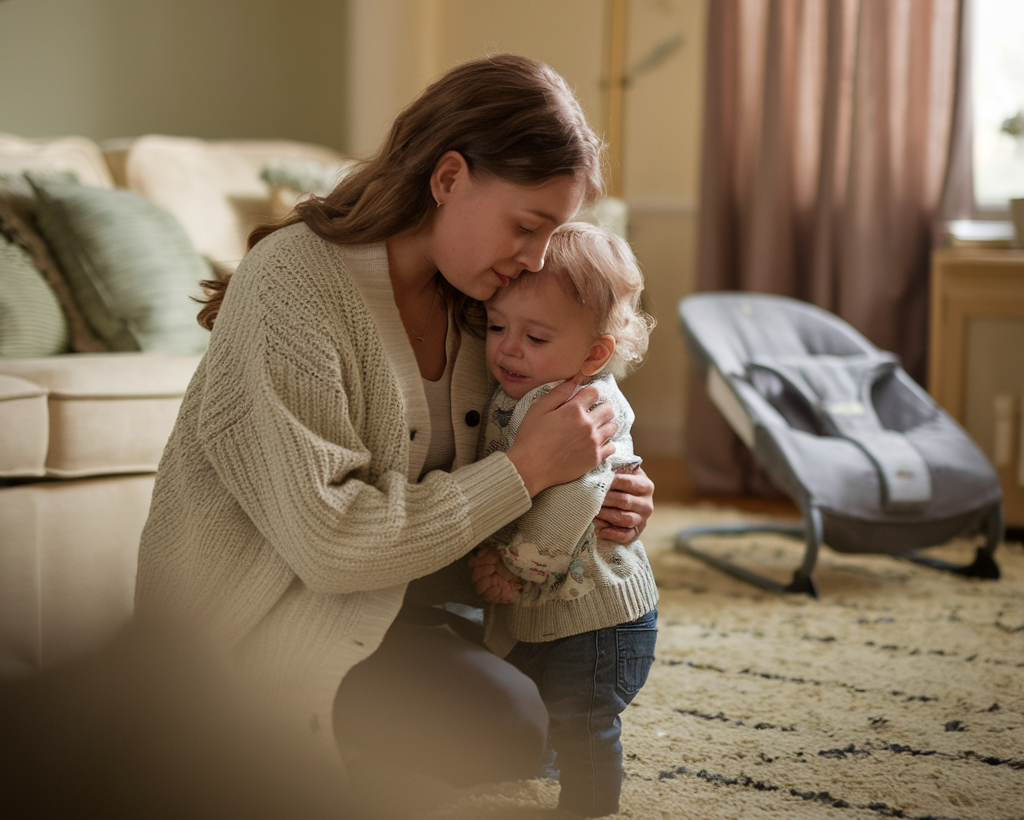
Quick answer: Separation anxiety is a normal developmental milestone, not a problem to fix. It peaks at 8–14 months in most babies, often recurs at 18 months and 2 years. It reflects healthy attachment — babies who experience it are attached and cognitively advanced enough to understand that caregivers continue to exist when out of sight.
The developmental basis
Before 7–8 months, babies lack object permanence — the understanding that objects (including people) continue to exist when they are not visible. A baby who doesn’t cry when you leave the room isn’t securely attached — they simply don’t yet understand that you have continued to exist somewhere else. When object permanence develops at around 7–8 months, the baby can now represent you mentally and knows you’re gone. But they can’t yet understand time (‘Mummy will come back in 20 minutes’) — which is why separation triggers acute distress. Separation anxiety is not insecurity; it’s cognitive advancement.
The typical timeline
6–8 months: separation anxiety begins to appear; stranger awareness (wariness of unfamiliar faces) often emerges simultaneously. 8–14 months: typically the most intense period. Babies often cry intensely at the moment of separation — then, in many cases, settle reasonably quickly once the caregiver is gone. 12–18 months: often a second peak, coinciding with increased mobility (baby can now crawl or walk after the parent) and heightened awareness of their world. 18 months–3 years: separation anxiety during key transitions (nursery drop-off, bedtime) is still normal. Peaks often coincide with other developmental transitions.
Settling strategies at childcare and nursery
Settling-in sessions before the start date are the most effective intervention — repeated short separations in a new environment, increasing in duration gradually, allow the baby to build confidence that the caregiver returns. Consistent transition rituals (the same hug, the same phrase, the same quick goodbye) are more effective than prolonged farewells, which tend to increase distress. Research on childcare transitions consistently finds that drawn-out departures maintain rather than reduce anxiety — a warm, confident, brief goodbye is better. A comfort object (specific toy, blanket with caregiver’s scent) provides transitional comfort.
Bedtime separation anxiety
Separation anxiety at bedtime is normal from 8 months onward. Many babies who were settling easily begin protesting at bedtime as separation anxiety peaks. This is why sleep training that worked at 4 months may fail to work at 10 months — the developmental context has changed. Maintaining a consistent, warm bedtime routine, a comfort object, and appropriate settling support (the level varies with parenting approach) is the recommended approach during peak separation anxiety months.
Frequently Asked Questions
Is separation anxiety worse in babies who are more attached?
Not in the way most parents fear. Secure attachment (strong positive bond with the primary caregiver) does not produce more severe or longer-lasting separation anxiety — in fact, securely attached children typically transition better to new environments and recover faster after separation than insecurely attached children, because they’ve learned that their caregiver consistently returns. The peak of separation anxiety does not indicate excessive dependency.
My baby is 10 months and cries when I leave — will starting nursery damage them?
No — the research on childcare and secure attachment is reassuring. Settled childcare that meets the baby’s physical and emotional needs does not damage attachment to the primary caregiver. The distress at drop-off is real and temporary; attachment research consistently shows that children with secure home attachments maintain those attachments through nursery experience.
When does separation anxiety become a problem?
Separation anxiety becomes clinically relevant when it persists beyond the typical developmental window and significantly impacts daily functioning for child and family — particularly at school age. Brief anxiety at separation transitions throughout the preschool years is normal.
Related Reading
- 7 month old baby: separation anxiety & object permanence
- I didn’t bond with my baby straight away – and that’s OK
Found this helpful? Sign up to the LylyMama newsletter — evidence-based answers to the questions every new parent actually has.