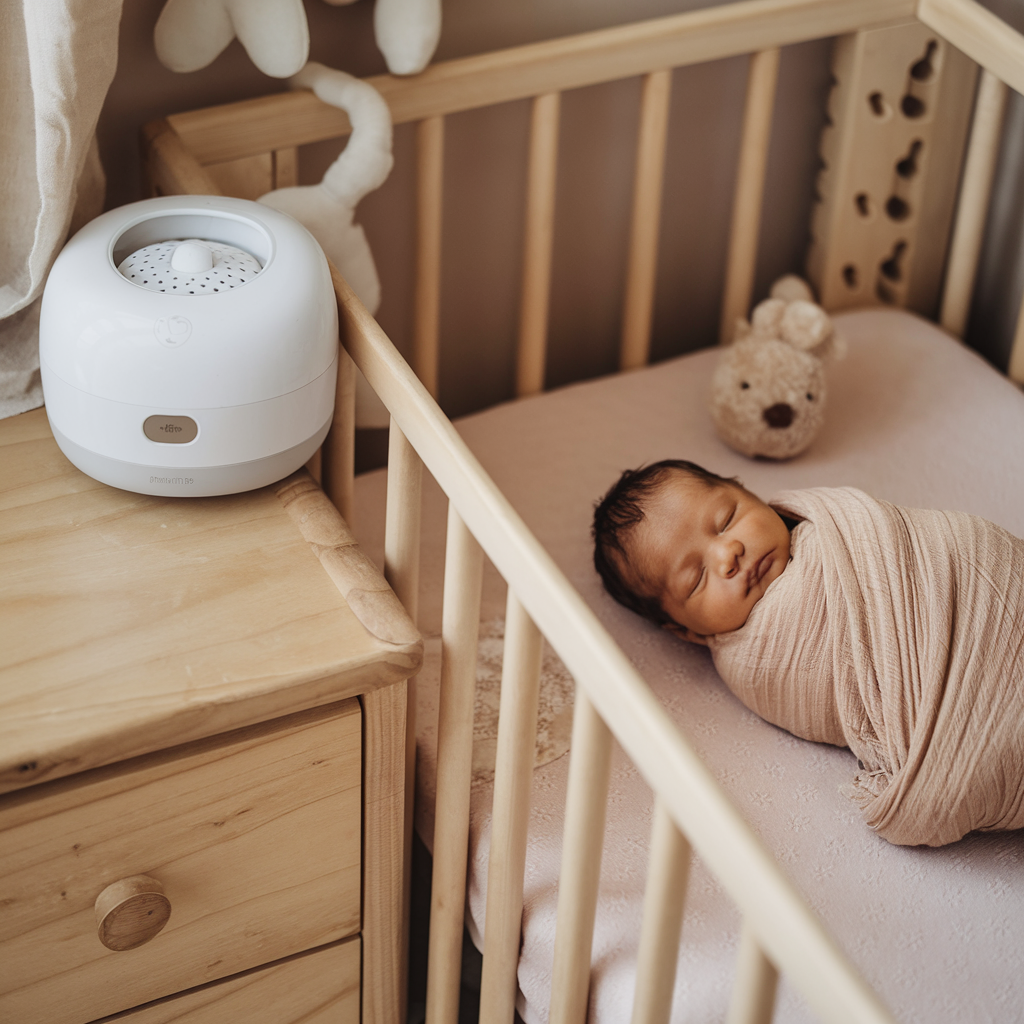
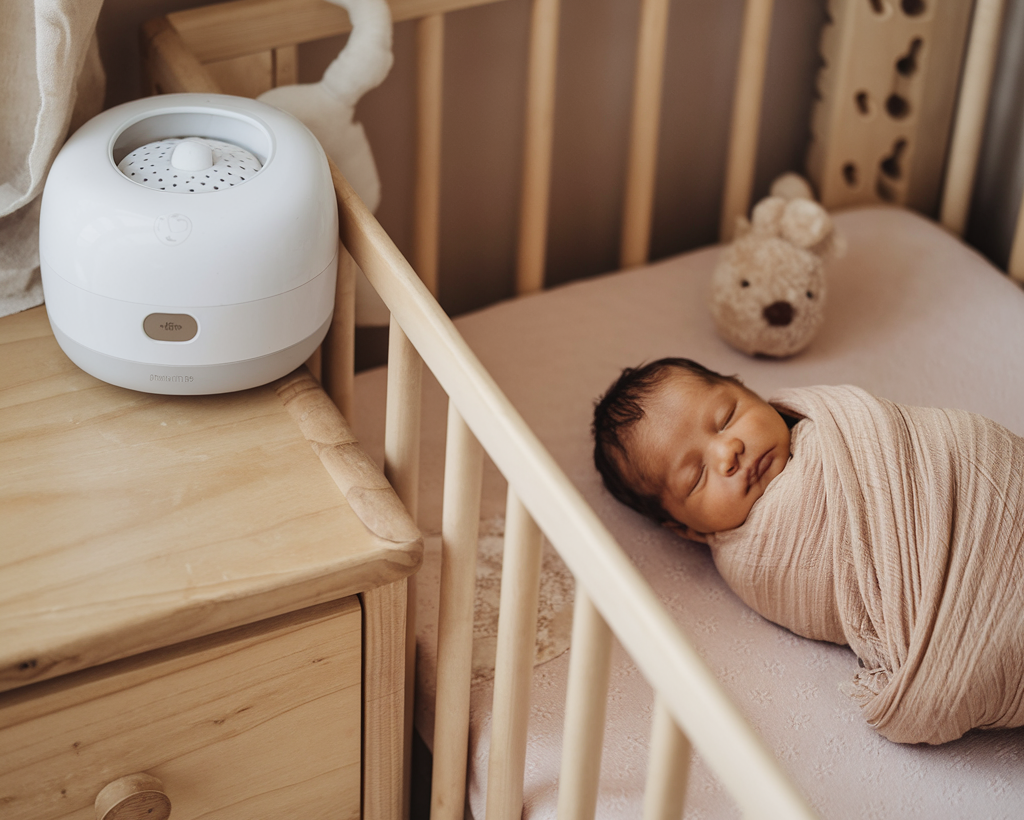
White noise works. Multiple studies show it reduces infant crying duration, shortens sleep onset time, and improves sleep consolidation by masking ambient sounds causing arousal at the natural sleep cycle transition. It’s one of the most evidence-based tools in the new parent toolkit.
Why white noise works — and what to buy
Volume — keep under 65dB at the position closest to the baby. Sound type — pure white noise vs brown noise vs fan vs shushing; different babies respond to different frequencies. Portability — portable machines allow travel and nap-on-the-go use. Auto shut-off — some parents prefer continuous play; others prefer a timer.
Budget: Dreamegg D1 White Noise Machine — ~£25
Offers 24 sounds (white, pink, brown noise, fan, rain, ocean, heartbeat, lullabies), night light, timer settings, and rechargeable battery. At £25 it outperforms most of what’s available at 2–3x the price. Volume range appropriate (max ~70dB). USB rechargeable. Has developed a strong reputation in UK parent communities.
Pros: 24 sounds, rechargeable, affordable, night light, timer, genuinely effective
Cons: Night light can be too bright at maximum setting
Best for: Most families — a genuine best-value recommendation in this category
Mid-range: Hatch Rest Baby Sound Machine — ~£90
App-controlled, allowing parents to adjust sound type, volume, and colour of integrated night light without entering the baby’s room. Also serves as a toddler clock (light changes colour to signal when it’s okay to get up). App control is genuinely useful for adjusting settings after baby is asleep.
Pros: App control, integrated night light/toddler clock, clean design, good sound quality
Cons: Expensive for a white noise machine, app requires WiFi
Best for: Tech-comfortable parents who want app control, or those planning to use it as a toddler sleep trainer
Portable: Marpac Hushh Portable Baby White Noise Machine — ~£35
Small, portable, clips to a pram, car seat, or cot. Three sounds (bright white noise, deep white noise, gentle surf). Rechargeable via USB. The clip makes it functional during buggy naps in a way that a phone app can’t replicate. For families who rely on white noise for every sleep environment, the portable format is worth the specific investment.
Pros: Clips to pram/cot, very portable, rechargeable, discreet size
Cons: Only 3 sounds, more expensive per sound than Dreamegg
Best for: Families needing white noise on the move — pram naps, travel, visiting family
Do you actually need a machine
Free option: any phone app (Hatch, White Noise Baby, MyNoise) produces functionally equivalent white noise at zero cost. The case for a dedicated machine is purely about separating it from your phone — no managing the app, no notifications interrupting playback, no battery anxiety. If you can leave your phone in the baby’s room overnight without needing it, the app is sufficient. If you need your phone available, buy a machine. The Dreamegg at £28–35 is hard to beat for the purpose.
Frequently Asked Questions
Is white noise safe for babies?
Yes, at appropriate volume. Keep the machine at least 2 metres from the baby, volume at or below 65dB, and don’t place it in or touching the cot.
Will my baby become dependent on white noise to sleep?
Some babies do associate white noise with sleep — this is a manageable sleep association. Most families phase it out naturally as children get older.
Does the type of white noise matter — white vs pink vs brown?
All three reduce ambient sound masking effectively. White noise (all frequencies equally) is slightly harsher to adult ears but has the most trial evidence. Pink noise (lower frequencies emphasised, like rainfall) is gentler. Brown noise (lower still, like deep rumbling) is deepest. In practice the difference is small — try different types via a free app before deciding, and use whatever your specific baby responds to best.
Related Reading
Disclosure: This post contains affiliate links. If you buy through our links we may earn a small commission at no extra cost to you. We research products independently and are never paid to recommend specific items.
Found this helpful? Sign up to the LylyMama newsletter for honest, researched guides on everything you need in pregnancy and early parenthood.
The D1 Pro’s rechargeable battery means no cable management — place it anywhere in the room without proximity to a socket. 24 sounds include white, pink, and brown noise plus fan, lullabies, and nature sounds. The night light has adjustable brightness, which matters — several parents report the maximum setting is too bright as a sleep light.
The Rest+ can be used as a toddler ok-to-wake clock from approximately 2 years — the colour of the night light (set via app) signals to the toddler whether it’s ok to get up. This feature extends the product’s useful life by approximately 2 years beyond the white noise function. App control without entering the room to adjust volume or light is the other significant practical feature.
The Hushh’s clip attachment makes it genuinely portable — onto the pram hood for nap continuity on walks, onto the cot rail for home use, clipped inside a nappy bag for travel. For families using white noise for all sleep contexts and wanting a consistent sound association regardless of environment, portability has real value.