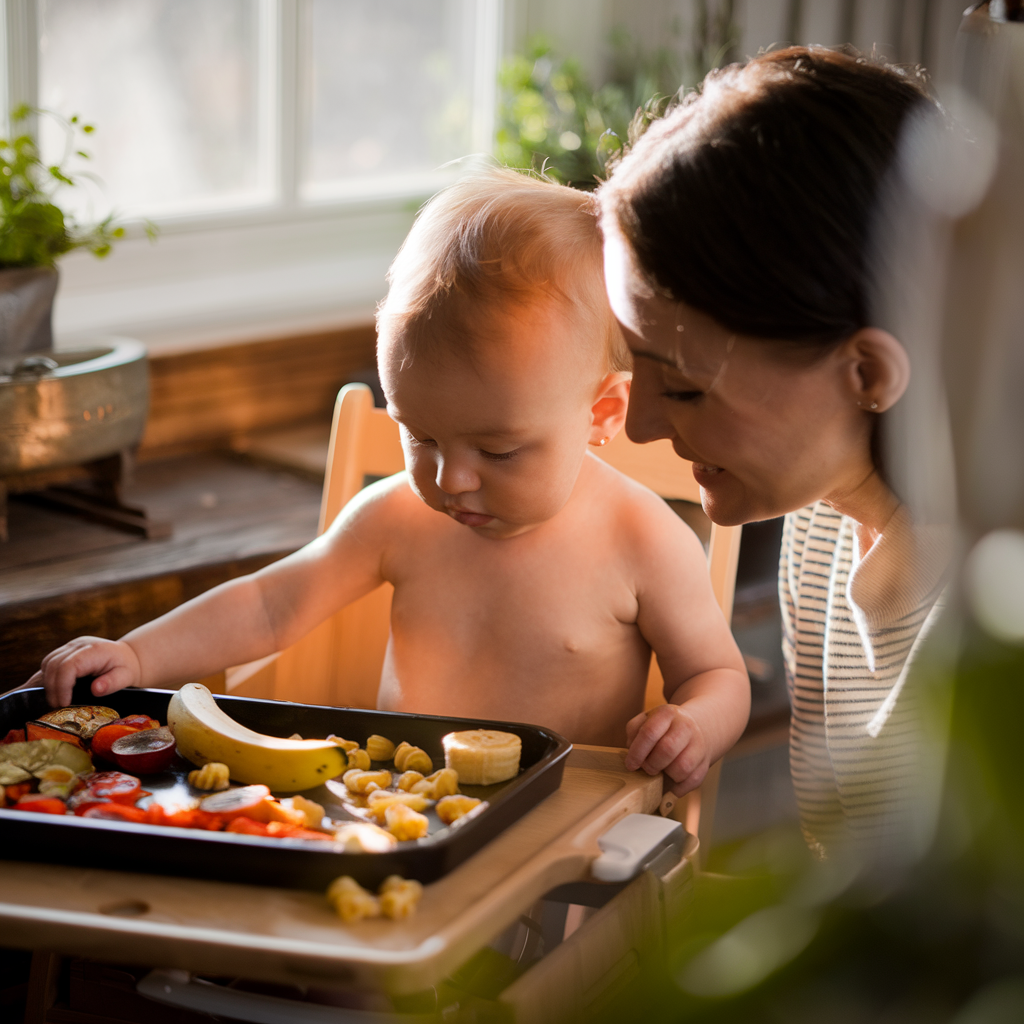
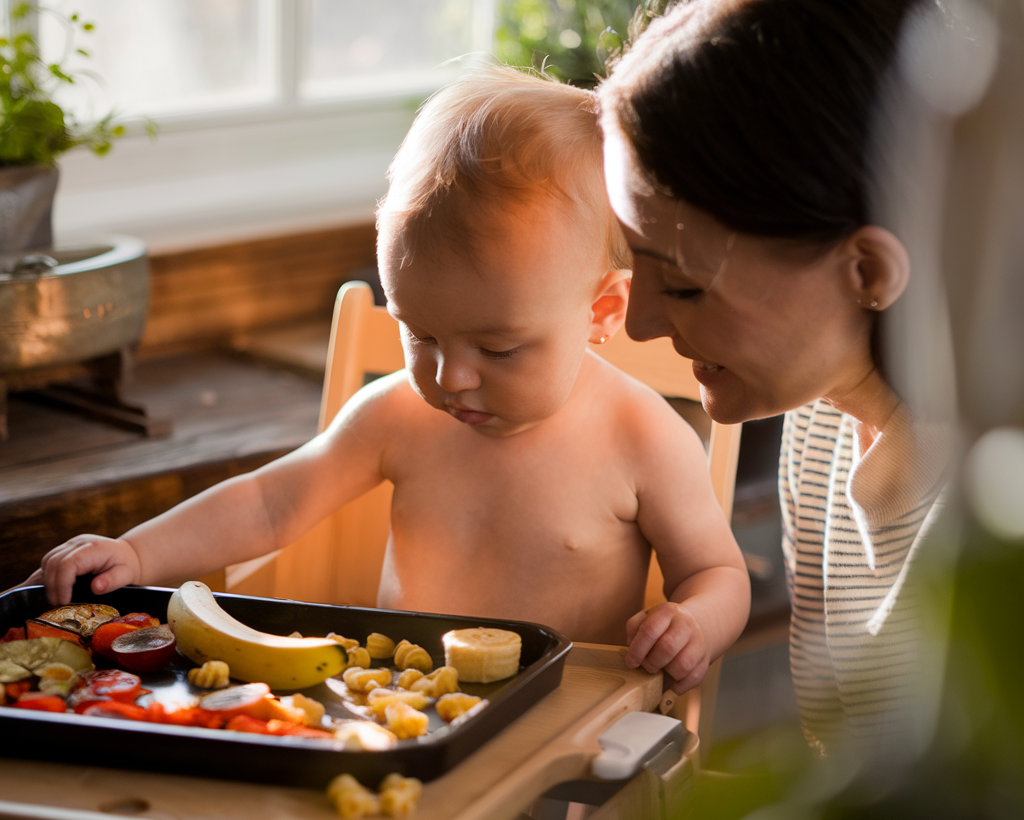
At 9–12 months, babies are developing pincer grasp, exploring independence, and ready for family food adapted to their developmental stage. These finger food ideas turn everyday meals into baby-safe portions without making separate food.
The Family Food Principle
The most sustainable weaning approach is not making separate baby food but adapting whatever the family is eating. This exposes baby to a broader range of flavours and textures, reduces meal preparation burden, and establishes normal family mealtimes from the start. The key adaptations: reduce or eliminate salt in cooking (add salt to adult portions at the table), cut to appropriate sizes, ensure softness is appropriate, and avoid specific high-risk items.
Adapting Family Dinner
- Pasta: any pasta dish works — just ensure the sauce is low-salt. Offer the same pasta the family is eating, or cut larger shapes into smaller pieces.
- Roasted vegetables: already soft from roasting. Cut to finger size. No adaptation needed.
- Chicken thighs: darker meat stays juicier and softer — ideal for babies. Remove skin for young babies. Shred or cut into pieces.
- Fish: flake and check carefully for bones. Baked, steamed or poached fish is ideal.
- Rice: sticky rice works well for older babies. Serve in small mounds they can pick up.
- Soft cooked vegetables: any softly cooked carrot, parsnip, broccoli, courgette, or sweet potato.
- Beans and lentils: dal, bean stew, or roasted chickpeas (from 10–11 months when pincer grasp is established).
Quick Finger Food Ideas by Category
Protein
- Mini meatballs: beef mince, egg, breadcrumbs, mild herbs. Bake 20 minutes.
- Egg strips: scrambled egg cooked flat and cut into strips
- Cheese cubes: soft cheese like cheddar, mild gouda
- Poached chicken pieces: tear into small strips
- Hummus as a dip or spread on toast fingers
Carbohydrate
- Toast fingers with avocado, hummus, or nut butter
- Mini pitta with soft fillings
- Small pieces of soft bread roll
- Oat pancakes cut into strips
- Soft-cooked pasta pieces
Vegetable
- Roasted sweet potato cubes
- Steamed broccoli florets (8–9 months: still quite soft; older babies can handle firmer)
- Soft cucumber batons (peeled)
- Avocado slices — dip in crushed oat cereal for grip
- Cherry tomatoes (halved or quartered from 9 months)
Fruit
- Ripe pear and peach slices
- Soft mango spears
- Banana (leave peel on bottom third as grip)
- Blueberries (halved from 9 months — whole blueberries are a choking risk under 12 months)
- Melon chunks (remove rind)
Allergen introduction at 9–12 months
By 9 months, if you haven’t already introduced the major allergens (peanut, egg, wheat, dairy, tree nuts, fish, shellfish, sesame, soy), this window remains important. Current guidance supports continued allergen exposure at 2–3 times per week to maintain tolerance once established. Family food is an efficient vehicle for this: a family pasta dish includes wheat; scrambled eggs at breakfast introduce egg; peanut butter on toast covers peanut; natural yogurt covers dairy. The 9–12 month age is also when texture tolerance develops rapidly — babies at this stage often accept new textures that they’d refuse if first introduced at 18 months.
Gagging vs choking: gagging is normal and protective at this stage — the gag reflex is positioned further forward in infants than adults. A baby gagging on a piece of soft food is using normal physiology, not indicating a choking risk. Choking is silent; gagging is noisy. Familiarise yourself with the distinction before starting finger foods and take a paediatric first aid course if you haven’t already.
Frequently Asked Questions
What size should finger food be for a 9-month-old?
At 9 months, babies are developing a pincer grasp but can’t yet reliably use it — larger pieces (the size of an adult finger) are easier to hold with a whole fist grip. By 10–12 months as pincer grasp refines, smaller pieces (pea-sized) become more manageable and appropriate.
Do I need to steam or cook all vegetables?
All vegetables offered to babies under 12 months should be soft enough to squash easily between your thumb and forefinger. Hard raw vegetables (carrot sticks, celery, apple) are a choking risk. Ripe soft fruits can be offered raw; harder fruits and all vegetables should be cooked until soft.
Disclosure: This post contains affiliate links. We may earn a small commission at no extra cost to you. We only recommend products we genuinely use.
Related Reading
- 9 month old baby: first words coming – how to encourage speech
- Baby-led weaning vs purees: which approach is right for your family
Found this helpful? Sign up to the LylyMama newsletter for more recipes, weaning guides, and honest parenting content every week.