
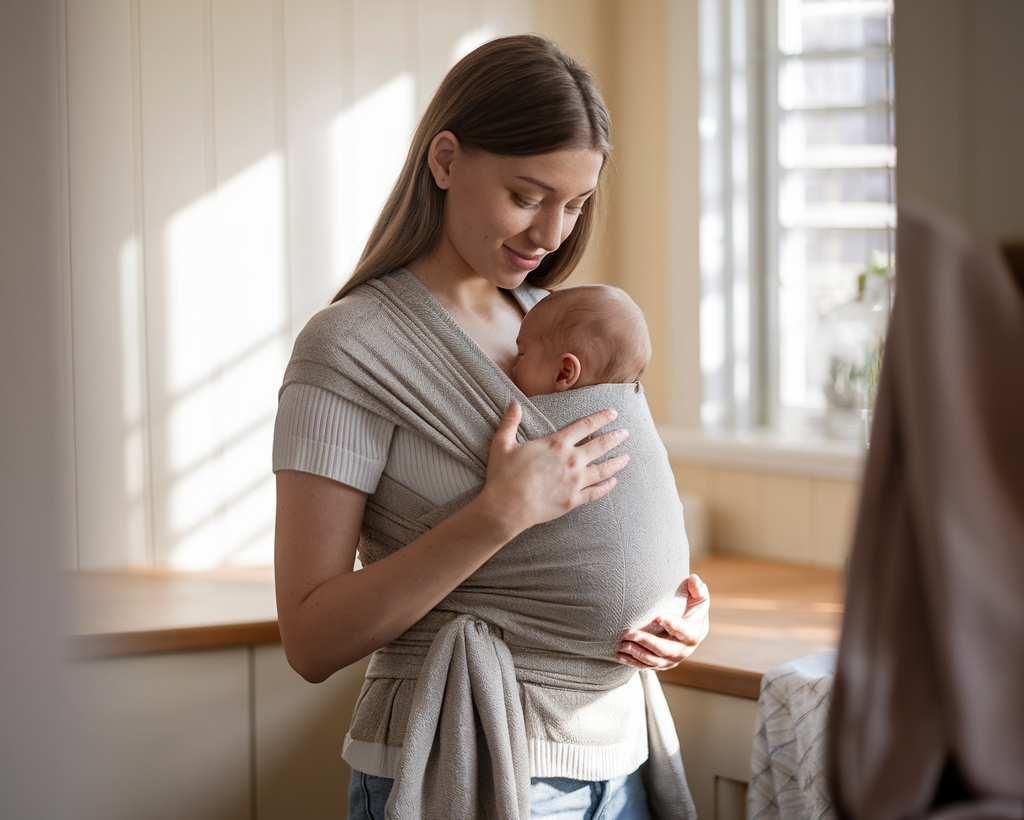
Quick answer: Babywearing — carrying your baby in a carrier, wrap, or sling — is one of the oldest infant care practices in human history and one of the most evidence-supported.
Babywearing — carrying your baby in a carrier, wrap, or sling — is one of the oldest infant care practices in human history and one of the most evidence-supported. The research on its benefits is substantial, the safety framework is clear, and the practical impact on new parent life can be transformative.
The Evidence for Babywearing
A 1986 study by Hunziker and Barr found that increasing carrying time by 3 hours per day reduced infant crying by 43% at 6 weeks of age — one of the most reproduced findings in infant care research. Subsequent research has confirmed: babywearing reduces crying duration and frequency, particularly in the colicky evening period; it reduces maternal postnatal depression scores; it improves breastfeeding rates and duration (proximity facilitates feeding initiation and the physical contact supports milk let-down); and it supports infant neurological development through the vestibular input, proprioception, and constant sensory engagement of being carried. The physiological mechanisms overlap with skin-to-skin contact: oxytocin release, cortisol reduction, temperature regulation, and breathing and heart rate stabilisation all occur during babywearing.
Carrier Types: Choosing What Works for You
Ring slings: one piece of fabric threaded through two rings, worn over one shoulder. Highly adjustable, compact when packed, good for newborns and quick ‘pop on’ use. Learning curve moderate. Best for shorter carries. Stretchy wraps (Moby, Boba): long piece of stretchy fabric wound around the body. Excellent for newborns — the stretch accommodates small bodies and the fabric cradles well. Warm and snug. Pre-tying means ready-to-use for multiple outings. Best to 12–14kg (approximately 6–9 months). Woven wraps: non-stretch fabric that can carry from newborn through toddlerhood and allows backcarries, hip carries, and front carries in multiple positions. Steeper learning curve but the most versatile option. Soft structured carriers (SSCs) (Ergobaby, Tula, LÍLLÉbaby): buckle carriers with padded waistbands and shoulder straps. Easiest to put on and take off; most accessible for partners new to babywearing; good for longer carries as the weight distribution is optimised. Ensure a newborn insert is used for babies under 4–5kg. Meh dais and buckle-free half-buckle carriers: a middle ground between wraps and SSCs.
The T.I.C.K.S. Safe Babywearing Rules
- T — Tight: Carrier should be snug, with baby close enough to kiss. A loose carrier allows baby to slump, compromising the airway.
- I — In view at all times: You should always be able to see your baby’s face by glancing down, without moving fabric.
- C — Close enough to kiss: Baby’s head should be close enough that you can kiss them on the forehead without bending over.
- K — Keep chin off chest: Baby’s chin should not be pressed against their chest — this position restricts the airway. Ensure at least a finger-width gap under the chin.
- S — Supported back: Baby’s back should be supported in a natural slight curve (not straight, not forced into a C-shape). The carrier should support the full spine.
Hip-Healthy Positioning
The optimal carrying position for hip health — particularly important for babies with hip dysplasia or those undergoing treatment with a Pavlik harness — is the ‘M position’ or ‘seat’ position: baby’s knees should be higher than their bottom, with thighs fully supported from knee to knee by the carrier fabric, and knees bent out to the sides in a frog-leg position. This positions the femoral heads optimally within the acetabulum. Narrow-based carriers (older bjorn-style carriers where baby dangles by the crotch) do not support this position. Current evidence from hip dysplasia specialists strongly supports wide-base M-position carriers.
Frequently Asked Questions
Can I babywear a newborn safely?
Yes — with the correct carrier and technique, babywearing from birth is safe and beneficial. For very young babies: use a carrier rated for their weight; ensure a newborn insert for SSCs that require it; maintain the T.I.C.K.S. safety rules vigilantly; and check positioning every 5–10 minutes in the early weeks as you develop your technique. Sling libraries (in the UK) allow you to try different carriers before purchasing — an invaluable resource given the range of options and the investment involved.
Can my partner babywear?
Absolutely — and there are significant benefits to both. Partners who babywear develop stronger attachment, report feeling more competent as parents, and the physical contact releases oxytocin and activates caregiving neural circuits. Many SSC carriers adjust to fit a wide range of body sizes easily.
Is babywearing safe for my back?
A well-fitted carrier that distributes weight through the waist and shoulder system, with baby positioned high and close (the T.I.C.K.S. rules), should not cause back problems. Carrying a baby at waist height in a poorly positioned carrier or one-shoulder carrier for extended periods can cause strain. If you have a history of back problems, visit a sling library for a fitting and seek advice from a sling consultant.
Related Reading
- Best baby carriers 2025: wraps, ring slings and structured SSCs
- Hip dysplasia in babies: what DDH means and how it’s treated
Disclosure: This post contains affiliate links. We may earn a small commission at no extra cost to you. We only recommend products we genuinely use and trust.
Found this helpful? Sign up to the LylyMama newsletter — honest, evidence-based content for real mothers, delivered every week.