
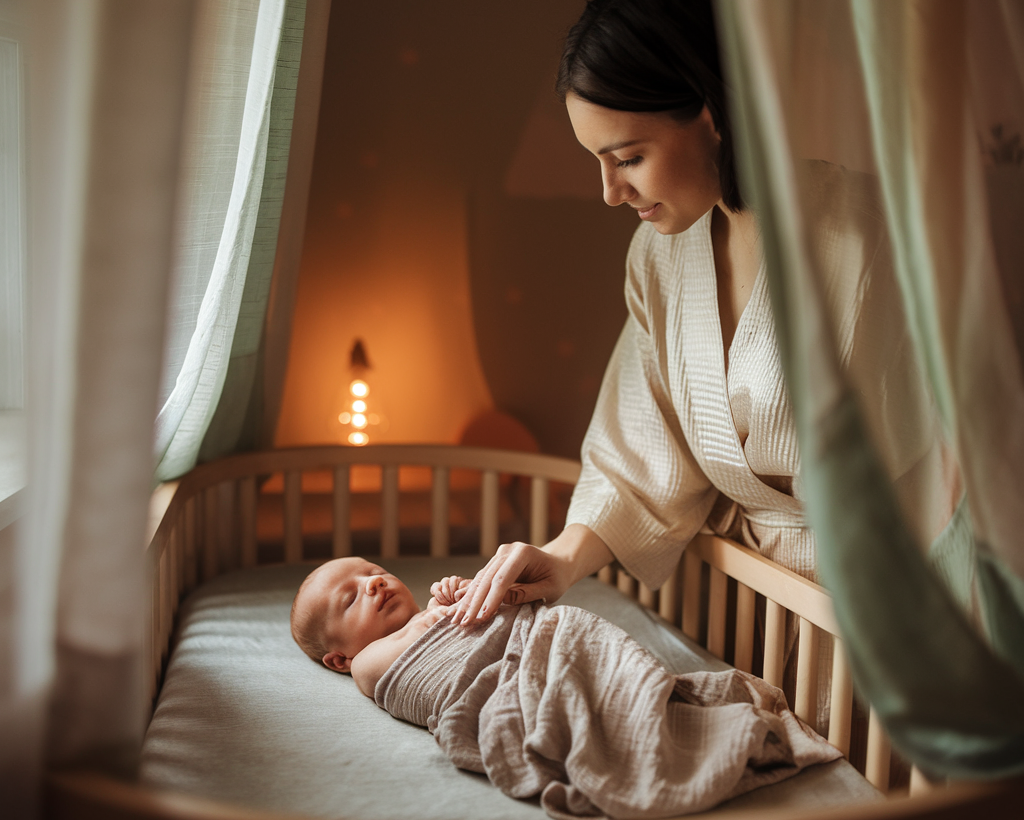
Quick answer: Check the back of the neck or chest — not the hands or feet, which are normally cooler than the core. A correctly dressed baby should feel warm but not hot or sweaty. The ideal room temperature is 16–20°C, with 18°C as the target.
Why hands and feet are unreliable
Peripheral circulation in babies is less efficient than in adults — blood is preferentially directed to the core organs, leaving the hands and feet cooler as a normal physiological state. A baby with warm chest and neck but cool hands and feet is not cold — they are displaying normal cardiovascular physiology. Using hand temperature to assess thermal state is one of the most common and consequential errors in infant care, leading to overdressing which is an independent risk factor for SIDS.
The correct assessment: back of the neck
The skin at the back of the neck or chest directly reflects core body temperature. Press the back of your hand (more sensitive than the palm) to the back of the baby’s neck. What you’re assessing: warm and dry — correctly dressed. Cool — add a layer. Hot or sweaty — remove a layer immediately. A sweaty baby or damp hair at the nape is a sign of overheating, which is associated with increased SIDS risk.
Dressing guide by room temperature
16–18°C: vest, babygrow, and a 3.5 tog sleeping bag OR vest, babygrow, and one or two blankets (tucked in firmly at armpit level). 18–20°C: vest, babygrow, and a 2.5 tog sleeping bag. 20–22°C: vest and a 2.5 tog sleeping bag. 22–24°C: vest and a 1.0 tog sleeping bag. Above 24°C: diaper and a 0.5 tog sleeping bag or just a light sheet. These are guidelines — check the baby’s actual temperature using the neck assessment, as individual babies vary. The tog rating system assumes these combinations; the GroSnug/GoBabyToo dressing guides on most sleeping bag packaging provide equivalent guidance.
Room temperature and SIDS
Overheating is an independent risk factor for SIDS in multiple studies. The recommended room temperature of 16–20°C is lower than most adults find comfortable, and lower than many central heating systems maintain. A room thermometer at cot height (cooler air sinks — temperature at adult standing height can be 2–3°C higher than at cot level) allows accurate monitoring. If the room is warmer than 20°C, dress accordingly — don’t rely on cooling the room if the heating is controlled centrally.
Electric blankets and heated sleeping surfaces
Electric blankets and heated mattress pads are not safe for babies under any circumstances. Baby temperature regulation should come from the room temperature and appropriate clothing layers, not from a heated sleeping surface. Hot water bottles used to warm the mattress must be removed completely before the baby is placed on the surface.
Frequently Asked Questions
My baby’s hands are blue at the fingertips — is that cold or normal?
Mild blueness (acrocyanosis) at the fingertips and around the mouth is common in newborns and is caused by normal peripheral circulation immaturity — blood oxygen is adequate, but peripheral vessels are more constricted than in older babies. It typically resolves by 2 weeks. If blueness is around the lips and spreads, or if the baby seems unwell or is breathing unusually, seek medical assessment.
Can I use a fan to cool the baby’s room?
Yes — a fan in the room (not pointing directly at the baby) is safe and may modestly reduce SIDS risk by improving air circulation. A 2008 study found fan use during sleep was associated with a 72% reduction in SIDS risk. Place the fan to circulate room air generally rather than directed at the baby.
Is it okay to have the heating on all night in the baby’s room?
Monitor room temperature rather than setting the thermostat and assuming. If the room stays at or below 20°C with heating on, that’s fine. If it climbs above 20°C, dress the baby accordingly or use a thermostat-controlled setting that maintains 18–20°C. Erring cooler rather than warmer is safer within the recommended range.
Related Reading
Found this helpful? Sign up to the LylyMama newsletter — evidence-based answers to the questions every new parent actually has.