
Quick answer: Clean only what you can see — the outer ear and the entrance to the ear canal — with a soft damp cloth. Never insert cotton buds, Q-tips, or anything else into the ear canal. Baby ears are largely self-cleaning; the canal produces wax that migrates outward naturally.
Why cotton buds are harmful, not helpful
The ear canal has a self-cleaning mechanism: the skin of the canal grows outward like a slow conveyor belt, carrying dead skin cells and dried wax toward the outer ear. Cotton buds disrupt this by pushing wax inward and compacting it — creating the blockage they’re intended to remove. More seriously, the neonatal and infant ear canal is extremely short (approximately 2cm in a newborn) and the eardrum is easily reached. Cotton bud injuries to the eardrum are well documented in paediatric ENT practice. The NHS, AAP, and NICE all advise against cotton bud use in ears at any age.
Safe ear cleaning method
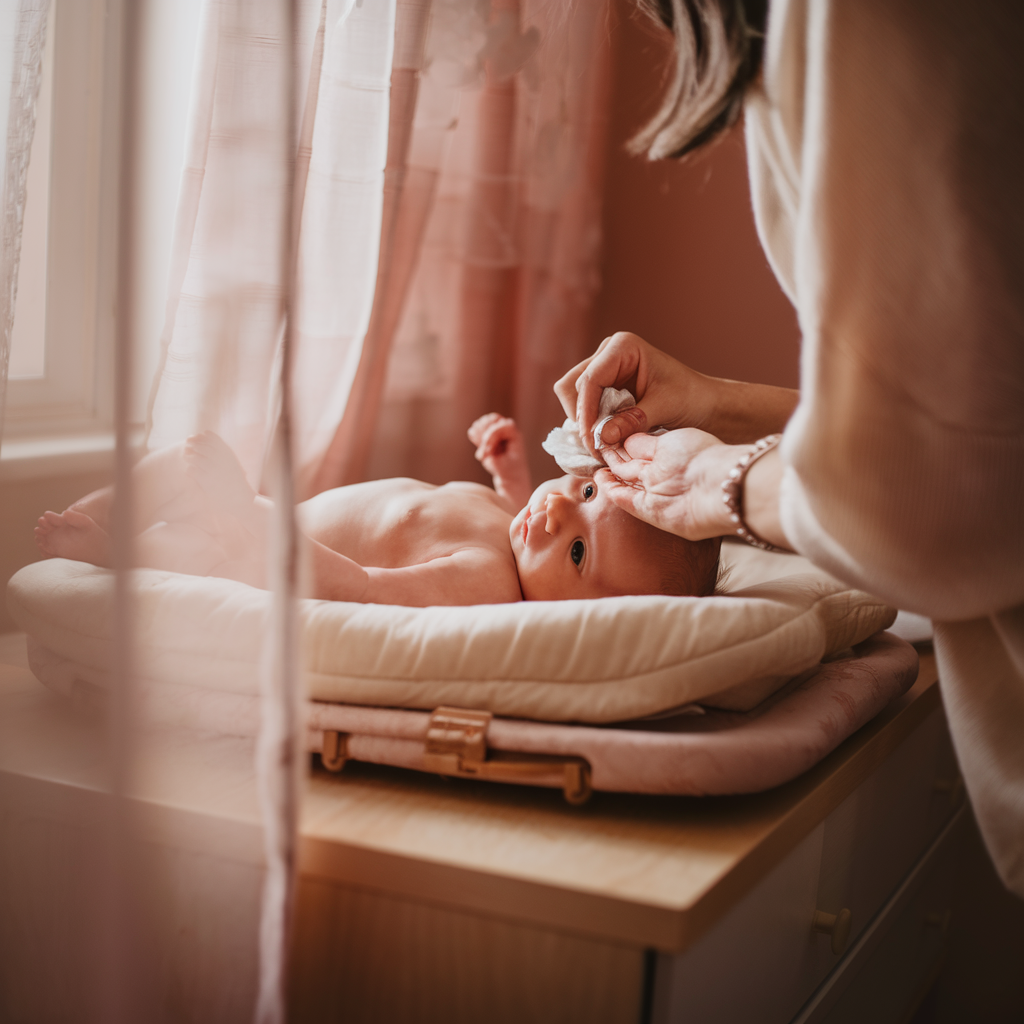
For the outer ear: a soft damp cloth or cotton wool ball, wiped gently around the outer ear and the outer part of the canal entrance. Do not push the cloth inside. After bathing, gently dry the outer ear by patting. If water enters the canal during bathing, tilting the baby’s head to let it drain naturally is sufficient — no intervention needed. The interior of the ear canal does not require cleaning and should not be touched.
Ear wax: what is normal
Ear wax (cerumen) in babies varies enormously in colour and consistency — pale yellow, orange, dark brown, wet, dry, flaky. All are normal variants. The amount produced varies between babies. Wax that is visible at the entrance of the ear canal is normal and will migrate outward on its own. Only wax causing a visible blockage at the canal entrance, or associated with hearing changes, needs any attention — and even then, a doctor should assess rather than a parent attempting removal. Dark brown or black wax is old dried wax, not a hygiene problem.
When to see a doctor
Contact your doctor same day for: yellow, green, or bloody discharge from the ear (indicates possible ear infection with perforated eardrum, or otitis externa); a baby repeatedly pulling at one ear alongside fever above 100.4°F (38°C), unusual crying, or feeding difficulty; any suspicion that an object has been inserted into the ear canal; or wax that is visibly blocking the entire canal entrance and appears to be affecting your baby’s response to sound. The NHS specifically advises against ear candling — it has no evidence of effectiveness and carries a burn risk.
Frequently Asked Questions
My baby has discharge from their ear — what should I do?
Yellow, green, or bloody discharge is not normal ear wax and warrants a same-day doctor assessment. It can indicate a middle ear infection with a perforated eardrum, or an outer ear infection (otitis externa). Do not attempt to clean inside the ear canal — see your doctor promptly.
My baby keeps pulling at one ear — is that teething or an ear infection?
Ear-pulling alone, without fever or unusual crying, is usually exploratory — babies discover their ears around 3–4 months. Ear-pulling combined with fever above 100.4°F (38°C), unusual crying especially when lying down, feeding difficulty, or disrupted sleep is more likely to indicate an ear infection and warrants a doctor assessment.
Can I use olive oil drops for baby ear wax?
Olive oil ear drops can soften wax in older children and adults. For babies under 6 months, discuss with your doctor before using any ear drops. Never use drops if there is any possibility the eardrum is perforated (history of ear infections, discharge, previous perforation). For most healthy babies, the ear is self-cleaning and drops are not needed.
Related Reading
- Ear infections in babies: signs, treatment and prevention
- Baby fever: temperature chart and when to seek help
Found this helpful? Sign up to the LylyMama newsletter — evidence-based, honest answers to the questions every new parent actually has, straight to your inbox.