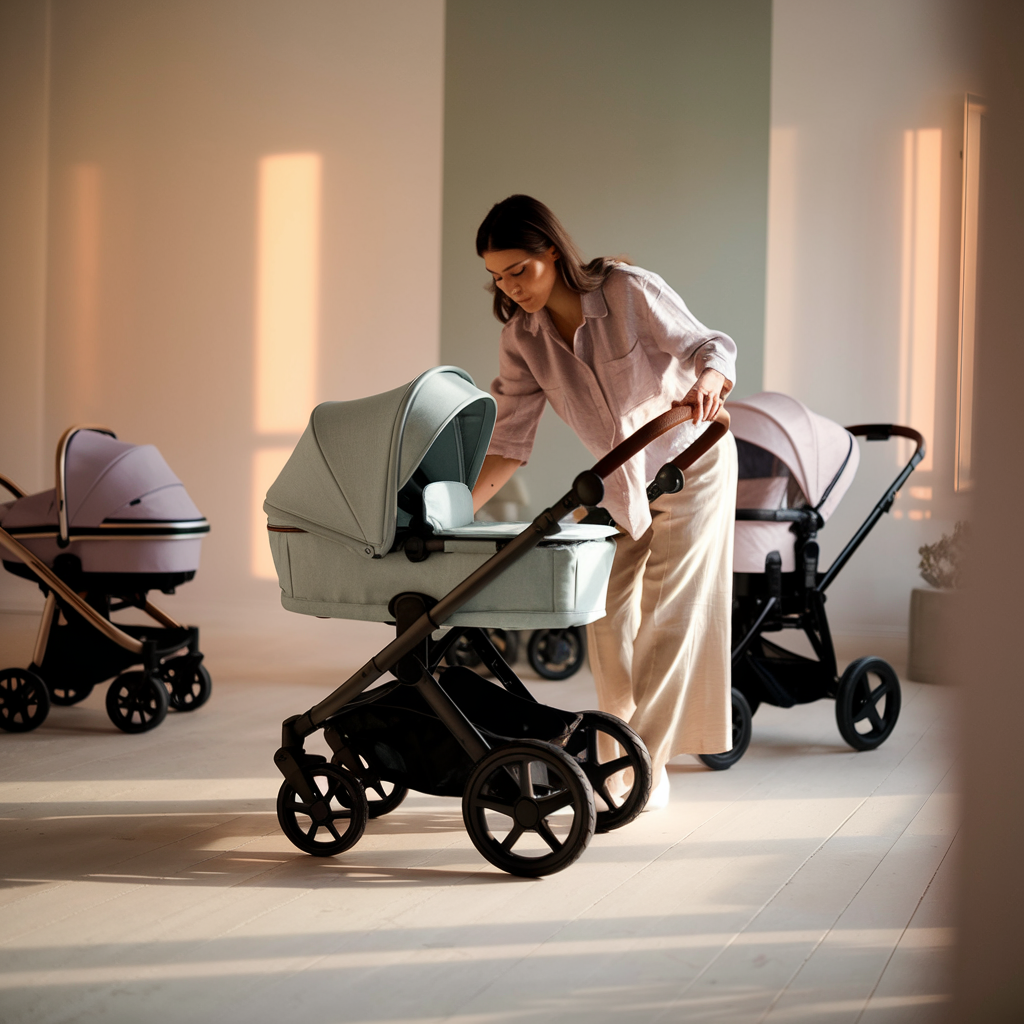
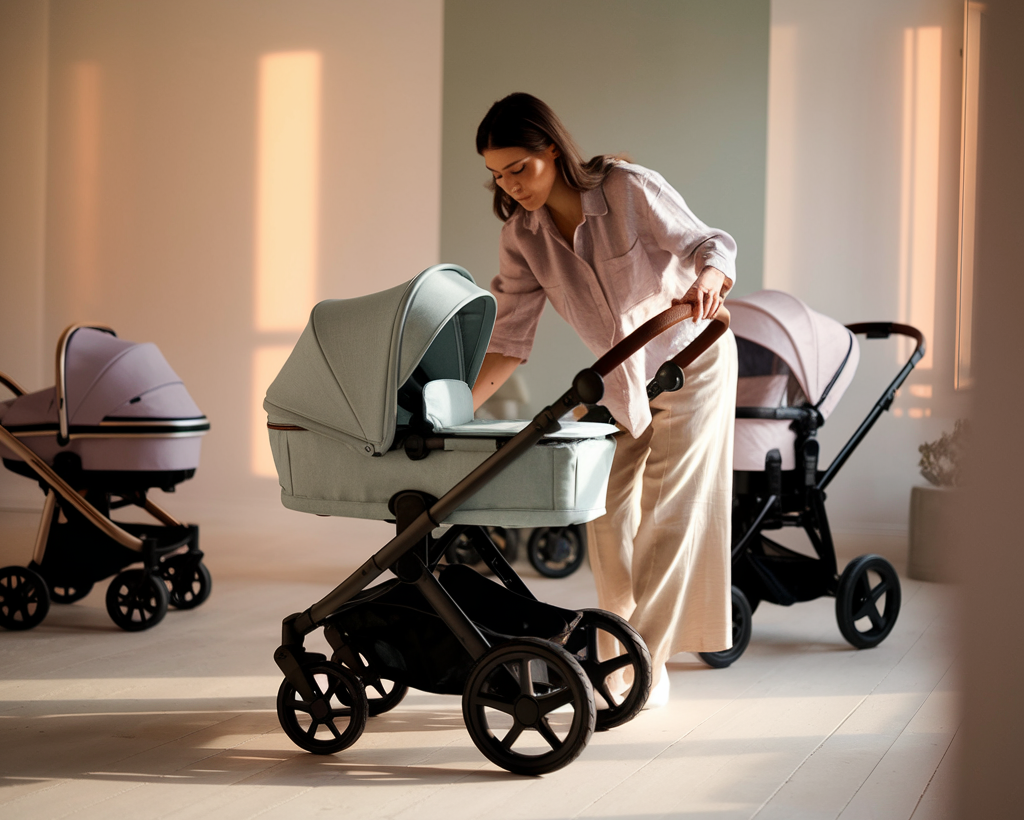
A pushchair is likely the most expensive single baby purchase you’ll make and the one you’ll second-guess most. This guide cuts through to what genuinely matters and the best options at each budget.
What makes a pushchair worth buying
How we selected these strollers
The strollers in this guide were selected through a combination of hands-on parent testing, editorial research, and ongoing reader feedback. Our testing panel included parents of newborns through 3-year-olds across urban, suburban, and rural settings, testing each stroller over a minimum of 4 weeks across varied terrain. Assessment criteria: maneuverability (one-handed push, turning radius, kerb-handling), fold mechanics (one-hand fold achievable, fold size for car boot), seat comfort and adjustment range, basket capacity (tested with a full weekly shop), and build quality at the 6-month mark. Pricing was verified at time of publication and reflects UK RRP — prices fluctuate. We do not accept payment for editorial placement.
Fold mechanism — you will do this one-handed with a baby in the other arm, in a car park, in the rain. Weight — anything over 10kg becomes a problem when lifting into a car boot daily. Tyre type — foam-filled tyres puncture-proof but harsher; air tyres smoother but need pumping. Seat recline — essential for newborns. Sun canopy coverage — UPF 50+ and large enough to actually shade the baby. Basket size — you will use this for everything.
Budget: Cosatto Supa 3 — ~£250
One of the most capable budget pushchairs on the market. Handles well on pavements, decent-sized basket, folds without an engineering degree. The canopy is generous. It’s heavier than premium options (11.5kg) but for parents who aren’t lifting it into a boot multiple times daily, this rarely matters.
Pros: Decent suspension, large canopy, reasonable fold, good basket, bold print options
Cons: 11.5kg on the heavy side, narrower seat than premium options, plastic feel on some components
Best for: Budget-conscious parents doing mostly pavement walking, less car loading
Mid-range: Joie Versatrax — ~£450
Genuinely impressive at its price point. Converts from carrycot to seat, works with most car seat brands via adapters, handles different terrain on all-wheel suspension, and folds to a manageable size. The seat unit is spacious (suitable to ~22kg). Joie’s reputation for value is earned — quality at £450 that competes with products at £700+.
Pros: Excellent suspension, large seat, car seat compatible, grows with baby, quality build
Cons: Slightly bulky when folded, canopy could be larger, fold non-intuitive initially
Best for: Parents wanting genuine versatility — newborn to toddler — without the premium price tag
Premium: Bugaboo Fox 5 Renew — ~£1,300
The benchmark for a reason. The all-terrain suspension is genuinely in a different class from anything under £800 — it handles cobblestones, gravel, and grass without vibration transmitted to the baby. The fold is fast, the seat spacious and flat, and the materials quality obvious. For families who walk extensively on varied terrain, or who want to buy once, it’s worth it.
Pros: Best-in-class suspension, effortless fold, luxurious seat, excellent resale value, long product lifespan
Cons: £1,300 is significant; heavier than expected at 9.9kg; accessories cost extra
Best for: Parents who walk extensively, want the pram to last years, or have the budget and want to buy once
How to choose: step-by-step
Test the fold one-handed at the shop while holding a bag — this is the real-world test. Measure your car boot opening before buying: width matters as much as depth. Check the harness buckle with a closed fist. Weigh up new vs second-hand: a two-year-old Fox in good condition is often a better product than a new mid-range alternative — inspect for cracks at fold joints, check wheel bearing smoothness, and always buy new for any car seat component.
Frequently Asked Questions
Should I buy new or second-hand?
Second-hand pushchairs are excellent value. Check for product recalls and inspect the frame for cracks at fold joints. Well-maintained 2-year-old prams are often in very good condition.
Do I need a travel system?
Not necessarily — the car seat element has a shorter life than the pushchair. Buying separately gives more flexibility. If convenience is priority, Joie’s travel system range offers good value.
Is it worth buying a travel system from birth?
Yes if you’re moving frequently between car and pram — clicking an infant seat in without disturbing a sleeping baby is genuinely useful in the first six months. After that the click-in becomes irrelevant. Ensure the specific car seat and pram are genuinely compatible without a paid adapter before buying the combination.
Related Reading
- Nursery essentials checklist: what you actually need vs nice-to-haves
- Best baby carriers: wraps, ring slings and structured SSCs
Disclosure: This post contains affiliate links. If you buy through our links we may earn a small commission at no extra cost to you. We research products independently and are never paid to recommend specific items.
Found this helpful? Sign up to the LylyMama newsletter for honest, researched guides on everything you need in pregnancy and early parenthood.
Check current stock — Cosatto regularly discontinues prints and replaces models. The Supa 3 is the current generation; its predecessor the Supa 2 is equivalent if found at a better price second-hand.
The Versatrax carrycot is tested and certified for overnight sleep — a genuine practical advantage. Note: carrycot overnight sleep certification applies specifically to the flat bassinet surface; the stroller seat is not a safe sleep environment. Some comparable prams sell the carrycot separately, adding £100–150 to the effective price.
The Fox 5 fabric is machine washable and unclips without tools — a detail that matters after 18 months of use. The chassis has a 10-year guarantee. Factor resale value when calculating cost: a Fox bought for £1,300 and sold at £800 two years later costs £250/year.