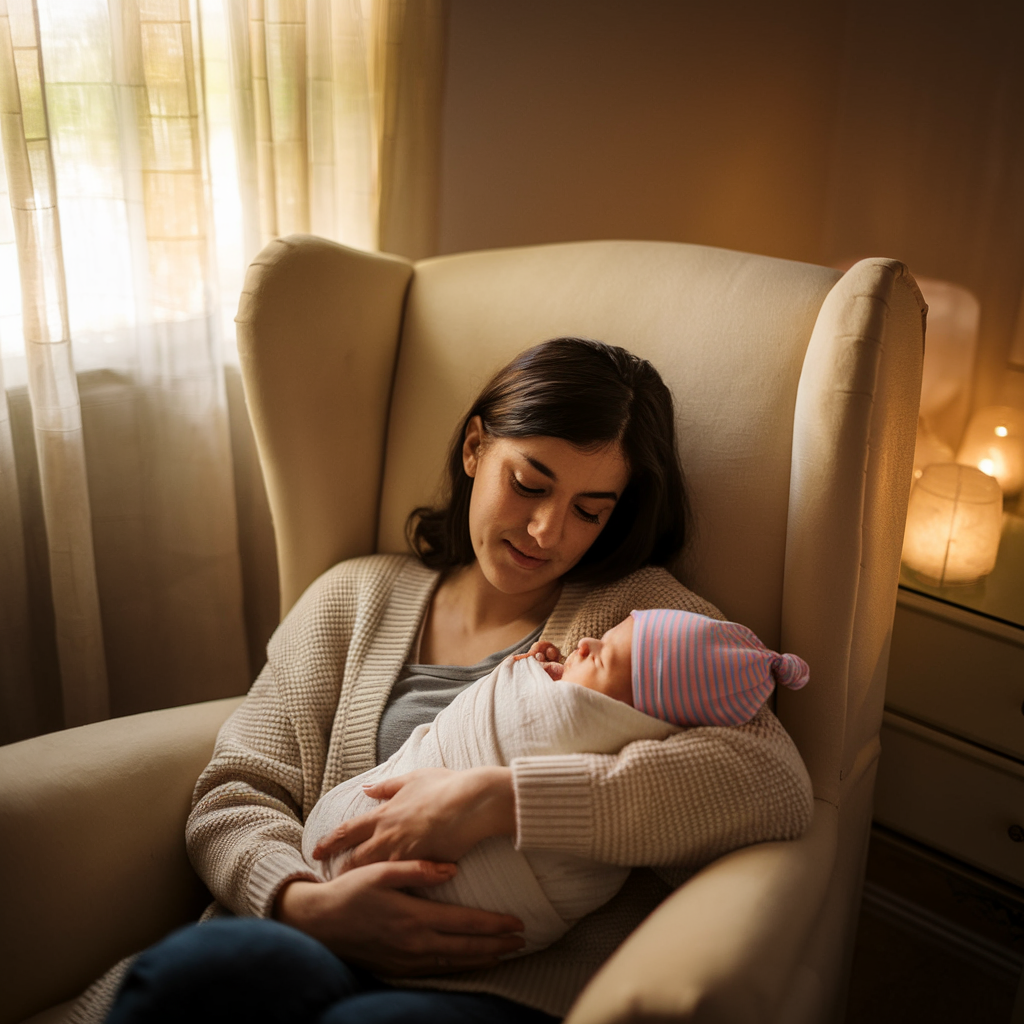
Quick answer: New parents are almost universally shocked by newborn sleep — not because there isn’t enough of it (newborns sleep 16–18 hours a day), but because it’s so fragmented, unpredictable, and relentless.
New parents are almost universally shocked by newborn sleep — not because there isn’t enough of it (newborns sleep 16–18 hours a day), but because it’s so fragmented, unpredictable, and relentless. Understanding why newborns sleep the way they do makes the reality significantly easier to manage.
How Much Sleep Is Normal for a Newborn
Newborns (0–3 months) need approximately 14–17 hours of sleep per 24-hour period, though some sleep as much as 18–19 hours. The critical difference from adult sleep: this is distributed in 2–4 hour chunks around the clock, with no consolidation into nighttime blocks yet. The circadian rhythm — the biological clock that distinguishes day from night — is not developed at birth. It matures gradually over the first 3–4 months, primarily regulated by light exposure and feeding patterns. This is why ‘getting on a schedule’ before 12 weeks is largely futile. You’re not doing it wrong; the biology isn’t ready yet.
Why Newborns Wake So Frequently
Frequent waking is not a problem to solve — it’s biologically essential. Reasons: Stomach size: A newborn’s stomach holds only 1–2 tablespoons at birth. It physically cannot hold enough calories for more than 2–3 hours. Waking to feed is survival. Sleep cycle architecture: Newborns spend approximately 50% of their sleep in active (REM-like) sleep — light, easily disturbed sleep with twitching, smiling, and irregular breathing. Adult REM sleep is about 20%. This is protective — light sleep makes waking and arousal easier, which may reduce SIDS risk. Temperature regulation: Newborns cannot regulate their body temperature efficiently and may wake when cold. Neurological development: Frequent sleep state transitions support brain development. The immature nervous system moves through sleep states rapidly.
Safe Sleep: The Non-Negotiables
Safe sleep guidelines save lives. The ABCs: Alone — baby sleeps alone in their own space (room-sharing in a separate sleep surface for 6 months is recommended; bed-sharing significantly increases suffocation risk). Back — always on their back for every sleep. Back sleeping reduced SIDS rates by 50% when it became standard guidance in the 1990s. Crib — firm, flat, bare sleep surface with no soft items (no bumpers, pillows, loose blankets, positioners, or toys). Approved sleep surfaces: crib, bassinet, Moses basket, play yard with firm mattress. Swaddle blankets are safe when used correctly (arms in, not too tight, stop when baby shows signs of rolling).
Normal Sleep Patterns Week by Week
Weeks 1–2: Completely disorganized sleep-wake cycles. Baby is often most alert at night (womb rhythms — you moved during the day which rocked them to sleep; when you were still at night, they woke). Weeks 3–6: Some babies begin consolidating slightly longer stretches — a 3–4 hour stretch at night is a win. Weeks 6–8: Often the hardest — a developmental leap means more waking and crying, not less. This is temporary. Weeks 8–12: Circadian rhythm beginning to emerge. Some babies give a longer first stretch of 4–5 hours. 3–4 months: Many babies transition from newborn sleep patterns — this often causes a period of more disruption (the ‘4-month sleep regression’) before consolidation improves.
Practical Strategies That Help
Maximize light exposure during the day: Open curtains, go outside, use bright lights — this helps set the circadian clock. Keep nights dark and boring: Dim lights for night feeds, no stimulation, back to sleep quickly. Watch wake windows: Newborns can only comfortably stay awake for 45–90 minutes before they need to sleep again. Overtiredness makes sleep worse, not better. White noise: Continuous white noise (not music) mimics the constant sound of the womb. Studies show it helps newborns fall and stay asleep. Use at a safe volume (under 65 decibels) and keep the source away from baby’s head. Swaddling: Reduces the startle reflex that wakes many newborns. Learn a secure but not-too-tight technique. Stop swaddling when baby begins rolling.
Frequently Asked Questions
When will my baby sleep through the night?
‘Sleeping through the night’ is medically defined as a 5-hour stretch — not the 12 hours parents imagine. Many babies achieve a 5-hour stretch by 3–4 months. True 6–8 hour stretches are more common from 4–6 months onward, though significant individual variation exists. Sleep-training approaches (from 4–6 months, when developmentally appropriate) can accelerate consolidation for families who choose them.
Is it safe for my baby to sleep in a swing or bouncer?
No — swings, bouncers, car seats, and inclined sleepers are not approved sleep surfaces. The inclined position can allow a baby’s head to fall forward, compromising their airway (positional asphyxia). If baby falls asleep in a swing, transfer to a flat surface as soon as safely possible. The Fisher-Price Rock ‘n Play Sleeper was recalled in 2019 after being linked to multiple infant deaths.
My newborn only sleeps when held — is this normal?
Completely normal. Newborns have spent 9 months in constant contact, warmth, and motion. A flat, still, cool surface is profoundly unfamiliar. Being held is biologically normal newborn behavior, not a habit that ‘needs to be broken’ in the newborn stage. Many families use safe babywearing (a well-rated carrier with baby in the correct ergonomic position) to meet this need while functioning. For unsupported sleep, try the ‘arms-first’ transfer: lower baby onto the sleep surface arms-first before their back touches, and keep your hands in contact for 30 seconds before withdrawing.
Related Reading
- Bringing baby home: the first 24 hours survival guide
- Baby sleep schedule generator by age
- 3 month old baby: sleep regression or just a growth spurt?
Found this helpful? Sign up to the LylyMama newsletter for more honest, evidence-based parenting guides delivered to your inbox every week.