
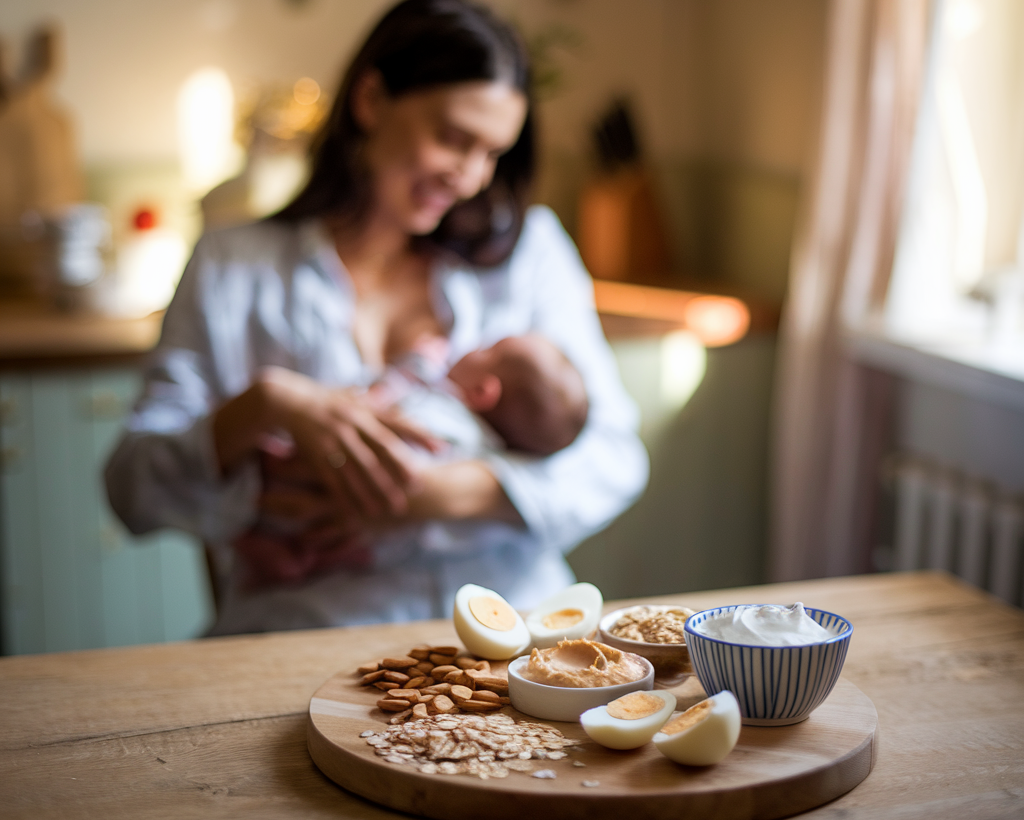
Protein is one of the most important nutrients for breastfeeding mothers — it supports milk production, muscle repair after birth, and sustained energy. These snacks prioritise protein alongside other key nutrients.
How Much Protein Do Breastfeeding Mothers Need?
The recommended protein intake during breastfeeding is approximately 71g per day (compared to 46g for non-pregnant, non-breastfeeding women). This is achievable through regular meals, but snacks are a useful way to fill the gap. Aim for 15–25g protein at each snack where possible.
High-Protein Snack List
- Greek yogurt (full-fat, plain): 10–15g protein per 150g serving. Add a drizzle of honey and some berries. One of the fastest, most convenient protein sources.
- Hard-boiled eggs: 6g per egg. Batch cook 6 on Sunday. Eat cold, whole, with a little salt.
- Cottage cheese on rice cakes: 12–15g per serving. Add sliced cucumber or cherry tomatoes.
- Edamame (frozen, microwave 3 minutes): 11g protein per 100g. Season with a little sea salt.
- Hummus and pitta (100g hummus): 8g protein from chickpeas. Add raw vegetables alongside.
- String cheese or babybel: 6–8g per piece. No prep, entirely one-handed.
- Handful of almonds (30g): 6g protein + magnesium, calcium, healthy fats.
- Smoked salmon on rice cakes: 12–15g protein per 50g salmon. Also provides DHA omega-3.
- Nut butter on banana: 8g protein from 2 tbsp nut butter + potassium and quick carbohydrates from banana.
- Protein smoothie: see smoothie guide — target 20g+ by including Greek yogurt, nut butter, and milk.
Protein Balls Recipe
Makes 20 balls. Prep: 10 minutes, no bake. Combine: 1 cup oats, ½ cup peanut butter, 3 tbsp honey, 2 tbsp chia seeds, 3 tbsp dark chocolate chips, 2 tbsp protein powder (optional, for higher protein). Mix well. Roll into tablespoon-sized balls. Refrigerate 30 minutes. Store in fridge for 1 week. Each ball: approximately 8–10g protein with peanut butter base.
Foods that naturally combine protein and convenience
The most practical high-protein foods for new mothers require minimal preparation: Greek yogurt (17g per 170g serving), hard-boiled eggs (6g each, batch-cooked once weekly), cottage cheese (14g per 100g, eaten straight from the pot), edamame (17g per 155g serving, available frozen), tinned fish — sardines, tuna, salmon — (20–25g per tin), and cheese (7g per 28g). None of these require cooking at time of eating. Building snacks around these sources means adequate protein intake even when structured meal preparation isn’t possible.
Protein timing matters more than most people realise during the postpartum period. Spacing protein intake across 4–5 occasions daily (rather than concentrating it at dinner) maximises muscle protein synthesis — important for postnatal recovery, particularly after caesarean. This doesn’t require planning elaborate snacks; it means ensuring protein appears at every eating occasion including informal snacking.
Frequently Asked Questions
Is protein powder safe while breastfeeding?
Plain whey protein or plain pea protein (without additional stimulants, artificial sweeteners, or proprietary blends) is generally considered safe while breastfeeding. Many lactation and sports nutrition professionals consider it appropriate when whole food protein is difficult to meet. Avoid protein supplements marketed for weight loss with added stimulants.
What are the signs I’m not eating enough protein?
Low protein intake contributes to: persistent fatigue beyond what’s explained by sleep deprivation, slow wound healing (including perineal healing), poor hair quality (hair loss is common postpartum but is worsened by nutritional deficiency), and general weakness. If these are significant, a postpartum nutrition consultation with a registered dietitian is worthwhile.
Disclosure: This post contains affiliate links. We may earn a small commission at no extra cost to you. We only recommend products we genuinely use.
Related Reading
- Snacks for breastfeeding mums: energy-boosting ideas for every hour
- Pumping breast milk: how to build and maintain supply
Found this helpful? Sign up to the LylyMama newsletter for more recipes, weaning guides, and honest parenting content every week.