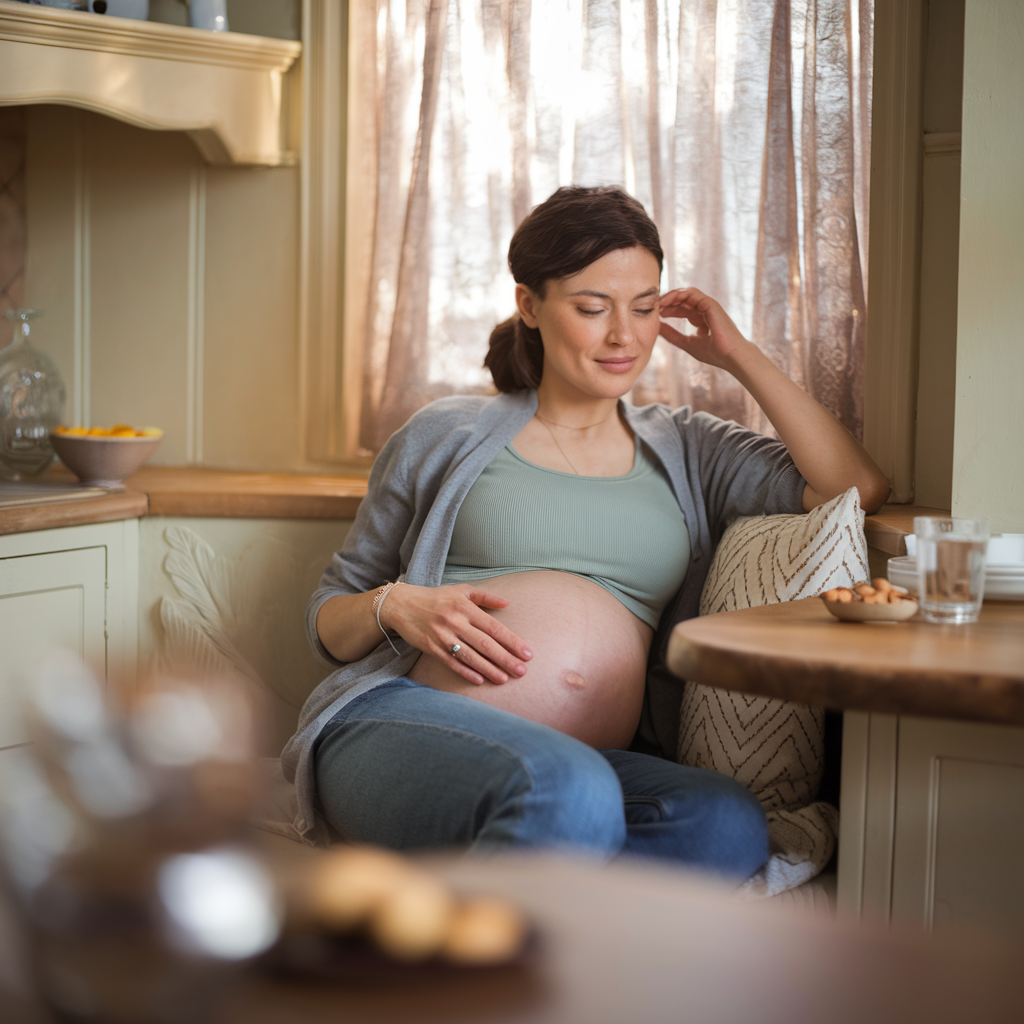

Quick answer: Heartburn affects more than half of all pregnant women and for many it’s the most persistently uncomfortable third-trimester symptom.
Heartburn affects more than half of all pregnant women and for many it’s the most persistently uncomfortable third-trimester symptom. The good news: it’s very manageable, and it almost always resolves within days of giving birth.
Why Heartburn Is So Common in Pregnancy
Two mechanisms make heartburn virtually universal in late pregnancy. Progesterone relaxes smooth muscle including the lower esophageal sphincter (LES) — the valve normally preventing stomach acid from flowing back into the esophagus. A relaxed LES allows reflux with far less provocation and this effect begins early in the first trimester. The growing uterus compresses the stomach upward — by the third trimester the stomach is significantly displaced, increasing intra-abdominal pressure and forcing acid upward. Both mechanisms together make reflux nearly inevitable for many women, particularly after meals or when lying down.
Diet Tweaks That Make a Real Difference
Dietary modifications are first-line and can dramatically reduce symptoms: Eat smaller, more frequent meals (5–6 small meals rather than 3 large ones) — a full stomach creates more reflux pressure. Eat slowly. Avoid known triggers: spicy foods, citrus (fruits and juice), tomatoes and tomato products, chocolate, peppermint (counterintuitively relaxes the LES), carbonated beverages, fried and fatty foods, garlic and onions. Don’t lie down for 2–3 hours after eating. Eat your largest meal at lunch and keep dinner light. Sit upright or take a short walk after eating rather than reclining.
Safe Antacids in Pregnancy
Calcium carbonate (Tums, Rolaids): First-line, safe throughout pregnancy, works within minutes, and provides supplemental calcium. Magnesium hydroxide (Maalox, Mylanta): Safe in the second trimester; avoid high doses in the third. Famotidine (Pepcid): H2 blocker, safe in pregnancy, more effective than antacids for persistent symptoms. Omeprazole, pantoprazole (PPIs): Used when H2 blockers are insufficient; omeprazole is most studied. Not typically first choice in the first trimester but used when clinically indicated. Avoid: Aspirin-containing antacids, sodium bicarbonate (causes fluid retention), and Pepto-Bismol.
Sleeping Position for Nighttime Heartburn
Nighttime heartburn is often the most disruptive. Evidence-based strategies: Elevate the head of the bed 6–8 inches using bed risers or a wedge under the mattress (not just pillows under your head, which can worsen reflux by compressing the stomach). Sleep on your left side — the stomach is on the left, and left-side sleeping keeps the LES above stomach acid. Right-side sleeping significantly increases nighttime reflux in studies. Don’t eat within 3 hours of lying down. Wear loose clothing.
Third Trimester: When Heartburn Peaks
Heartburn typically worsens through the third trimester, often peaking in the final weeks. The good news: for most women it improves when the baby lightens (drops into the pelvis), usually 2–4 weeks before birth in first pregnancies — the stomach regains space. Many women report heartburn resolving within hours of delivery as the uterus no longer displaces the stomach.
Frequently Asked Questions
Does heartburn really mean my baby has more hair?
Surprisingly, this old wives’ tale has a grain of scientific support — a Johns Hopkins study found a significant correlation between heartburn severity and neonatal hair amount. The proposed mechanism: fetal hair may stimulate prostaglandin release, which also relaxes the LES. However, this is statistical correlation, not individual prediction — plenty of bald babies are born to mothers with severe heartburn.
When should I see a doctor about pregnancy heartburn?
Seek evaluation for: heartburn not responding to antacids and lifestyle changes, difficulty swallowing, vomiting blood or coffee-ground material, unintentional weight loss, or pain that feels different from typical reflux. These could indicate esophagitis or other conditions requiring evaluation.
Will I always have heartburn after this pregnancy?
Most pregnancy heartburn is entirely mechanical and resolves after birth. However, pregnancy can unmask pre-existing acid reflux tendencies. If you had reflux before pregnancy, it will likely worsen during and may persist postpartum. Maintaining healthy weight and avoiding trigger foods post-delivery reduces recurrence.
Disclosure: This post contains affiliate links. We may earn a small commission at no extra cost to you. We only recommend products we genuinely trust.
Related Reading
- 20 weeks pregnant: halfway there — anatomy scan guide
- 28 weeks pregnant: kick counts and why they matter
- Pregnancy symptoms week by week: what’s normal when
Found this helpful? Sign up to the LylyMama newsletter for evidence-based guides, honest essays and practical advice delivered to your inbox every week.