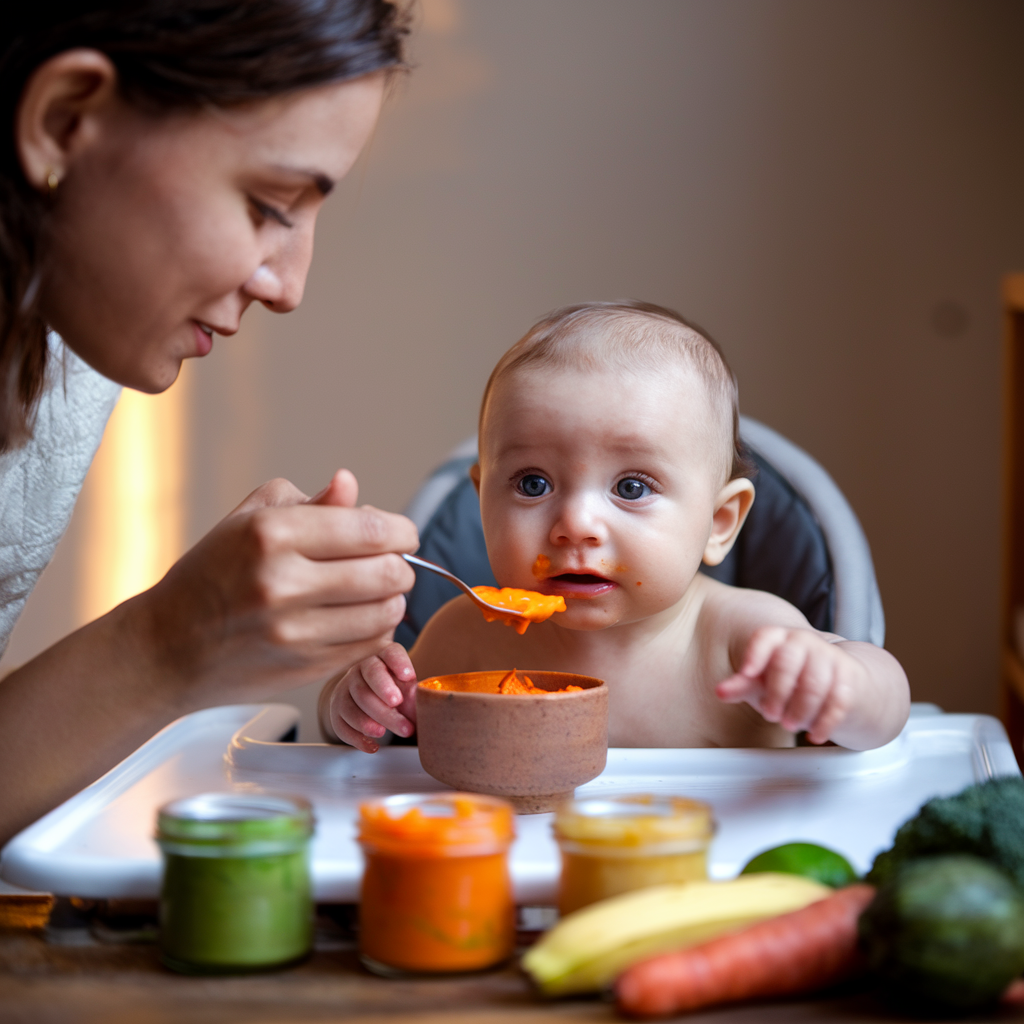
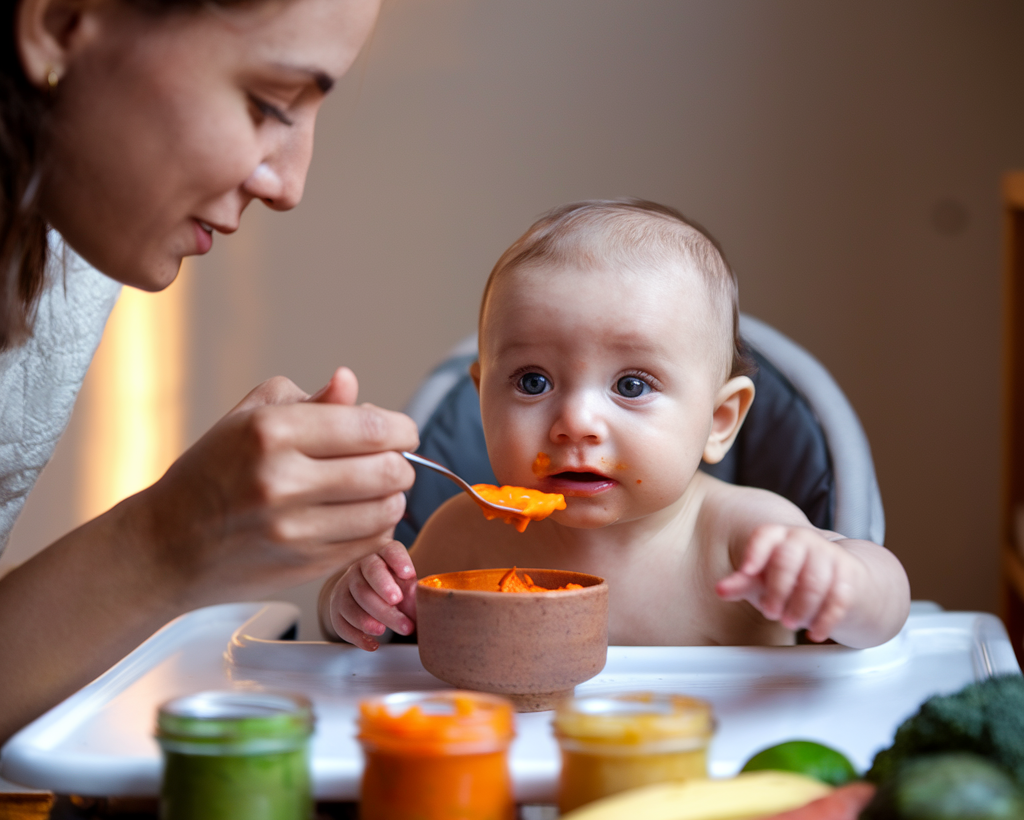
Starting solid foods is an exciting milestone — and the first purées don’t need to be complicated. These 15 recipes are simple, nutritious, and designed for babies who are beginning their food journey. The WHO recommends starting at around 6 months — and all three developmental readiness signs must be present before starting, regardless of age.
Before You Start: Readiness Signs
Before introducing any purées, confirm your baby shows all three signs: sitting with minimal support, loss of the tongue-thrust reflex (not automatically pushing food back out), and showing interest in food. The WHO and AAP recommend starting at around 6 months. Starting before 4 months is not recommended by any major health body. Between 4 and 6 months, starting is possible only if all three readiness signs are present and your pediatrician agrees — but 6 months is the standard recommendation for good reason: the digestive system and motor skills are more reliably ready.
First-Stage Purées (Single Ingredient, Smooth)
1. Sweet Potato Purée
Peel and cube 1 medium sweet potato. Steam for 15 minutes until completely tender. Blend with 2–3 tbsp breast milk or formula to a smooth consistency. Freeze in ice cube trays for single-portion convenience. Nutritional value: vitamin A, vitamin C, fibre, complex carbohydrates.
2. Butternut Squash Purée
Halve a butternut squash, roast cut-side down at 180°C for 45 minutes. Scoop flesh, blend until smooth. Naturally sweet, easily accepted by most babies. Rich in beta-carotene and potassium.
3. Carrot Purée
Peel and chop 4 medium carrots. Steam 20 minutes, blend with cooking water to preferred consistency. Mildly sweet, good first vegetable. Rich in beta-carotene.
4. Parsnip Purée
Peel and chop 3 parsnips. Roast at 180°C for 25 minutes until soft and slightly caramelised. Blend with breast milk or formula. Sweeter than carrot, well-accepted.
5. Broccoli Purée
Steam 200g broccoli florets for 8 minutes until very tender. Blend with cooking water. May require more liquid than root vegetables. Excellent for introducing ‘green’ flavours early.
6. Pea Purée
Cook 150g frozen peas in boiling water for 3 minutes. Drain, blend with 2–3 tbsp water until smooth. Press through a sieve for a very smooth texture. Excellent source of plant protein and iron.
7. Apple Purée
Peel, core, and chop 3 eating apples. Cook in a small amount of water for 10 minutes until soft. Blend until smooth. Naturally sweet — good for mixing with bitter vegetables.
8. Pear Purée
Peel, core, and chop 3 ripe pears. Either steam for 5 minutes or blend raw if very ripe. Pear is one of the gentlest fruits on baby’s digestion and can help with constipation.
9. Mango Purée
Peel and cube a ripe mango. Blend raw — no cooking required. Sweet and fragrant, usually very popular. Rich in vitamin C and folate.
10. Avocado Purée
Mash half a ripe avocado with a fork. Add a squeeze of lemon juice and thin with breast milk if needed. Serve fresh — avocado doesn’t store well once prepared. Excellent source of healthy fats.
Iron-Rich First Purées
11. Red Lentil Purée
Cook 100g red lentils in 400ml water for 20 minutes until completely soft. Blend until smooth. Add a tiny pinch of mild spice (cumin or coriander) from 6 months. Excellent plant-based iron source.
12. Chicken Purée
Poach 100g boneless chicken breast in water or low-salt stock for 15 minutes. Blend with cooking liquid to a smooth consistency. Iron-rich, protein-dense, and a good first meat protein.
13. Beef Purée
Slowly cook 100g lean minced beef with a little water for 20 minutes. Blend thoroughly with cooking liquid. Best source of haem iron for babies — particularly important from 6 months.
Combination Purées (Second Stage)
14. Pea and Mint
150g peas cooked, blended with 5 mint leaves. The mint is a gentle introduction to herb flavours.
15. Sweet Potato and Apple
Equal parts sweet potato purée and apple purée combined. The apple sweetness complements the earthier sweet potato — excellent for babies who resist vegetables alone.
Frequently Asked Questions
How much purée should a 6-month-old eat?
At 6 months, breast milk or formula remains the primary nutrition. Start with 1–2 teaspoons once daily. By 7–8 months, gradually increase to 2–3 meals of 2–4 tablespoons each. Follow baby’s hunger and fullness cues rather than pushing for a specific volume.
Can I add salt or sugar to baby purées?
No salt under 12 months (kidneys cannot process it), no added sugar. Babies’ palates are entirely open to savoury and bitter tastes — don’t train them to need sweetness. The natural flavours of vegetables and fruits are appropriate and important for building flavour acceptance.
How long do baby purées keep?
Fridge: 2–3 days in a sealed container. Freezer: up to 3 months in ice cube trays, then transferred to a freezer bag. Defrost in the fridge overnight or in a bowl of warm water. Never refreeze previously frozen purée.
Disclosure: This post contains affiliate links. We may earn a small commission at no extra cost to you. We only recommend products we genuinely use.
Related Reading
- 6 month old baby: starting solids – a complete first-foods guide
- Solid food introduction chart: first foods by age
Found this helpful? Sign up to the LylyMama newsletter for more recipes, weaning guides, and honest parenting content every week.