Quick answer: Infantile eczema (atopic dermatitis) affects approximately 20% of children in developed countries and is one of the most common conditions managed in paediatric primary care.
Infantile eczema (atopic dermatitis) affects approximately 20% of children in developed countries and is one of the most common conditions managed in paediatric primary care. It’s chronic, manageable, and for most children, significantly improves with age.
What Causes Baby Eczema
Eczema is a complex condition with genetic and environmental components. The primary mechanism is a defective skin barrier — mutations in the filaggrin gene (present in approximately 30% of eczema patients) reduce the skin’s ability to retain moisture and keep irritants out, triggering immune activation and inflammation. The atopic triad (eczema, asthma, and hay fever often coexisting in the same individual or family) reflects shared immune dysregulation. Environmental triggers don’t cause eczema but can worsen it. Risk factors: Family history of eczema, asthma, or hay fever; urban environment; early antibiotic use; reduced microbial diversity in infancy (the hygiene hypothesis); and possibly caesarean birth.
Triggers: Identifying What Makes It Worse
- Dry skin (the primary trigger — when the skin barrier dries out, inflammation worsens)
- Scratching — creates itch-scratch cycles that worsen the barrier
- Heat and sweating
- Synthetic fabrics — choose 100% cotton for clothing and bedding
- Biological/perfumed laundry detergents — use non-biological, fragrance-free
- Perfumed skincare products and soaps
- Cow’s milk protein allergy (CMPA) — relevant in a subset of babies with both eczema and GI symptoms
- Environmental allergens: house dust mite, pet dander (from older childhood)
Treatment: The Step-Up Approach
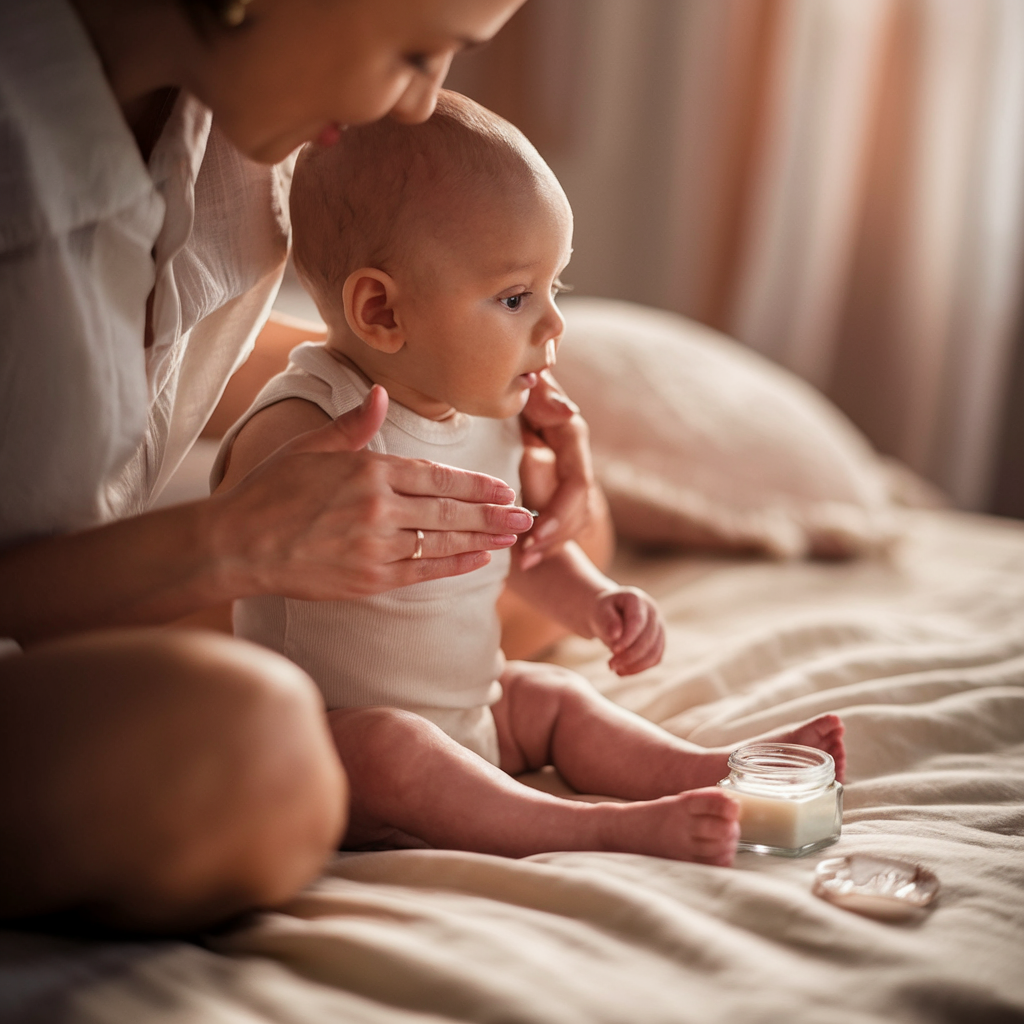
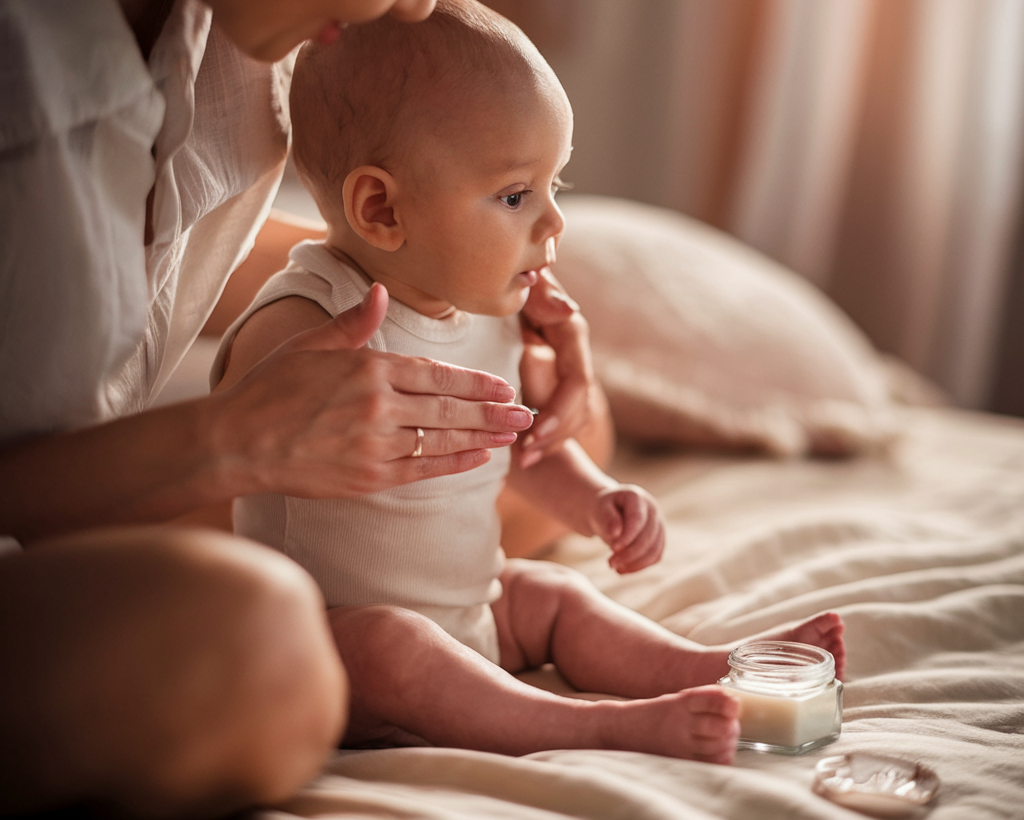
Step 1 — Emollient therapy (always): Apply a fragrance-free emollient at least twice daily and immediately after bathing while skin is slightly damp. This is the cornerstone of eczema management. Options: Aveeno Baby, CeraVe Baby, Diprobase, Doublebase — try several to find one baby tolerates. Apply generously (the amount should be liberal, not token). Step 2 — Topical corticosteroids for flares: Mild topical steroids (hydrocortisone 1%) are prescribed for active inflamed patches. Apply once or twice daily to red, itchy areas until the flare resolves (typically 5–7 days). Don’t apply to unaffected skin. Don’t use on the face without dermatologist guidance. Topical steroids at appropriate doses are safe. Step 3 — Specialist referral: For moderate-severe eczema not responding to steps 1–2, referral to a paediatric dermatologist is warranted. Options include tacrolimus ointment (non-steroidal), wet wrapping, or biological treatments.
Bathing and Skincare Routine
Short baths (5–10 minutes) in lukewarm water daily are appropriate — don’t avoid bathing. Use a soap substitute or gentle fragrance-free wash (not soap, which strips the skin barrier). Pat (don’t rub) dry. Apply emollient immediately while skin is still slightly damp — this ‘seals in’ moisture. Dress in 100% cotton. Keep nails short and smooth to reduce scratch damage.
Is It Related to Diet?
In a subset of babies (those with significant eczema plus GI symptoms such as reflux, colic, or blood in stool), cow’s milk protein allergy (CMPA) may be contributing. An elimination diet (removing dairy from the breastfeeding mother’s diet, or trialling hydrolysed formula) for 2–4 weeks can identify this. However, most babies with eczema do not have CMPA, and dietary restriction without evidence of food allergy is not beneficial and can be nutritionally harmful. Discuss with your GP before eliminating any food group.
Frequently Asked Questions
Will my baby outgrow eczema?
Most children with infantile eczema significantly improve by school age. Approximately 60–70% of those diagnosed in infancy have no significant eczema by adolescence. However, atopic conditions often evolve — some children whose eczema clears develop asthma or hay fever later. There’s no way to predict individual outcome, but good early management supports better long-term skin health.
Is it safe to use topical steroids on my baby?
Yes — mild topical steroids (hydrocortisone 1%) used as prescribed are safe and effective. The fear of topical steroid side effects is often disproportionate to actual risk at the doses used in eczema management. Risks (skin thinning, absorption) occur with prolonged, high-potency use on large areas — not with appropriate use of mild steroids on localised patches as directed. Undertreated eczema causes significant suffering and sleep disruption — effective treatment is the right choice.
Should I use probiotics for my baby’s eczema?
The evidence for probiotics in eczema treatment is modest and inconsistent — some studies show benefit, others don’t. Lactobacillus rhamnosus GG has the most supportive evidence. Probiotics are safe in healthy infants. They’re not a substitute for emollient therapy and topical steroids when needed, but may be a useful adjunct — discuss with your GP or dermatologist.
Disclosure: This post contains affiliate links. We may earn a small commission at no extra cost to you. We only recommend products we genuinely trust.
Related Reading
Found this helpful? Sign up to the LylyMama newsletter for evidence-based health and parenting guides delivered to your inbox every week.