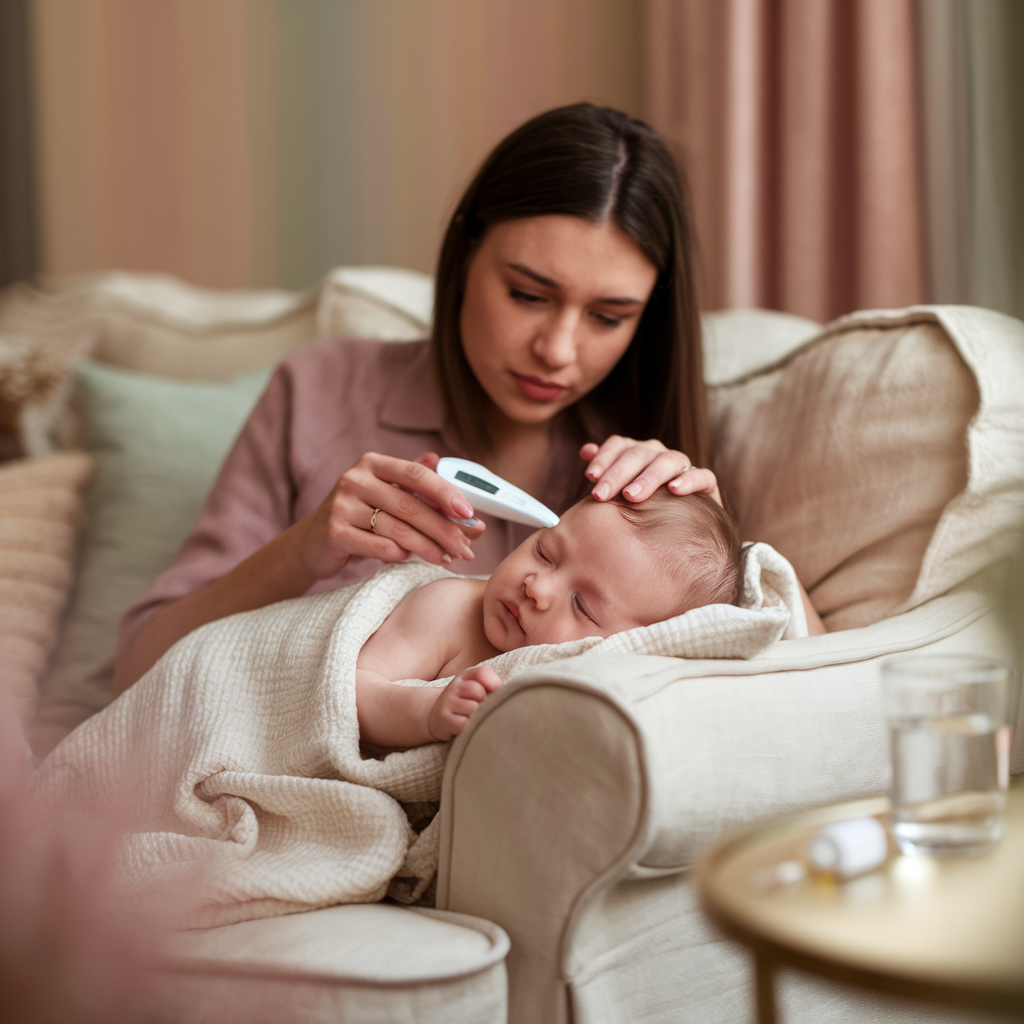
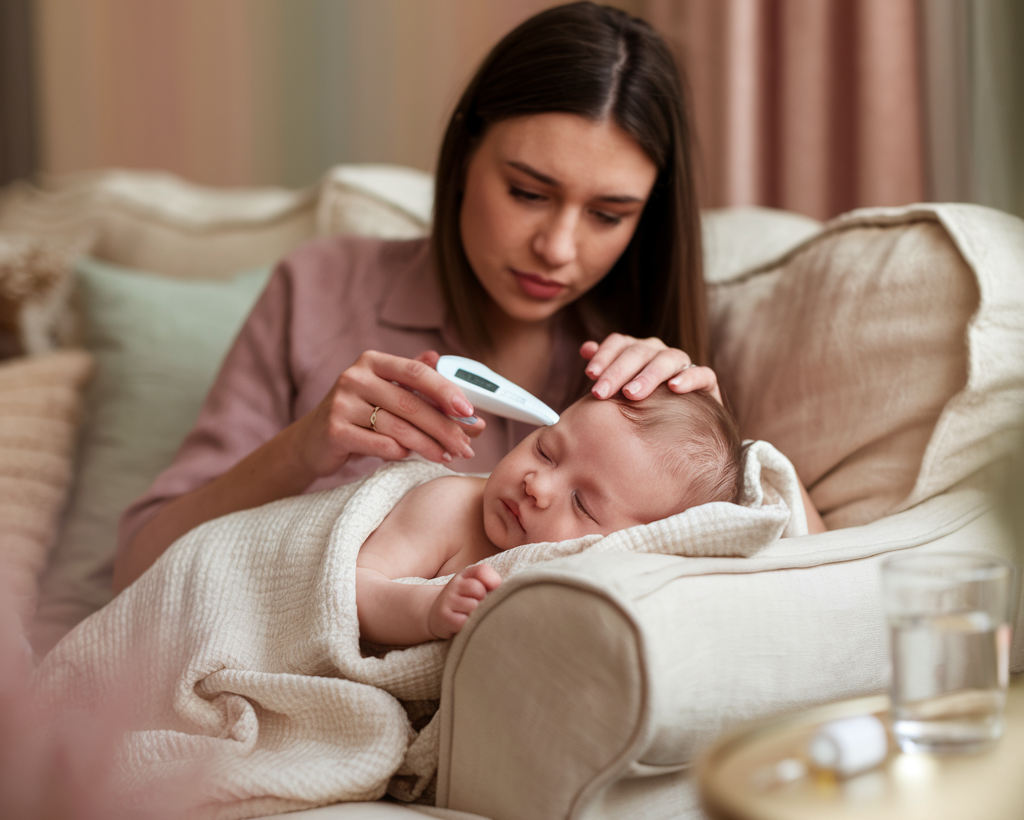
Quick answer: Fever in a baby is one of the most common reasons for an emergency call to a paediatrician — and one of the most anxiety-inducing experiences of early parenthood.
Fever in a baby is one of the most common reasons for an emergency call to a paediatrician — and one of the most anxiety-inducing experiences of early parenthood. Here’s how to measure it accurately, what the numbers mean, and when to go straight to hospital.
How to Take a Baby’s Temperature Accurately
The method matters at this age: Under 3 months: Rectal temperature is the most accurate and is recommended by the AAP for infants. Use a digital thermometer with a lubricant. Gently insert 1cm into the rectum and hold until it beeps. 3 months+: Temporal artery (forehead) thermometers are accurate from 3 months. Tympanic (ear) thermometers are accurate from 6 months. Axillary (armpit) temperatures read approximately 0.5°F / 0.3°C lower than rectal — add this if using armpit. Avoid: Mercury thermometers, forehead strip thermometers (unreliable).
Temperature Chart: What the Numbers Mean
- Normal: 97.5–99.5°F / 36.4–37.5°C
- Low-grade fever: 99.6–100.3°F / 37.6–37.9°C — monitor, comfort measures
- Fever: 100.4°F / 38.0°C or above — this is the clinical threshold
- High fever: 103°F / 39.4°C+ — call your doctor
- Very high fever: 104°F / 40°C+ — seek urgent medical attention
- Under 3 months: ANY temperature 100.4°F / 38°C+ = emergency, no exceptions
When to Go to the Emergency Room
Go immediately for: any fever in a baby under 3 months (0–12 weeks) — this is always an emergency regardless of the number; fever above 104°F / 40°C at any age; fever with a non-blanching rash (see meningitis guide); fever with difficulty breathing; fever with stiff neck; fever with persistent vomiting or inability to keep fluids down; fever with extreme lethargy (can’t be roused, floppy, unresponsive); or fever after recent travel to a malaria-endemic region. Call your doctor same-day for: fever in a 3–6 month old; fever lasting more than 2–3 days in a baby over 6 months; fever without an obvious cause in a baby over 3 months; or fever with a new rash.
Managing Fever at Home
Paracetamol (acetaminophen/Calpol): Safe from 2 months (8 weeks, if over 4kg / 9lbs). Dose by weight, not age — always check the packaging. Ibuprofen: Safe from 3 months and from 5kg / 11lbs. More effective for fever than paracetamol for some children. Not suitable for babies under 3 months. Lukewarm sponging: Has limited evidence but may provide temporary comfort — use lukewarm water only (not cold). Keep hydrated: Fever increases fluid loss — offer frequent feeds or small sips of water. Dress lightly: Remove extra layers — let heat escape. Don’t wrap in blankets. Don’t alternate without guidance: Alternating paracetamol and ibuprofen is sometimes recommended by doctors — don’t do this without specific instruction.
Why Fever Is Not Always the Enemy
Fever is a biological response to infection — it activates the immune system, inhibits bacterial replication, and is part of the body fighting illness. Treating fever reduces discomfort but doesn’t speed recovery. The primary reason to treat fever is for the baby’s comfort, not to ‘fight the illness’. A well baby with a fever of 102°F who is feeding, alert, and making wet nappies often doesn’t need emergency treatment — the fever itself is doing its job.
Frequently Asked Questions
Can a fever cause brain damage?
Standard fever (even up to 104°F / 40°C) does not cause brain damage. Brain damage from fever is associated only with extremely rare circumstances — heatstroke (a different condition where the body cannot regulate temperature) or specific severe infections affecting the brain directly (meningitis, encephalitis). Parents can be reassured that a fever from a cold or ear infection is not going to harm their baby’s brain.
My baby had a febrile seizure — is that permanent?
Febrile seizures (convulsions triggered by rapidly rising fever) affect approximately 2–5% of children and are frightening but not dangerous in themselves. They’re typically brief (under 5 minutes), stop on their own, and do not cause brain damage. Having one febrile seizure increases the risk of recurrence (30–50%) but does not significantly increase the risk of epilepsy. See the separate febrile seizures guide for what to do if one occurs.
Should I go to hospital if my 4-month-old has a temperature of 38.2°C?
At 4 months, a temperature of 38.2°C (100.8°F) warrants a call to your doctor or out-of-hours service today, but is not necessarily an emergency requiring the ER unless baby is very unwell-looking (not feeding, very lethargic, difficult to rouse, rash). Your doctor will want to assess the source of the fever and may want to see your baby. Don’t wait — call for guidance.
Related Reading
Found this helpful? Sign up to the LylyMama newsletter for evidence-based health and parenting guides delivered to your inbox every week.