
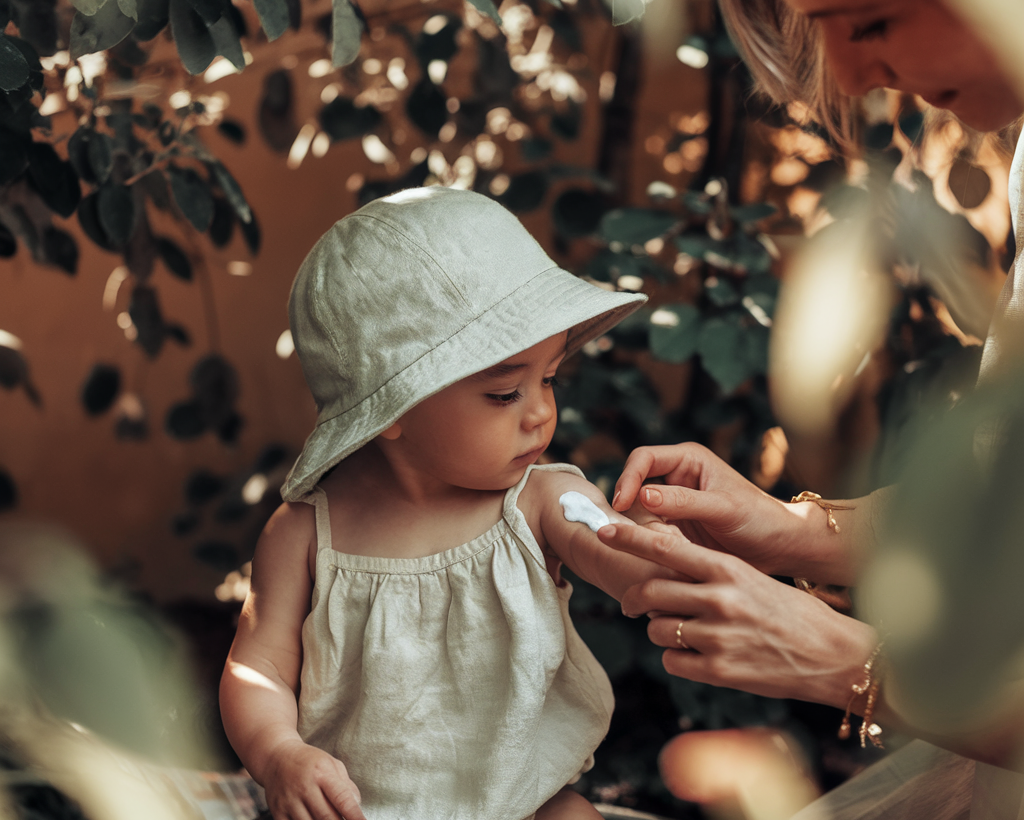
Quick answer: Baby skin is significantly more sensitive to UV radiation than adult skin — it burns faster, at lower UV indices, and with more severe consequences.
Baby skin is significantly more sensitive to UV radiation than adult skin — it burns faster, at lower UV indices, and with more severe consequences. Here’s evidence-based guidance on sun protection for the first year.
Why Baby Skin Needs Extra Protection
Babies under 6 months should be kept out of direct sunlight entirely — their skin has less melanin (the protective pigment) than older children and adults, thinner skin that burns more easily, an immature sweat response making overheating more likely, and chemical sunscreens may not be appropriate for their immature skin barrier. The WHO, AAP, and most dermatology bodies agree: no direct sunlight for babies under 6 months, and diligent protection from 6 months onward.
Protection Strategies by Age
Under 6 months: Keep out of direct sun entirely. Use shade (pram shade, beach tent, tree shade), protective clothing (UV-protective clothing with UPF 50+, wide-brimmed hat, long sleeves), and avoid the peak UV hours (10am–4pm). Chemical and mineral sunscreens are generally not recommended under 6 months due to skin absorption risk and potential for irritation. Exception: if sun exposure is unavoidable, a small amount of mineral (zinc oxide or titanium dioxide) sunscreen on exposed areas is acceptable. 6 months and over: Use broad-spectrum SPF 30–50 mineral sunscreen on all exposed areas. Apply 15–30 minutes before exposure. Reapply every 2 hours and after swimming or sweating. Continue protective clothing and shade.
If Sunburn Happens: Treatment
Move baby to a cool environment immediately. Cool (not cold) water on the affected area — cool damp cloths applied for 10–15 minutes. Paracetamol for pain if baby is distressed. Keep baby well hydrated — sunburn causes fluid loss. After-sun lotion (aloe vera based, fragrance-free) can soothe from 6 months. Do not: Apply ice or very cold water (can cause further skin damage), butter or oil (trap heat), toothpaste (old myth — harmful), or pop blisters.
When to Seek Medical Attention
Seek medical care for: sunburn covering more than 15% of the body surface, blisters (second-degree burn), baby is under 1 year, fever above 38°C alongside sunburn, signs of heat stroke (hot dry skin, high temperature, confusion, unconsciousness), or if baby seems very unwell. Sunburn in a very young baby always warrants a call to your GP or NHS 111 / telehealth line.
Frequently Asked Questions
Can babies get vitamin D from sunlight safely?
The amount of sun exposure needed for vitamin D synthesis puts babies at significant burn risk — particularly given their lower melanin. Current guidance is to supplement with vitamin D drops (400 IU daily for all babies, whether breastfed or formula-fed taking less than 500ml per day) rather than relying on sunlight. This provides adequate vitamin D without any UV risk.
Is SPF 50 really necessary or is SPF 30 enough?
SPF 30 blocks approximately 97% of UVB; SPF 50 blocks approximately 98%. The difference is small but in practice, SPF 50 provides better real-world protection because it compensates for under-application (most people apply 25–50% of the required amount). For babies, SPF 50 mineral sunscreen is recommended.
Which ingredients should I avoid in baby sunscreen?
For babies under 6 months: avoid all sunscreen if possible; use physical barriers only. For babies over 6 months: choose mineral sunscreens (zinc oxide, titanium dioxide) over chemical sunscreens (oxybenzone, octinoxate, avobenzone) — evidence for chemical sunscreen safety in infants is limited and hormone-disrupting potential has been raised. Fragrance-free, hypoallergenic formulations are preferable.
Disclosure: This post contains affiliate links. We may earn a small commission at no extra cost to you. We only recommend products we genuinely trust.
Related Reading
- Bringing baby home: the first 24 hours survival guide
- When can babies go outside for the first time?
- What temperature should a baby’s room be?
Found this helpful? Sign up to the LylyMama newsletter for evidence-based health and parenting guides delivered to your inbox every week.