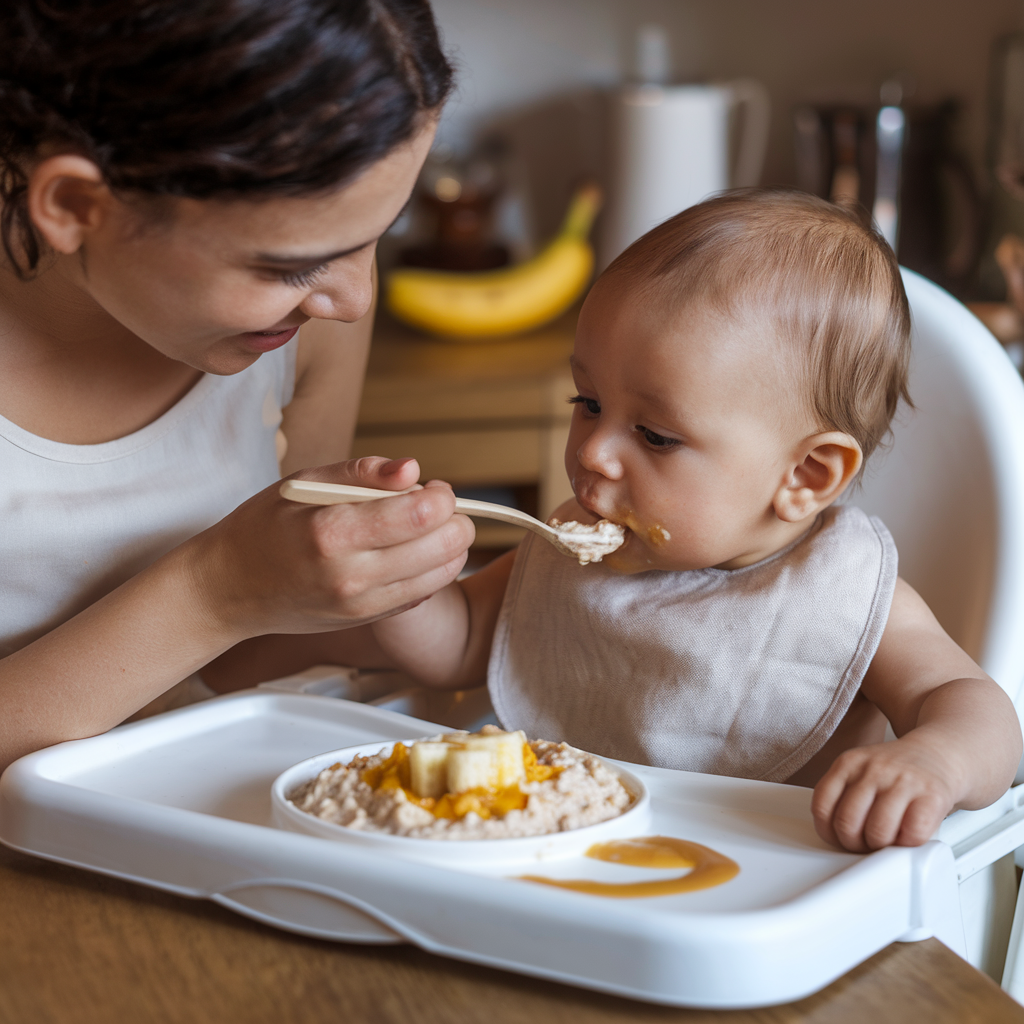
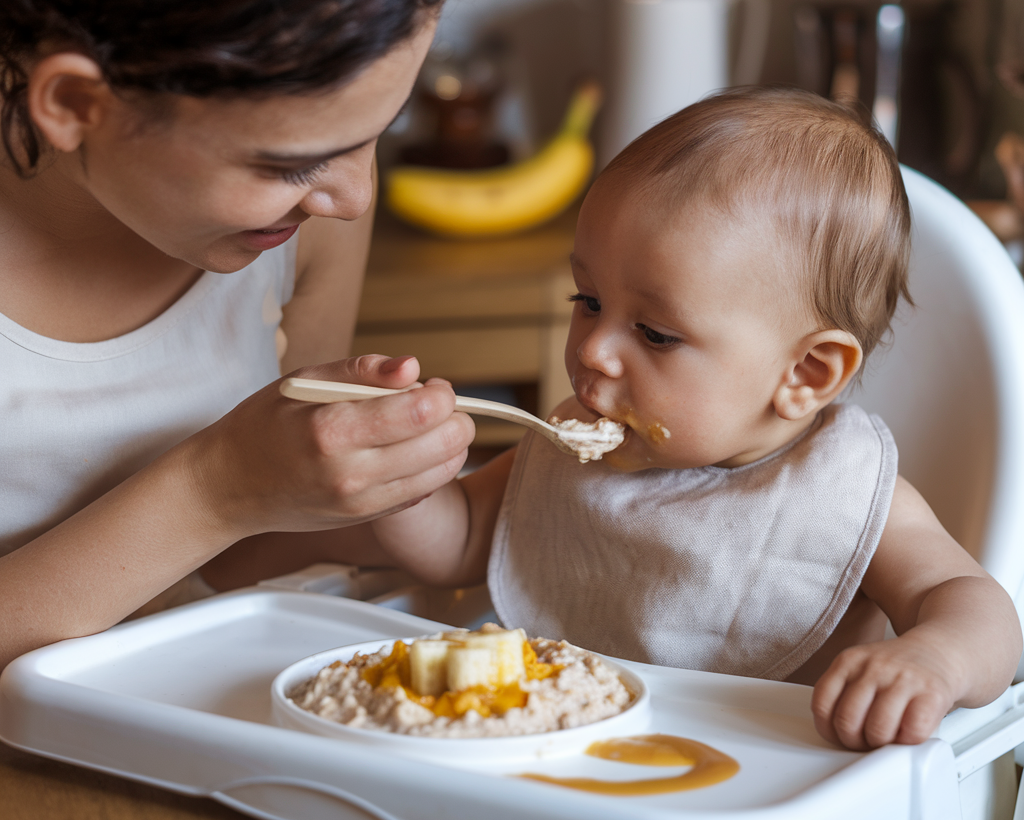
Baby porridge is one of the most versatile, nutritious, and practical early weaning foods. These 10 variations take the basic oat porridge from bland to genuinely delicious — for babies and for the adults eating alongside them.
Why Oat Porridge Is a Perfect First Food
Oats tick every box for early weaning: iron-fortified baby oats provide up to 6mg iron per serving (meeting the majority of daily needs), they’re easily texturised from smooth to lumpy as baby develops, they’re one of the most accepted early textures, oats are low allergen, they provide sustained energy from complex carbohydrates, and they batch-prepare easily. From 6 months, use baby oats (finely ground) or regular rolled oats blended to a smooth texture. From 8–9 months, lumpy or textured porridge is appropriate.
Base Porridge Recipe
4 tbsp baby oats + 120ml breast milk, formula, or full-fat cow’s milk (from 6 months as a cooking ingredient). Combine in a saucepan over low heat, stir constantly for 2–3 minutes until thick and creamy. Adjust consistency with more liquid. This makes one generous baby portion.
10 Porridge Variations
1. Banana and Cinnamon
Stir half a mashed ripe banana into warm porridge. Add a tiny pinch of cinnamon. The banana sweetens naturally and adds potassium and vitamin B6.
2. Apple and Ginger
Cook a peeled, grated apple with the oats. A tiny pinch of ground ginger from 6 months adds warmth without heat.
3. Mango and Coconut
Stir in 2 tbsp mango purée and 1 tsp coconut cream. Tropical, sweet, and popular with most babies.
4. Pear and Vanilla
Cook grated or puréed pear with the oats. Add a drop of real vanilla extract. Mild and sweet.
5. Strawberry and Chia
Warm a few chopped strawberries, mash into the porridge. Stir in 1 tsp chia seeds (added fibre, omega-3). Vitamin C from strawberries boosts iron absorption.
6. Blueberry and Almond
Stir in a handful of defrosted frozen blueberries. Add 1 tsp almond butter (introduce nuts early to reduce allergy risk). Rich in antioxidants and healthy fats.
7. Pumpkin and Nutmeg
Stir 2 tbsp pumpkin purée into porridge. A tiny pinch of nutmeg. Rich in beta-carotene and vitamin C.
8. Beetroot and Berry
1 tbsp cooked beetroot purée stirred in with mixed berry purée. Turns a spectacular pink. Rich in folate and natural nitrates.
9. Sardine (Savoury Porridge)
Savoury porridge made with water or stock instead of milk. Stir in half a tin of mashed sardines. This sounds unusual but introduces important umami flavours and provides excellent DHA and iron. Early exposure to varied flavours builds food acceptance.
10. Avocado and Lime
Savoury porridge with half a mashed avocado stirred in. Tiny squeeze of lime juice. Healthy fats, potassium, and a flavour combination that works surprisingly well.
Frequently Asked Questions
When can I use regular oats instead of baby oats?
From around 8–9 months, when baby is ready for more texture. Blend regular oats briefly before cooking for a slightly coarser texture than baby oats. By 10–12 months, standard rolled oats cooked to a thick, slightly textured porridge are appropriate.
Can I make porridge in advance?
Baby porridge is best made fresh as it continues absorbing liquid and changes texture in storage. If needed, prepare up to 24 hours in advance and reheat with a splash of milk to restore consistency. Don’t reuse porridge that has been in contact with a baby’s spoon.
Disclosure: This post contains affiliate links. We may earn a small commission at no extra cost to you. We only recommend products we genuinely use.
Related Reading
- 6 month old baby: starting solids – a complete first-foods guide
- First baby purees: 15 easy recipes for 6 month olds
Found this helpful? Sign up to the LylyMama newsletter for more recipes, weaning guides, and honest parenting content every week.