
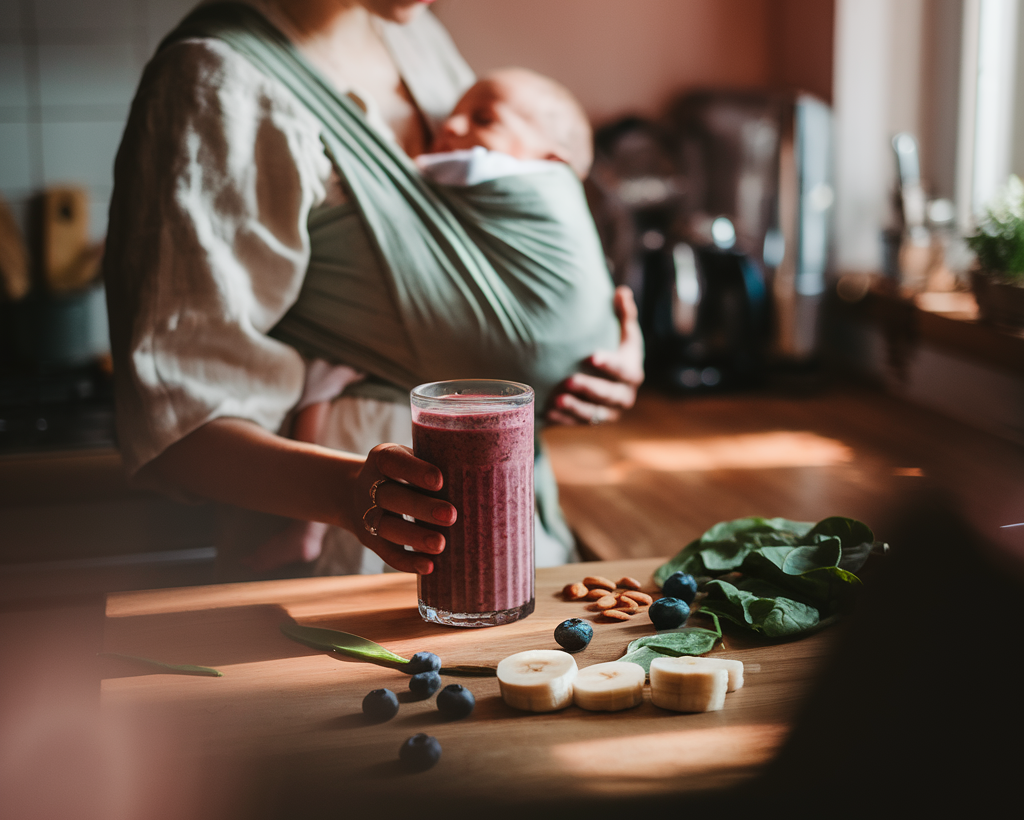
Smoothies are one of the most practical ways to hit your nutritional needs in the postpartum period — they’re fast, one-handed, and can pack an extraordinary amount of nutrition into a single drink. These recipes focus on iron, calcium, omega-3, and energy.
Why Smoothies Work for New Mums
Smoothies are ideal postpartum because: one hand holds the cup; they require 3–5 minutes to make; they can be prepped as smoothie packs (bags of frozen ingredients) the night before; they’re nutritionally dense; and they count toward fluid intake (important for milk supply). The limitation: they’re not a meal replacement for solid nutrition. Use them as a supplement to regular meals, not instead of them.
Iron-Boosting Smoothies
Green Iron Boost
Large handful spinach (2–3mg iron), 1 cup frozen mango (vitamin C enhances iron absorption), half banana, 1 cup fortified plant milk or dairy milk, 1 tbsp pumpkin seeds (1mg iron). Blend until smooth. The vitamin C from mango significantly improves iron absorption from the spinach and seeds.
Apricot and Almond
6 dried apricots (3mg iron), 1 cup milk, 2 tbsp almond butter, half banana, 1 tsp cinnamon. Soak apricots in water for 30 minutes if not using a high-powered blender. Rich in iron, calcium, and healthy fats.
Calcium-Rich Smoothies
Berry and Yogurt
200g full-fat Greek yogurt (250mg calcium), 1 cup frozen berries (vitamin C), 1 tbsp honey, splash of milk. Simple, fast, delicious. One of the highest-calcium smoothie options.
Tahini and Date
2 tbsp tahini (170mg calcium), 3 medjool dates (iron + quick energy), 1 cup milk, half banana, 1 tsp vanilla. Tahini is one of the most calcium-dense plant foods available.
Omega-3 and Brain Health
Walnut and Berry
Handful of walnuts (plant-based omega-3 / ALA), 1 cup mixed berries, 1 cup milk, 1 tsp flaxseed oil or ground flaxseed. A breastfeeding mother’s daily DHA needs are higher than pre-pregnancy — include algae-based DHA supplement alongside dietary sources.
Energy Smoothies for Night Feeds
Peanut Butter Oat
Half cup rolled oats, 2 tbsp peanut butter, 1 banana, 1 cup milk, 1 tsp honey. Blend. This is approximately 450 calories — a genuine mini-meal rather than just a drink. Ideal for the early morning after a broken night.
Smoothie Prep Hack: Freezer Packs
On Sunday evening, portion 5 smoothies into zip-lock bags: fruit, spinach, seeds, or any non-liquid ingredients. Label and freeze. Each morning, tip one bag into the blender, add liquid, and blend. Prep time: 90 seconds. This system means a nutritious smoothie every day regardless of how the morning goes.
Nutritional context: what new mothers actually need more of
Breastfeeding increases caloric needs by approximately 500 calories daily. More importantly, specific micronutrients are transferred preferentially into breast milk at the expense of maternal stores: iodine (supports baby’s thyroid and brain development), choline (brain development — eggs are the richest source), omega-3 DHA (neural development — oily fish and walnuts), and vitamin D (supplement separately; food sources are insufficient). Iron is critical for maternal recovery after birth, particularly after blood loss.
Smoothies are not a complete meal replacement — pair them with a source of sustained energy (oats, wholegrain toast, eggs) rather than replacing a meal entirely. Adding a tablespoon of hemp seeds, chia seeds, or nut butter to any smoothie improves satiety and adds protein without changing the flavour significantly.
Frequently Asked Questions
Can I add spinach to a smoothie without tasting it?
Yes — when blended with sweet fruit (mango, banana, pineapple), spinach becomes essentially undetectable. Start with a small handful (30g) and increase as you get used to it. Baby spinach has a milder flavour than mature spinach.
Should I use protein powder in breastfeeding smoothies?
Not necessarily — most women get adequate protein from food. If your diet is very restricted, a plain whey or pea protein powder with no artificial sweeteners is generally safe while breastfeeding. Avoid proprietary ‘weight loss’ protein powders with added stimulants.
Disclosure: This post contains affiliate links. We may earn a small commission at no extra cost to you. We only recommend products we genuinely use.
Related Reading
- Breastfeeding diet: what to eat, what to limit, what to avoid
- Pumping breast milk: how to build and maintain supply
Found this helpful? Sign up to the LylyMama newsletter for more recipes, weaning guides, and honest parenting content every week.